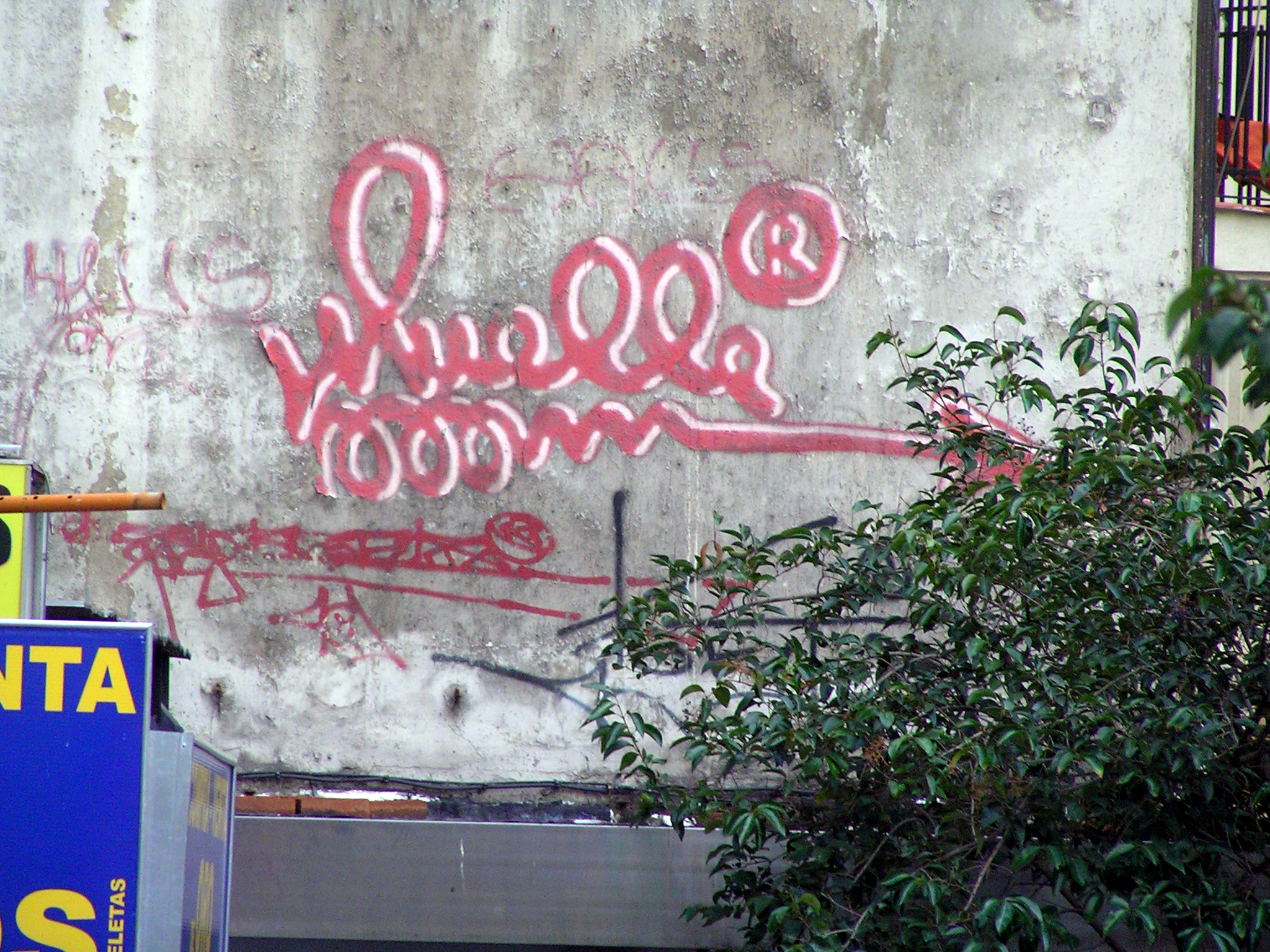
A journey that can begin in a school notebook
Before the complex lettering, the recognisable character or the commission to paint an entire building, there may be a much smaller beginning: a name repeated in the corner of a school notebook. Its letters change shape. A nickname replaces an ordinary signature. Something written almost absent-mindedly starts to feel like a deliberate expression of who its maker wants to be.
For some people, that experiment ends with the notebook. For others, it becomes entangled with friendships, neighbourhoods, artistic ambitions and eventually a working life. The journey from graffiti to street art, where it happens, involves changing relationships with audiences and identity as much as changes in technique.
Drawing on editorial experience and informal conversations within Valencia's graffiti community, this article explores seven interconnected stages that can help explain that journey. They form an interpretive model, not a representative survey or a timetable every writer follows. The named artists below are documented examples from public sources; they are not identified as participants in those conversations.
Some distinctions matter from the outset. Here, graffiti writing means a practice centred on names and letters. Street art encompasses a broader range of images, interventions and media. Muralism concerns painting on walls and architectural surfaces; public art is a wider category, including work with no connection to graffiti. These fields overlap, and their boundaries remain disputed. A large commissioned wall is not automatically graffiti, and a graffiti piece need not become figurative to be accomplished.
Above all, professional muralism is one possible destination. Continuing to develop letters can be a lifelong artistic pursuit in its own right.
1. The first signature: adolescence and the search for identity
A name offers a surprisingly rich starting point. A teenager can stretch its letters, tighten their spacing, join them together or exaggerate one stroke until the result feels different from everyday handwriting. Even practising a personal signature can reveal that writing has a visual personality beyond the information it communicates.
These experiments may happen during lessons, while completing assignments or simply through drawing for pleasure. Repetition matters: a form that initially looks accidental begins to become intentional. The writer discovers the satisfaction of making something recognisable, then the frustration of being unable to reproduce it quite as well a second time. Attention shifts from what the name says to how it looks.
Choosing a nickname or pseudonym adds another dimension. A family name arrives with an existing history; a chosen name can feel open to invention. It offers a public identity that need not disclose private life or reproduce the roles assigned at home and school. The choice is both personal and visual: particular letters may be attractive because of the shapes they make together.
Individuality and belonging can grow simultaneously. Wanting a distinctive signature does not exclude wanting friends who understand it. Discovering other writers, graffiti imagery or hip-hop culture can place a private interest within a larger world. The name belongs to one person, but the practice creates common ground with others.
This should not turn adolescence into a single psychological explanation for graffiti. People encounter writing at different ages and through different circumstances. The notebook is one useful starting point because it makes visible the meeting of curiosity, repeated practice and self-invention. It is not evidence that every writer begins in the same way.
Nor does experimenting with a signature inevitably lead to painting in the street. For those who continue, however, an important possibility has appeared: identity can be made, adjusted and expressed through a visual form. A mark can become something the writer recognises as their own before anyone else recognises it.
2. Beyond the notebook: discovering an audience
The next change is a change of audience. A name first drawn privately may appear on the writer's belongings, circulate among classmates or, in some cases, move onto school surfaces and neighbourhood walls. These are different settings, with different permissions and consequences. What connects them is the discovery that a mark can be encountered by someone other than its maker.
At first, the imagined audience may be very small. A friend recognises the signature; a classmate notices a variation; someone asks who made it. Their reactions can matter more than any abstract ambition to reach a city. Curiosity, approval and criticism give the name a social life. The writer begins to think about how others see something that previously existed mainly on paper.
For some young writers, unauthorised marking also brings nervousness, adrenaline and the excitement of testing a boundary. Understanding that attraction helps explain a motivation; it does not make the damage, conflict or legal consequences disappear. The account here concerns the emotional experience described in editorial conversations, not a recommendation to seek danger or paint without permission.
Public space introduces a different kind of recognition. A stranger might encounter the same name repeatedly without knowing the person behind it. An alias becomes familiar while the writer's everyday identity remains private. A neighbourhood is no longer only a place to pass through: it becomes a place in which the writer notices surfaces, other names and the possible visibility of their own.
A tag is a writer's stylised signature. Its apparent simplicity can conceal careful decisions about rhythm and proportion, but an early tag does not necessarily carry a complex political or artistic message. The immediate reasons for making it may be visibility, excitement, experimentation or the pleasure of recognition. Requiring an elaborate message from every first mark can obscure those more ordinary human impulses.
There is also a gap between the audience imagined and the audience encountered. Friends, other writers, residents and property owners may respond very differently to the same mark. Learning that public visibility brings disagreement as well as attention is part of discovering what it means to work beyond a private page.
3. Friends, crews and the education of practice
Finding other writers can change the scale of the interest. A solitary fascination becomes something to discuss, compare and share. One friend brings enthusiasm, another a new reference, another enough experience to explain why a composition feels unbalanced. The relationship provides reasons to continue even when the work itself is frustrating.
A crew is an association of writers, commonly represented by a shared name or initials. It can be far more than a group assembled to paint a wall. Friendship, mutual recognition and shared memories may give it continuity. Belonging can strengthen an individual identity rather than erase it: the writer develops a name within a collective relationship.
Much of the learning described in these experiences is informal. Writers look closely at one another's work, compare drawings and notice how a painted line differs from a sketch. A useful suggestion may emerge during a conversation rather than a lesson. Seeing somebody revise an unsuccessful passage can teach as much as seeing a finished piece.
Digital references expand that visual education. Photographs, videos and social platforms make distant styles accessible, but an image cannot fully convey the resistance of a surface, the movement of a hand or the decisions made while painting. Looking and doing remain connected activities. The challenge is to absorb references without allowing admiration to settle into imitation.
The vocabulary of the work also becomes more specific. A throw-up generally uses quickly constructed, relatively simple outlined letters, often rounded, with a limited colour range; it may be filled or left unfilled. A piece, a term derived from “masterpiece”, usually involves a more developed composition. These are useful descriptions rather than certificates of artistic rank. Tags, throw-ups and pieces can remain parallel practices throughout a writer's life.
Technical development introduces different relationships between letters and their surroundings. Fills distinguish the interiors of letters from outlines. Highlights, shadows and suggested depth change how forms occupy a surface. Colour can unite a composition or make it fall apart. Aerosol painting adds the challenge of translating a small drawing into movements made at a larger scale.
Practice gradually connects intention, gesture, tool and result. The important development is not merely acquiring more equipment or adding more effects. It is learning to make choices: when a letter needs space, when an outline loses clarity, when additional detail weakens the whole. Friends and crewmates can supply both encouragement and the honest criticism that makes these decisions more conscious.
By this point, a writer may be developing two things at once: an increasingly personal visual language and a place within a community that helps sustain it.
For a closer look at the different forms, see our graffiti and street-art field guide.
4. The turning point: stopping, continuing and choosing recognition
Some people move away from graffiti after an intense period of interest. Studies, work, relationships or other responsibilities take priority. Enthusiasm changes. Others stop after conflict associated with unauthorised painting, including fines or other consequences. There is no sound basis here for assigning percentages to these outcomes, and leaving graffiti is not an artistic failure.
For those who continue, the relationship can become more deliberate. Painting may remain a meaningful hobby, become a central part of identity or open an uncertain professional possibility. None of these requires the same level of commitment or produces the same kind of work. Maturity can mean choosing a sustainable place for graffiti within life rather than increasing its intensity indefinitely.
The settings may change too. Authorised walls, legal painting spaces and organised gatherings offer opportunities to work alongside others. A graffiti jam is a meeting centred on painting together, sometimes accompanied by music and other activities; it is not necessarily a competition. Such encounters allow techniques and ideas to circulate beyond an original group of friends.
Recognition becomes more complicated as the audience grows. In parts of graffiti culture, repeatedly seeing a name contributes to its reputation. A location's prominence or difficulty can also affect how some writers assess an intervention. These values are neither universal nor proof of artistic quality. Dangerous or unauthorised activity carries consequences that a photograph can conceal.
Visibility and artistic recognition are therefore related but distinct. A frequently encountered name may be familiar without its lettering being especially distinctive. A less prolific writer may earn respect for a strong composition or an unusual approach. Public popularity, peer recognition and the artist's own satisfaction can pull in different directions.
Meanwhile, influences begin to change character. An admired writer's approach may have supplied an early template; continued experimentation can loosen that dependence. The artist starts deciding what to retain, what to reject and what needs further work. Developing a style is rarely a single revelation. It can emerge through many small departures from the references that first made painting attractive.
Shared walls make those choices especially visible. Different approaches have to coexist, and a writer can see their own habits beside somebody else's solutions. The question becomes less about reaching a predetermined next stage and more about deciding what is worth pursuing. Continuing to paint creates room for that question; it does not dictate the answer.
5. Lettering, characters and other visual languages
For many writers, the name remains the subject. Its letters offer enough variation in structure, movement, colour and spatial illusion to sustain decades of work. Characters may accompany them without displacing them. Reworking a familiar sequence of letters can be a demanding form of research, not evidence that an artist has failed to progress.
The German artist DAIM offers a documented counterexample to any simple opposition between lettering and an expanded career. His official portfolio describes the construction and deconstruction of his name as central to his three-dimensional compositions, while presenting walls, canvases, prints and exhibitions. The letters remain productive across different formats. Moving into an exhibition does not necessarily mean moving away from writing.
Other writers become curious about unfamiliar languages. A friendship with an illustrator, a painting course or studies in design or fine art may introduce new references. Some explore faces, animals and imagined environments; others develop abstraction, recurring figures or graphic systems. These possibilities do not form a clean fork in the road. A person can work across them, return to letters or keep several practices alive together.
The transition can be uncomfortable. Confidence with lettering does not automatically provide confidence with anatomy, observation or pictorial light. An accomplished writer may feel inexperienced again when trying to describe a face or an animal. Frustration is part of the story: established skill has to coexist with the uncertainty of learning something new.
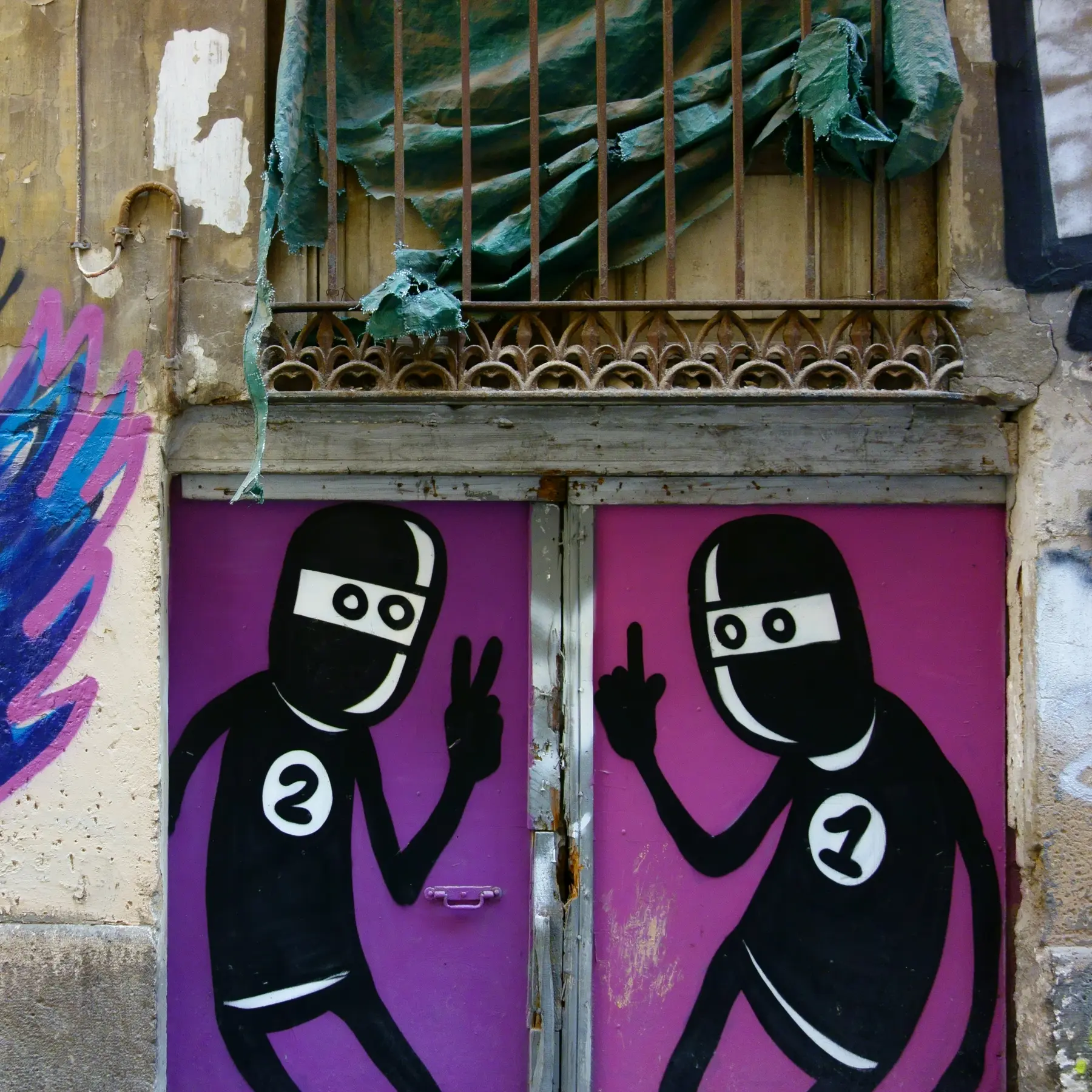
Gradually, recognition may attach to an image rather than a readable name. In Valencia, David de Limón traces his early interventions to the tag LIMÓN in 1998 and then a lemon-slice emblem in his official account. His later masked character provides another means of identification. This documented sequence illustrates how a written identity can develop into an image; it does not establish the motivations or experiences of every writer who uses a character.
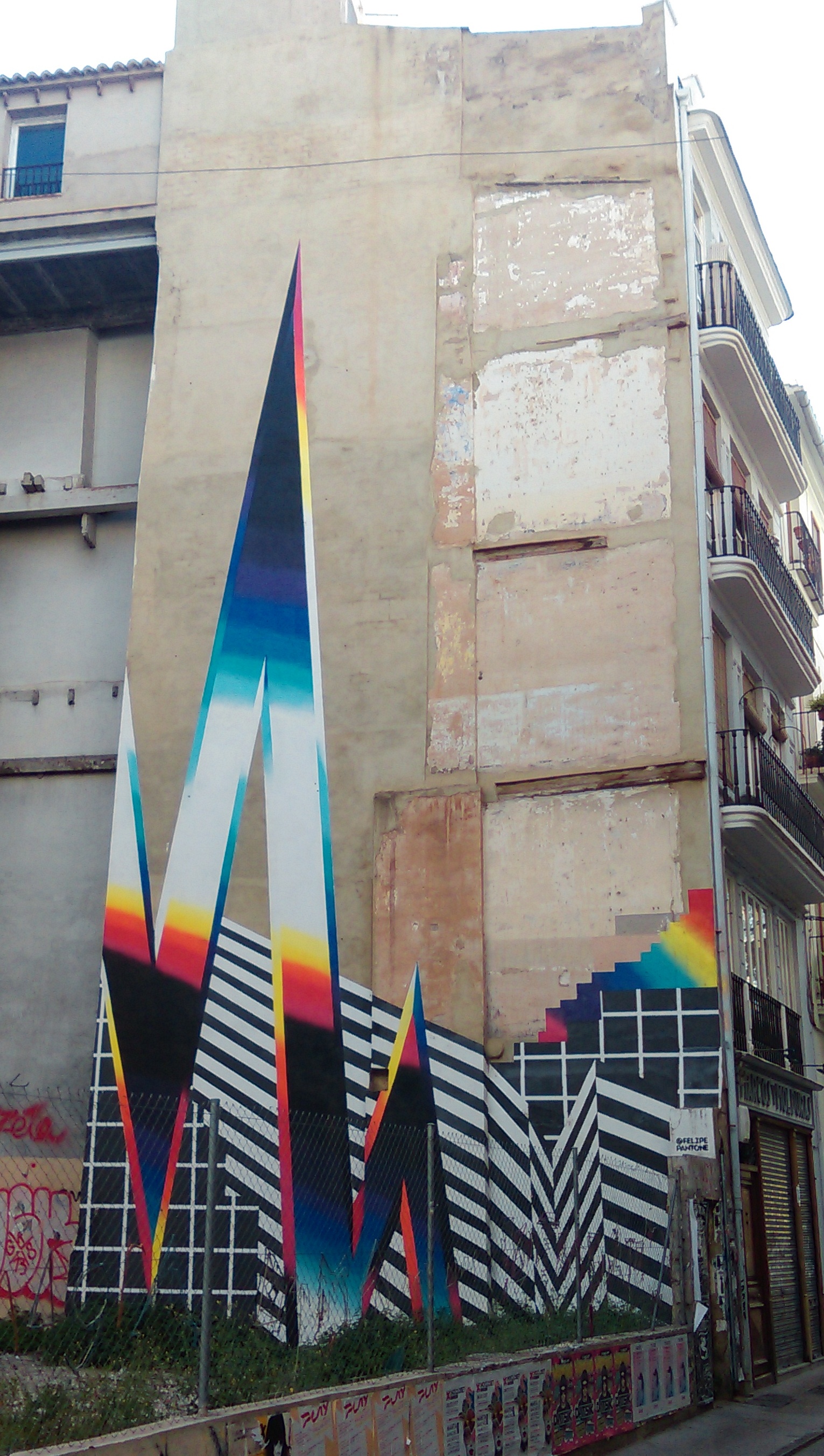
Felipe Pantone demonstrates a different direction. His published account of the Optichromie series explains how increasing contrast and combining optical patterns with saturated colour eventually led him to remove the letters from his compositions. Abstraction developed through problems he was already exploring in graffiti. The change was not simply a switch from writing a name to painting realistic pictures.
These examples also complicate the idea of a wider audience. A passer-by may respond immediately to a character's gesture without knowing graffiti conventions. An abstract surface may attract attention through colour and apparent movement. A dense letter piece may require more familiarity to read, while rewarding an informed viewer with extraordinary precision and invention.
Accessibility describes a relationship with an audience, not a verdict on quality. A figurative mural can be conventional; lettering can be radical. Realism is not the final examination of an artist's ability. The gain, where one occurs, is a wider range of expressive choices and a clearer understanding of which choices feel personal.
Nor does a new visual language necessarily replace older ways of working. Duke103, for example, described transforming street furniture into animals and characters in a published Hello Valencia interview. The surrounding street becomes part of the image. Such a practice points towards invention through setting as well as through subject matter, and helps explain why an artist's development cannot be measured by wall size alone.
Read more in our feature on David de Limón.
 VSA / Archive image
6. When someone wants to take a piece of the street home
For some artists, a different turning point arrives when someone asks to buy a work. It may be a friend who has watched years of practice, or a stranger who recognises an image from the street. The request changes the relationship: another person wants to live with something the artist has made.
The immediate feeling can be happiness and surprise. Years of drawing and painting, often pursued for their own sake, have generated a form of appreciation that feels unexpectedly tangible. The amount paid may matter less emotionally than the fact that somebody values the work enough to bring it home. This is a possible experience described by the editorial material, not a documented first-sale story assigned to any named artist.
The idea of taking a piece of the street home need not mean removing an intervention from its setting. A newly made canvas, drawing or print can carry the artist's visual language into a domestic space while the street work remains where it was made. A public encounter becomes the starting point for a different object and a more private relationship with the image.
That change of format also involves artistic decisions. A composition that depends on a corner, a shutter or a particular scale may not work unchanged on a rectangle hung indoors. Repetition can become variation: the same character or letter structure has to establish a different relationship with its surroundings. Producing an object for sale can therefore create a genuine creative problem as well as an economic opportunity.
Early sales may make a professional future imaginable. Prints, canvases and other formats become possibilities worth exploring. But it would be misleading to describe the first commercial response as an immediate abandonment of independence. Enjoying recognition and wanting to experiment are entirely compatible.
The more difficult questions can emerge later. Buyers may consistently prefer one character, palette or type of composition. Repeating it offers reassurance and perhaps income; changing direction introduces uncertainty. The artist must decide how much repetition remains meaningful and when familiarity begins to constrain curiosity. There is no universal point at which making a living becomes compromise. The tension lies in continually negotiating what the work is for and whom it addresses.
7. Professional opportunities, practical limits and artistic freedom
Festivals, exhibitions, collective walls and commissions can bring an artist into networks that once seemed distant. One completed project may introduce the work to another organiser, gallery or client. Recognition can create further opportunities, while participation gives the artist experience of working beyond familiar surroundings.
These invitations do not certify a hierarchy of artistic worth. Selection reflects many factors, including the requirements of a location, a curator's interests and existing relationships. A writer respected by peers may have little interest in those networks. Another artist may pursue them enthusiastically. Professional recognition is one form of recognition among several.
The work itself changes when other people become responsible for its conditions. A commission brings a budget, deadlines, technical requirements and expectations about the finished image. An exhibition introduces questions of sequence, scale and the relationship between individual works. Painting a facade requires attention to architecture and to how a composition will be encountered from different distances.
This can expand creative possibilities. Resources and collaboration may make a project achievable that an artist could not undertake alone. The same arrangement can narrow freedom if the brief leaves little room for invention. Negotiating a personal vision within shared constraints becomes part of the practice, rather than an interruption between supposedly more authentic moments of painting.
Economic reality also extends beyond the visible work. Time spent preparing proposals, communicating with organisers and making revisions has to coexist with time for painting. A full calendar of projects is not the same as a secure income, and an exhibition is not a guarantee of sales. Some artists sustain their practice alongside other employment or through several creative activities.
The pressure to repeat a successful image can grow under these conditions. Familiar work may pay for the studio and materials, while an unfamiliar direction may find little demand. Equally, a distinctive and initially difficult language can gradually attract an audience. Neither commercial popularity nor resistance to commercial taste predicts artistic quality or financial survival.
Maintaining independence is therefore an ongoing negotiation. An artist may accept a constrained commission, reserve time for experiments, continue painting with friends or keep different projects separate. These decisions can change across a working life. A professional practice does not erase the earlier relationships through which the artist learned to paint.
Anonymity requires similar choices. A pseudonym can remain a complete public artistic identity. Communicating privately with a client or handling administrative requirements does not automatically oblige an artist to disclose their personal identity to an audience. Some welcome greater public visibility; others maintain a firm distinction between work and private life. The existence of a commission is never a reason to investigate or expose that boundary.
Seen this way, a monumental mural is one possible expression of development, not its final proof. The more substantial changes concern the artist's control over decisions, the relationships that support the work and the ability to recognise a personal purpose within competing demands. A small painting, a refined tag or a wall made with old friends can remain central to that purpose.
 VSA / Archive image
Felipe Pantone’s mural in El Carmen, photographed in 2017. This image illustrates abstraction at architectural scale; it does not document the commission conditions of this particular work.
The artist evolves, and graffiti remains
The seven stages overlap because lives do. A professional muralist may continue practising a signature. A dedicated letter writer may exhibit canvases. Someone who stopped painting may return years later with different priorities. The artists represented in Valencia Street Art offer points of comparison, while the city's graffiti and street-art history supplies a local context rather than a universal template.
What connects the possibilities explored here is the gradual construction of an artistic identity: through private experimentation, public encounters, friendship, technical effort, recognition and choices about freedom. The notebook matters because it makes that process imaginable at its smallest scale. The building matters when it gives the process a different space in which to unfold.
Neither size nor popularity provides the final measure. Some artists keep writing their names; others develop images that identify them without letters. Both can sustain a lifetime of exploration. The meaningful question is how the work becomes more fully their own, and how they choose to keep that relationship alive.
Field note: An artistic identity can deepen through letters, characters, abstraction or muralism. Scale, popularity and commercial success do not determine its value.
Method and sources
- Street Art Museum Amsterdam: Art & Terminology: What is the Street Art movement? (opens in a new tab)
- Art Crimes: The Words: A Graffiti Glossary (opens in a new tab)
- 1088press / Bologna University Press: Graffiti in China — glossary (opens in a new tab)
- DAIM: DAIM — official portfolio, lettering and exhibitions (opens in a new tab)
- Felipe Pantone: Optichromie — the artist’s account (opens in a new tab)
- Felipe Pantone: The letters — artist archive (opens in a new tab)
- David de Limón: David de Limón official website (opens in a new tab)
- Hello Valencia: Duke103 in ten questions (opens in a new tab)
Related reading
Continue exploring
 Work by David de Limón · Official David de Limón website
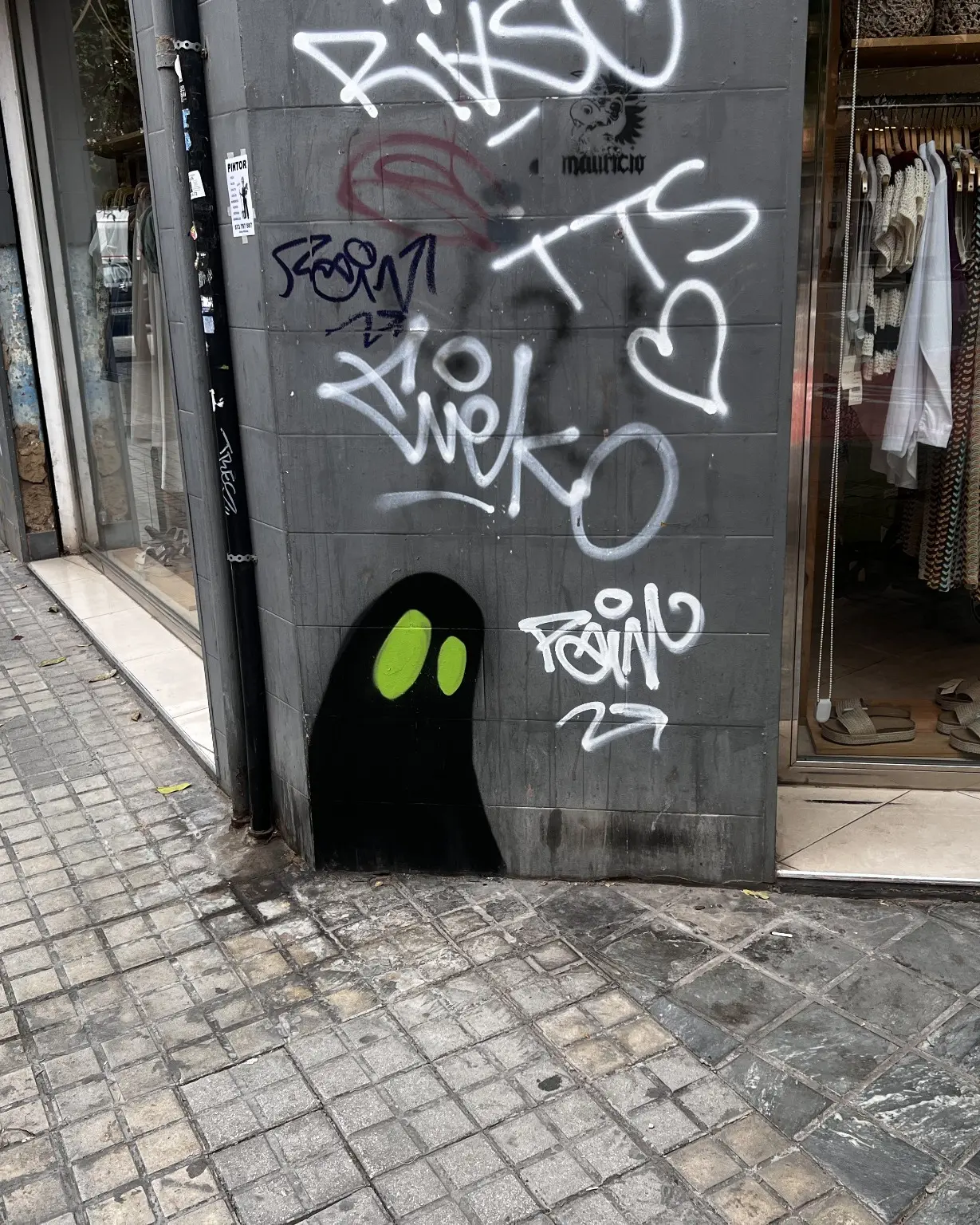 Work by La So0mbra · Official La So0mbra website
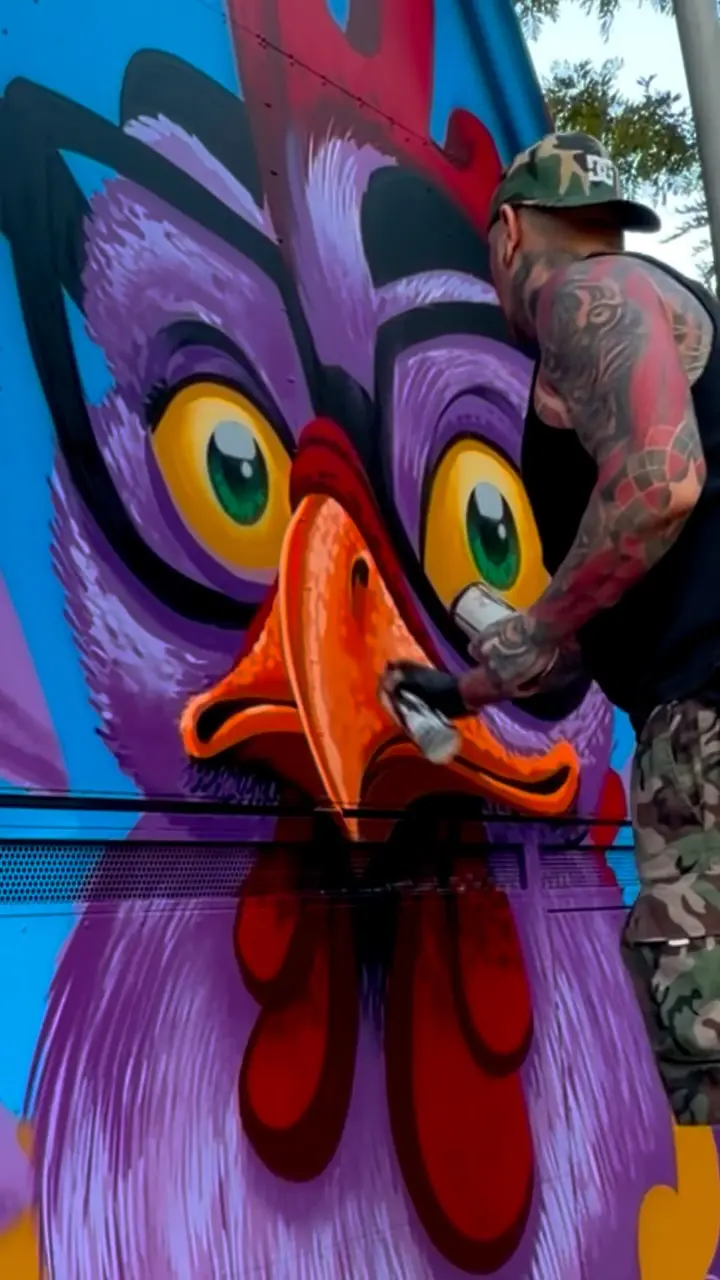 Work by Duke103 · Official Instagram · @elduke103
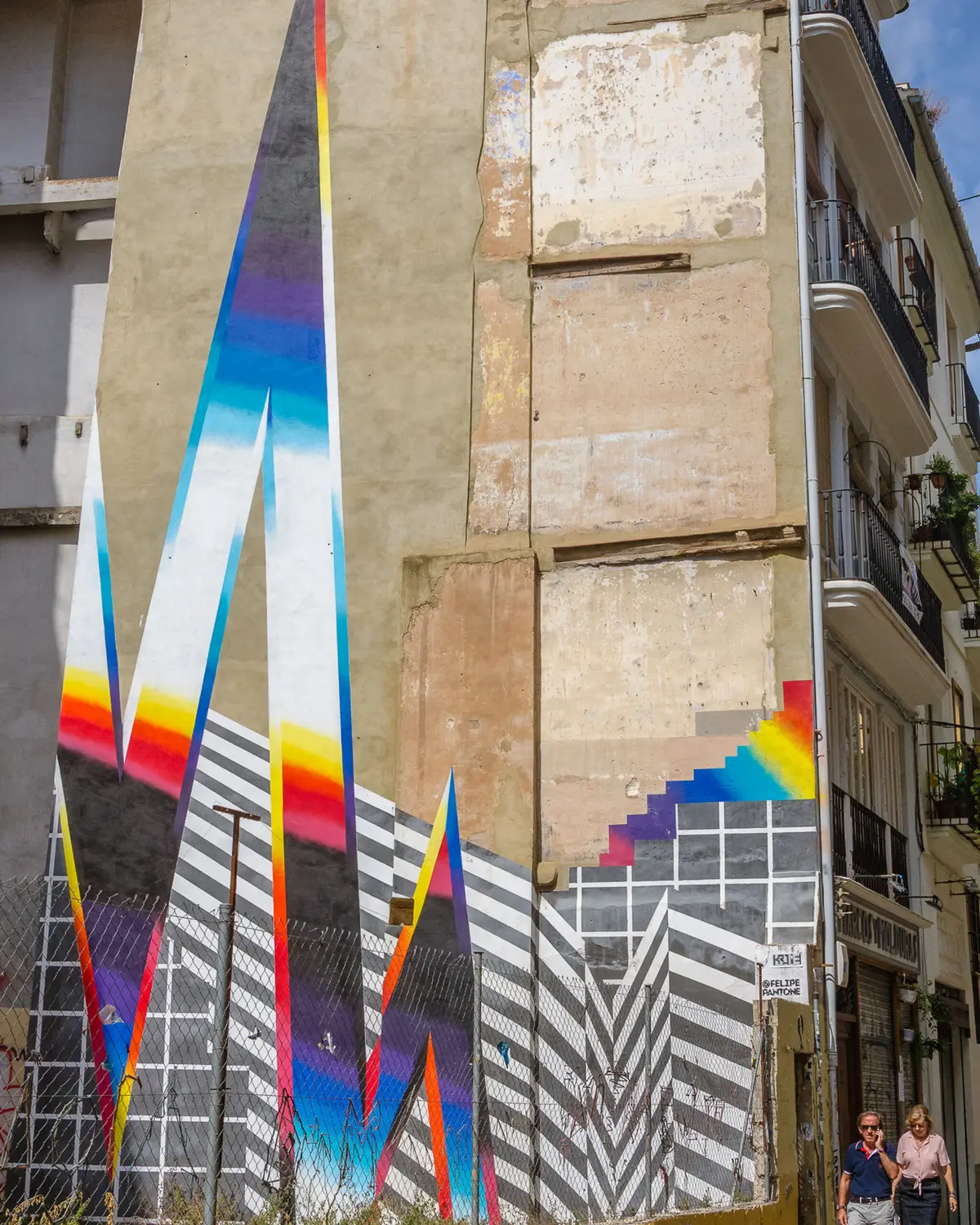 Work by Felipe Pantone · Street Art Cities
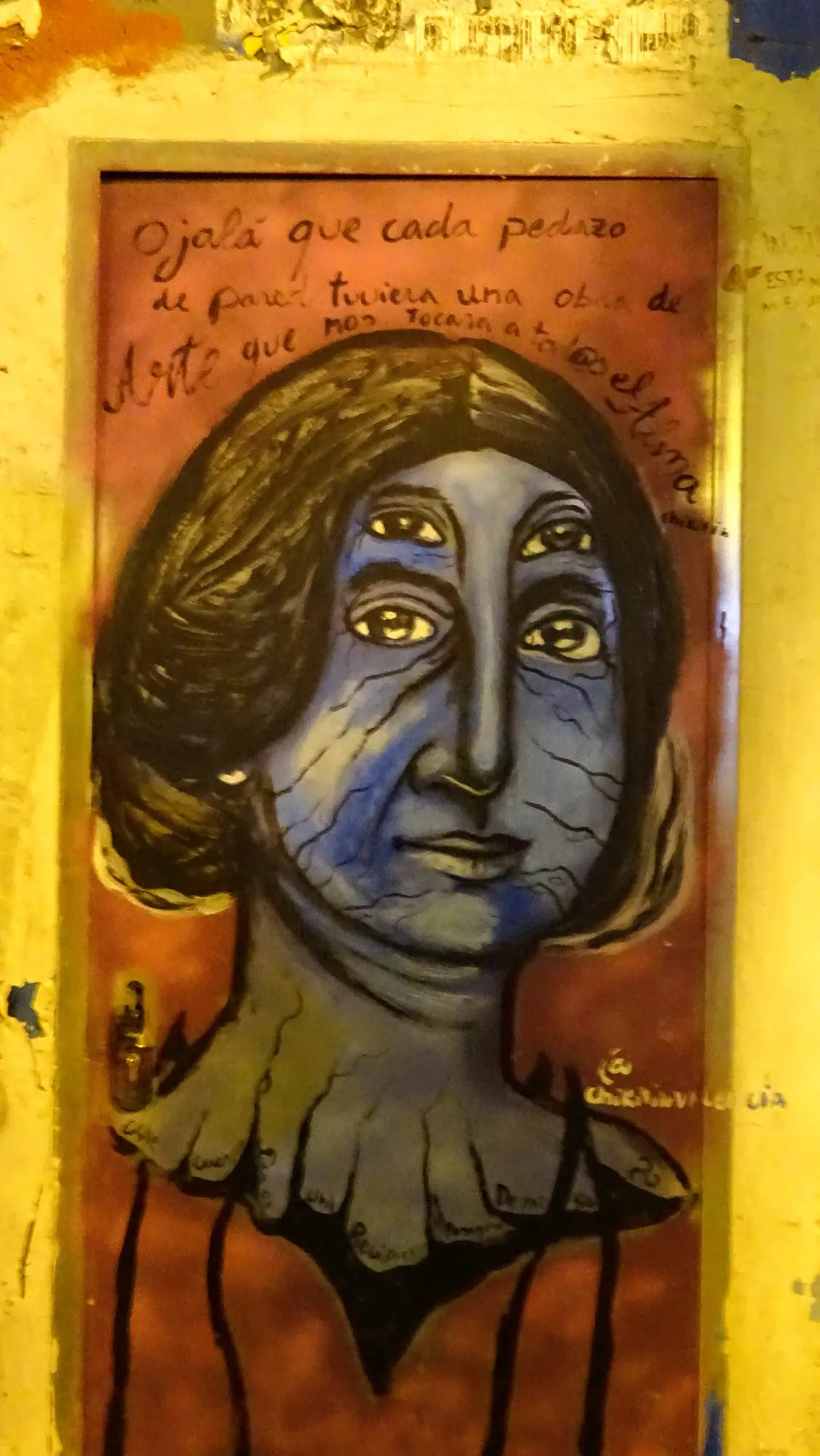 Work by Chikitín · Wikimedia CommonsWork by David de Limón · Wikimedia CommonsWork by Chikitín · Wikimedia Commons
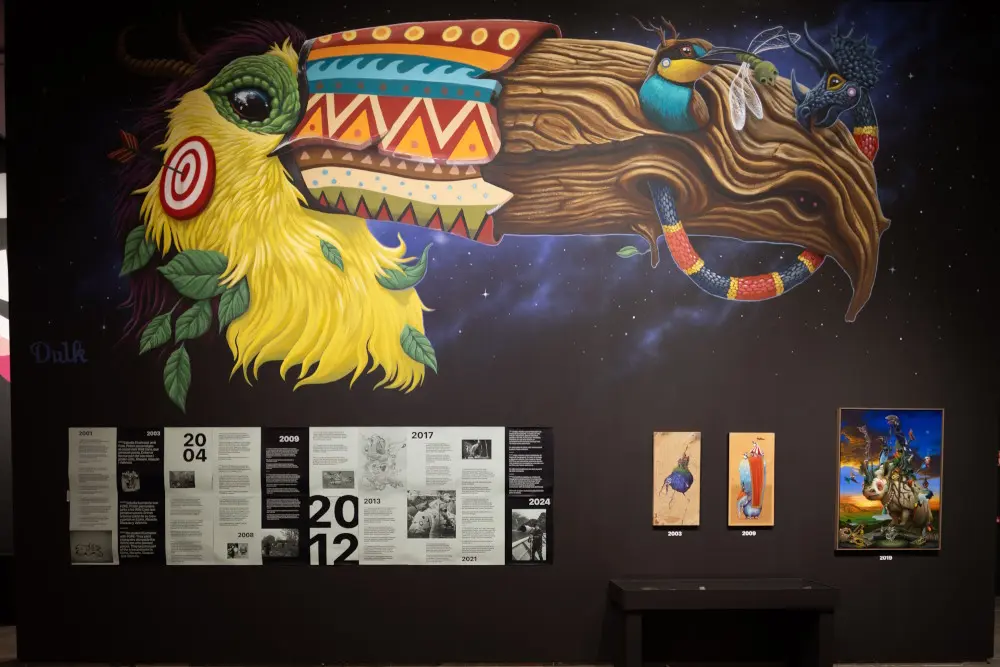 PRINCIPIOS: archive of Valencian urban art · Centre del Carme Cultura Contemporània
 Valencia Spain Street Art · Wikimedia Commons