One street can contain several visual languages
A walk through Valencia can place a tag, a painted character, a paper image and a large commissioned wall within a few minutes of one another. Calling all of them ‘graffiti’ hides important differences. Calling all of them ‘street art’ can do the same.
The useful question is not which label sounds more respectable. It is what the work is doing: is a writer developing a name through letters, is an image transferred through a cut stencil, was paper prepared elsewhere and pasted onto the wall, or does a composition respond to an entire façade? Technique, visual language, scale and context offer better clues than personal taste.
There is no universally accepted border. Street Art Museum Amsterdam describes the line between graffiti and street art as blurred, while URBAN NATION treats urban art as a broad field containing graffiti, street art, installations and other interventions. This guide therefore uses practical working definitions rather than claiming to settle the terminology.
Those definitions are lenses, not verdicts. A work can combine categories, and an artist can move between them without abandoning an earlier practice. The aim is to look more carefully and speak more precisely.
Graffiti writing: the name is the subject
Within graffiti culture, writing is the clearest starting point. The artist—or writer—develops a chosen name through repeated letterforms. The most basic form is the tag: a stylised signature made with paint, marker or another tool. Its speed does not make it accidental. Rhythm, pressure, proportion and the relationship between letters can take years to refine.
A throw-up is usually larger and quicker than a developed piece, often using rounded outlined letters and a restricted fill. A piece—short for ‘masterpiece’—is a more elaborate composition in which colour, outline, structure and depth can be worked in greater detail. These terms describe forms inside writing culture; they do not create a simple ladder from bad to good.
Lettering may be difficult for an unfamiliar viewer to read because readability is not always the only goal. Writers also respond to other writers, to the history of a name and to formal problems that become visible through repetition. A dense wildstyle can reward specialist knowledge in the same way that another artistic language rewards a trained eye.
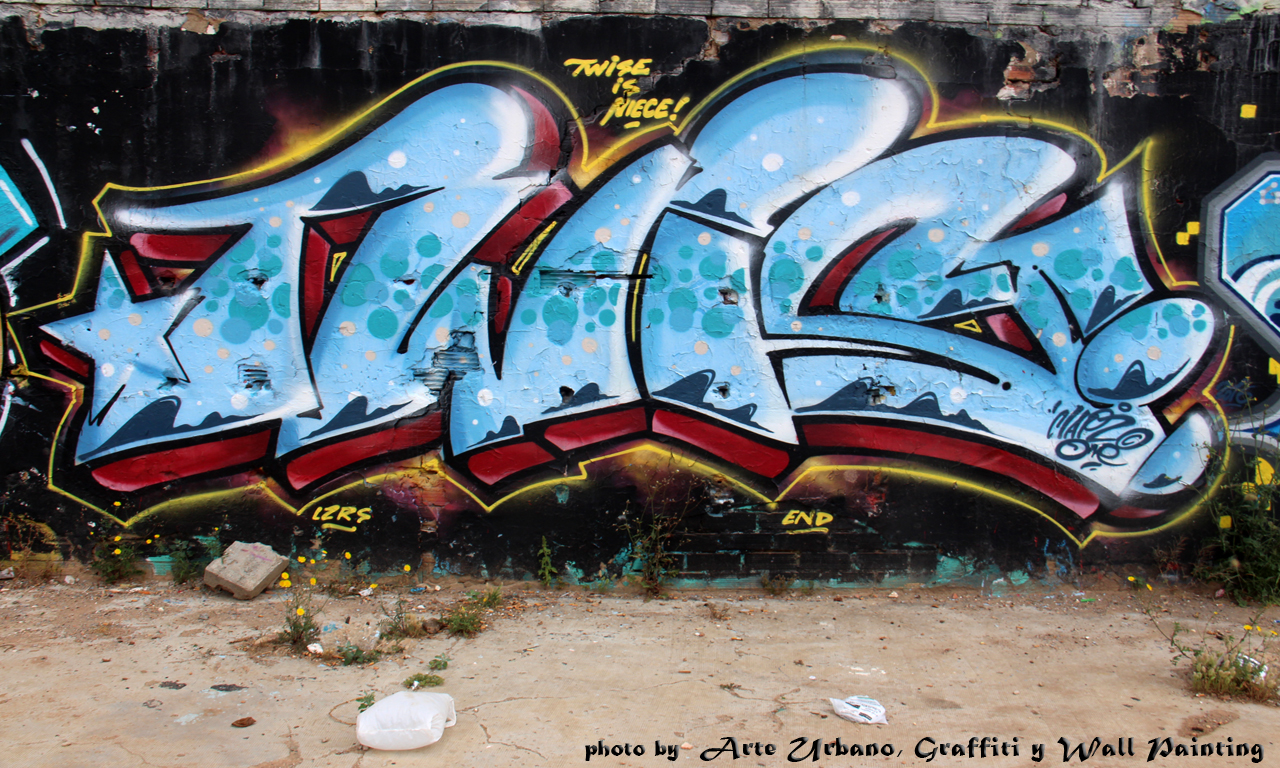
Clapas provides a Valencia-area example of a practice centred on letters. The documented Mislata photograph used here records pale-blue lettering on a dark wall. It is a dated example, not evidence that the same surface remains unchanged today.
 VSA / Archive image
Muralism: scale, architecture and a complete wall
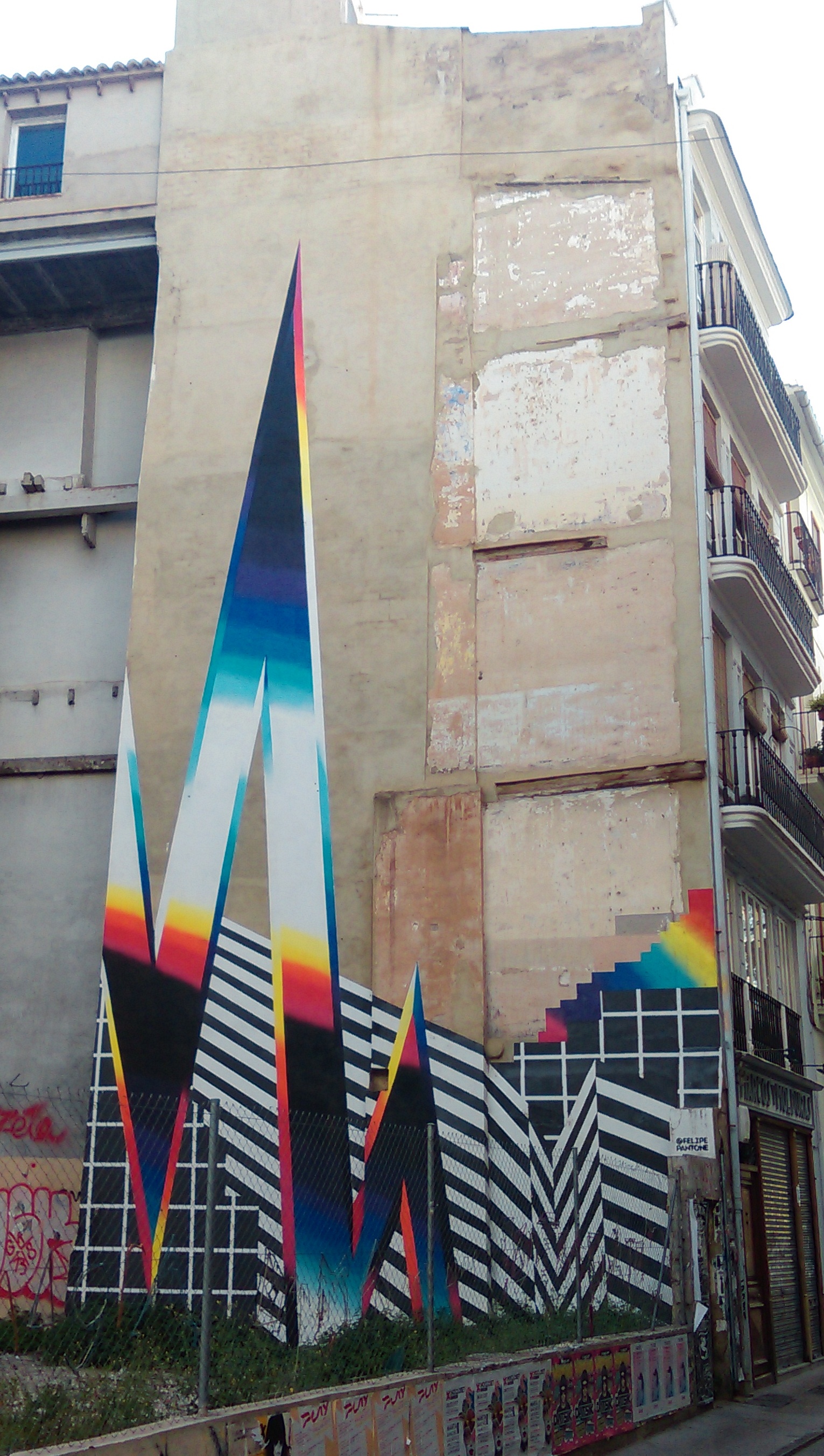
A mural is a large composition applied to a wall or ceiling, often conceived in relation to the architecture around it. Murals can be commissioned, community-led, institutional or unauthorised. The word identifies a format and relationship with a surface more reliably than it identifies the artist’s background.
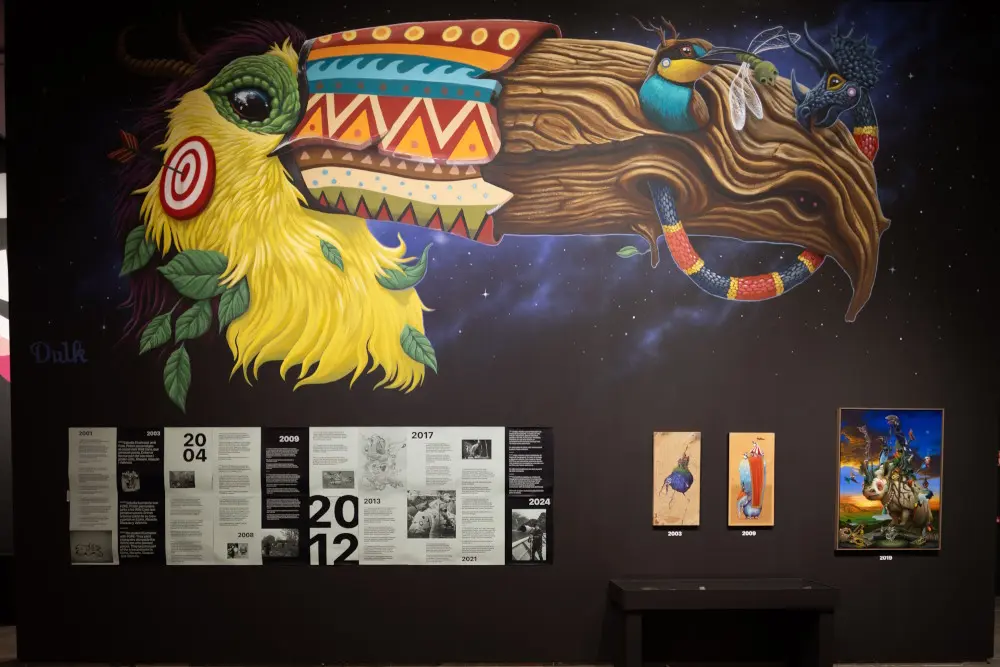
This distinction matters in Valencia. A large figurative wall produced for a festival may be muralism without being graffiti writing. A graffiti writer may also paint a mural while retaining letters, aerosol technique or references recognised within writing culture. PichiAvo’s work makes the overlap especially visible: classical figures and layers associated with graffiti coexist within large architectural compositions.
Permission alone does not solve the vocabulary. An authorised wall can contain graffiti writing; an unauthorised image is not automatically writing. Nor does size determine merit. A monumental wall can be conventional, while a compact letter piece can be formally inventive.
When reading a mural, step back before moving closer. Notice whether the composition uses windows, edges and viewing distance, then examine the marks and materials. Ask how much of the building has become part of the image.
 VSA / Archive image
Stencil: an image transferred through a cut template
A stencil is both a template and the image made through it. Open areas are cut into paper, card, plastic, metal or another thin material; pigment passes through those openings onto the surface below. More than one template can be layered to add colours or details.
The method makes repetition possible, but repeated does not mean identical. Paint density, alignment, surface texture and deterioration change each impression. A stencil can carry a portrait, symbol, sentence or political message, and it may be used within either street-art or graffiti contexts.
Look for hard-edged shapes, small bridges that keep enclosed areas attached to the template, and repeated versions of the same design. These are useful clues, not absolute proof: a hand-painted image can imitate stencil edges, and a complex stencil may conceal the mechanics of its making.
Do not assume that speed of installation means lack of preparation. Cutting a detailed template and planning several layers may require substantial studio time before the image reaches the street.
Paste-ups and stickers: work prepared before it reaches the wall
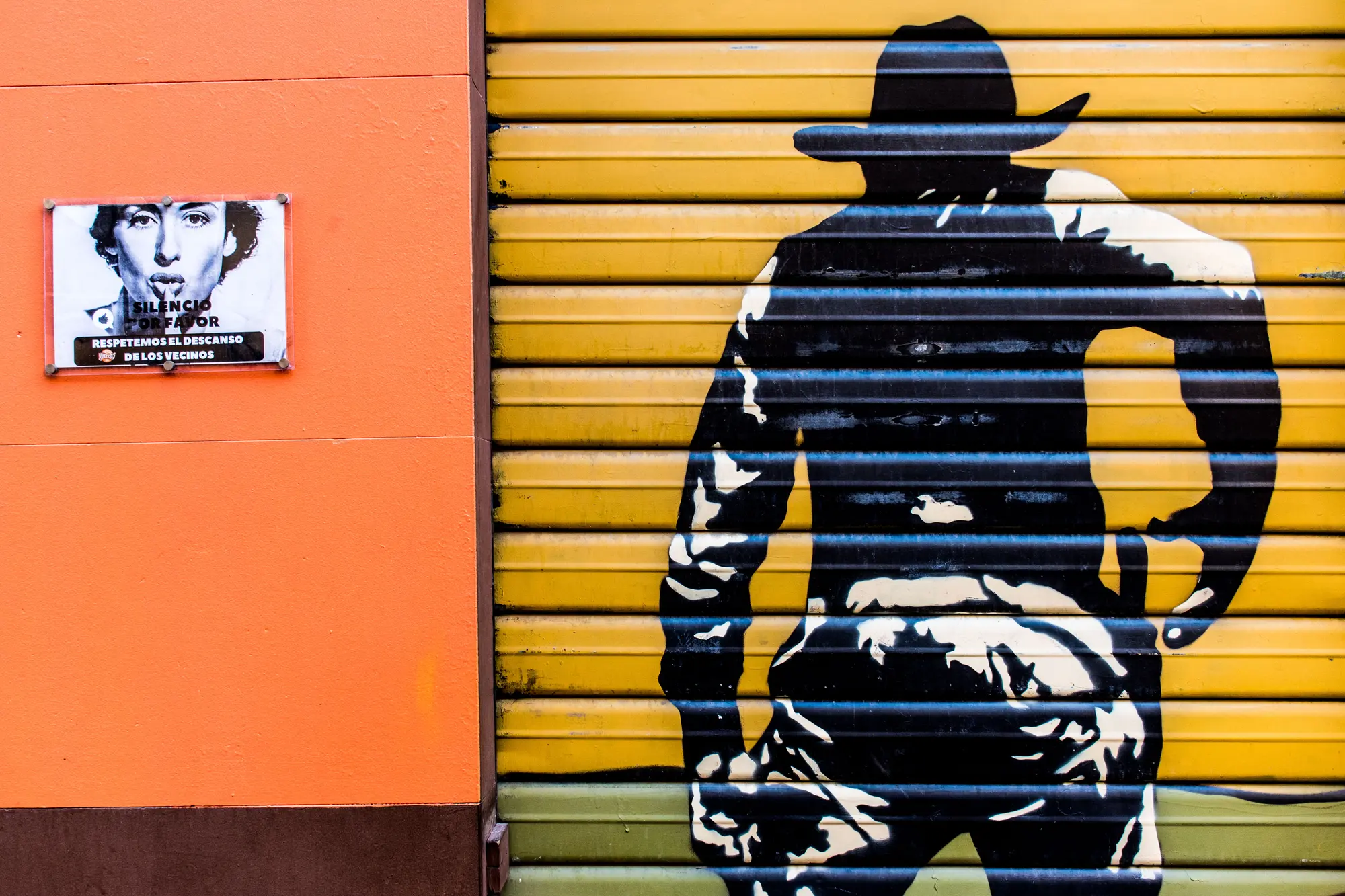
A paste-up is an image on paper that is attached to a public surface with paste or adhesive. It may be drawn, painted, printed, screen-printed or made with a stencil before installation. The paper edge is often the simplest clue, especially once weather exposes folds, tears or overlapping layers.
Stickers work at a smaller and more portable scale. They can carry a writer’s name, a character, a logo-like symbol, a hand drawing or a printed image. Some are unique; others circulate in large numbers. Their repetition can build recognition across distant streets without requiring the same surface or viewing distance as a painted piece.
Paper and adhesive create a different relationship with time. Edges lift, colours fade and later posters cover earlier ones. That fragility is not a defect to be corrected in the record. A photograph documents one moment in a layered surface, not a guarantee that the work will survive.
Paste-up and sticker are descriptions of technique or format, not proof of permission or intention. A commercial sticker and an artist’s intervention may share adhesive while serving completely different purposes. Context remains essential.
Characters: recognition through a returning figure
A character is a recurring or distinctive figure: a face, animal, masked body, invented creature or compact graphic personality. Characters can be painted freehand, cut as stencils, printed as paste-ups or combined with lettering. They are therefore a visual language rather than one technique.
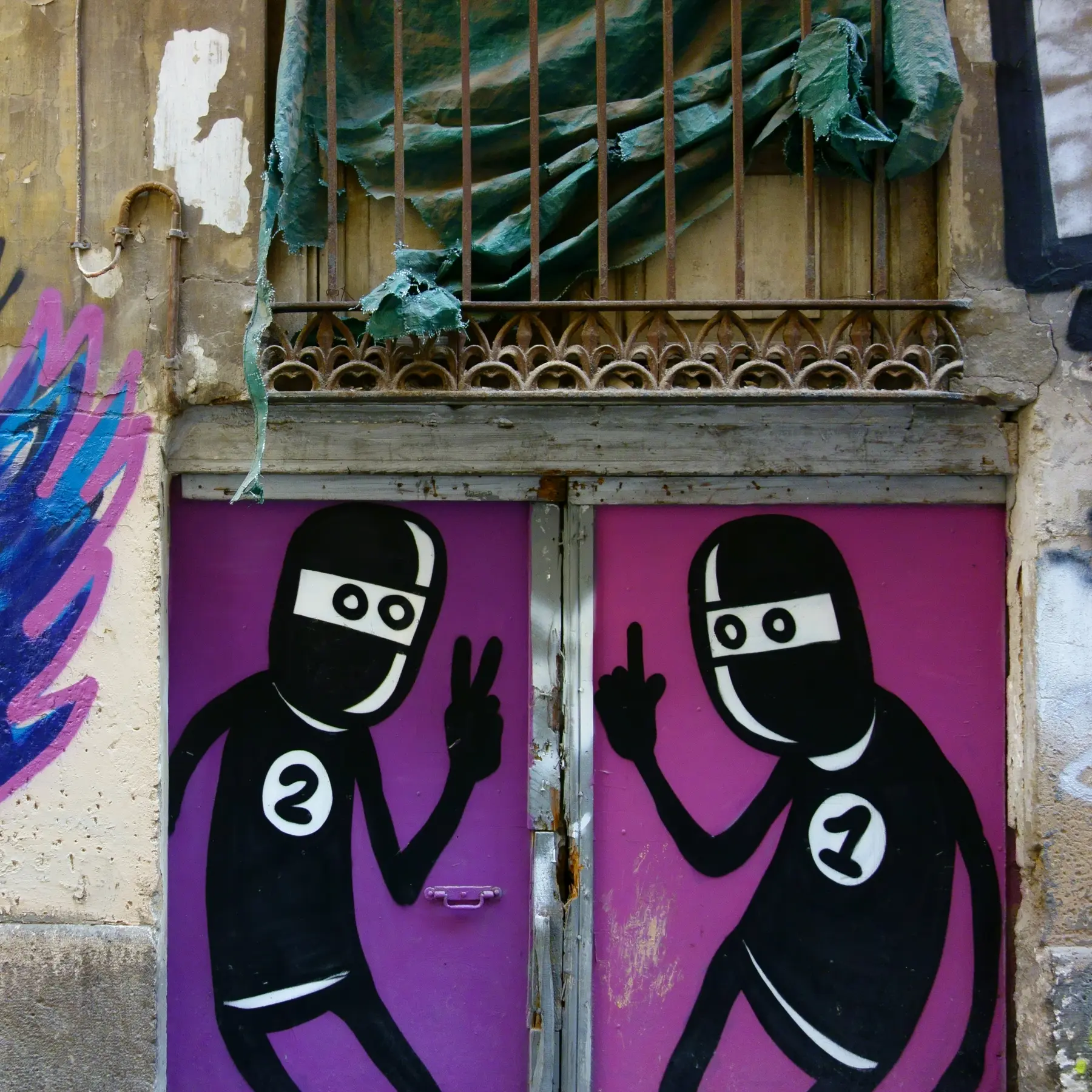
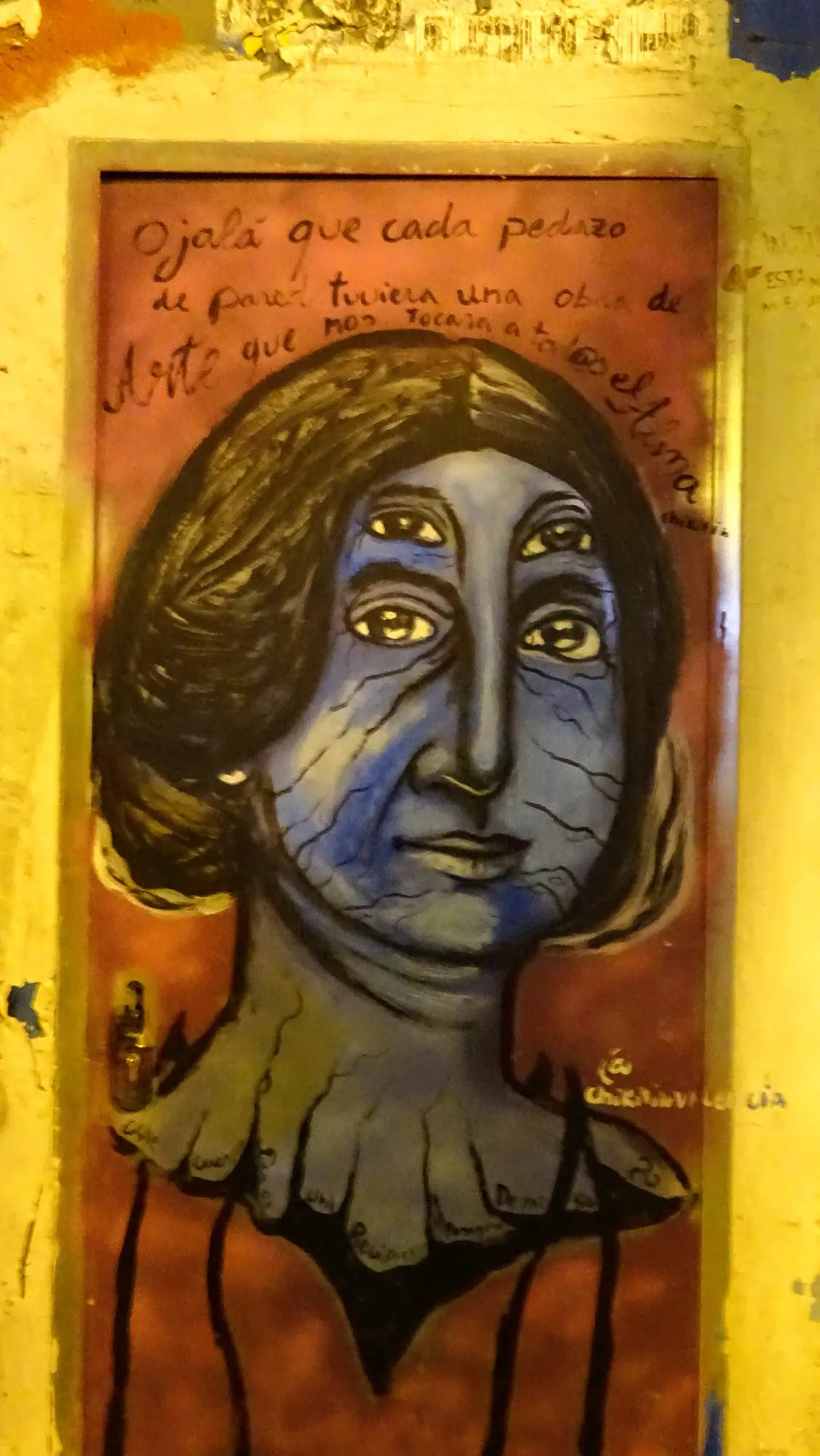
Valencia offers many documented examples. David de Limón moved from the tag LIMÓN and a lemon-slice emblem towards the masked figure for which he is widely recognised. Chikitín uses multiplied eyes across pasted and painted faces. Repetition helps viewers connect separate surfaces without needing to read a written name.
That accessibility should not be mistaken for simplicity. A recurring figure has to remain recognisable while adapting to doors, shutters, corners and different scales. The support can become part of the pose or expression. In the Chikitín image used as this article’s cover, a weathered doorway is not a neutral background; it helps shape the encounter.
Characters did not replace letters in Valencia. Both remain active, sometimes in the same composition or artist’s practice. The most accurate reading allows them to coexist rather than turning the history into a progression from writing towards pictures.
 VSA / Archive image
Small interventions widen the field beyond paint
Not every street intervention is painted or pasted. Wood, ceramic, mosaic, cork, cast objects and found materials can be attached to architecture or placed in dialogue with it. ‘Urban art’ is often useful as a broad term for this wider field, particularly when an object does not fit comfortably inside graffiti writing or muralism.
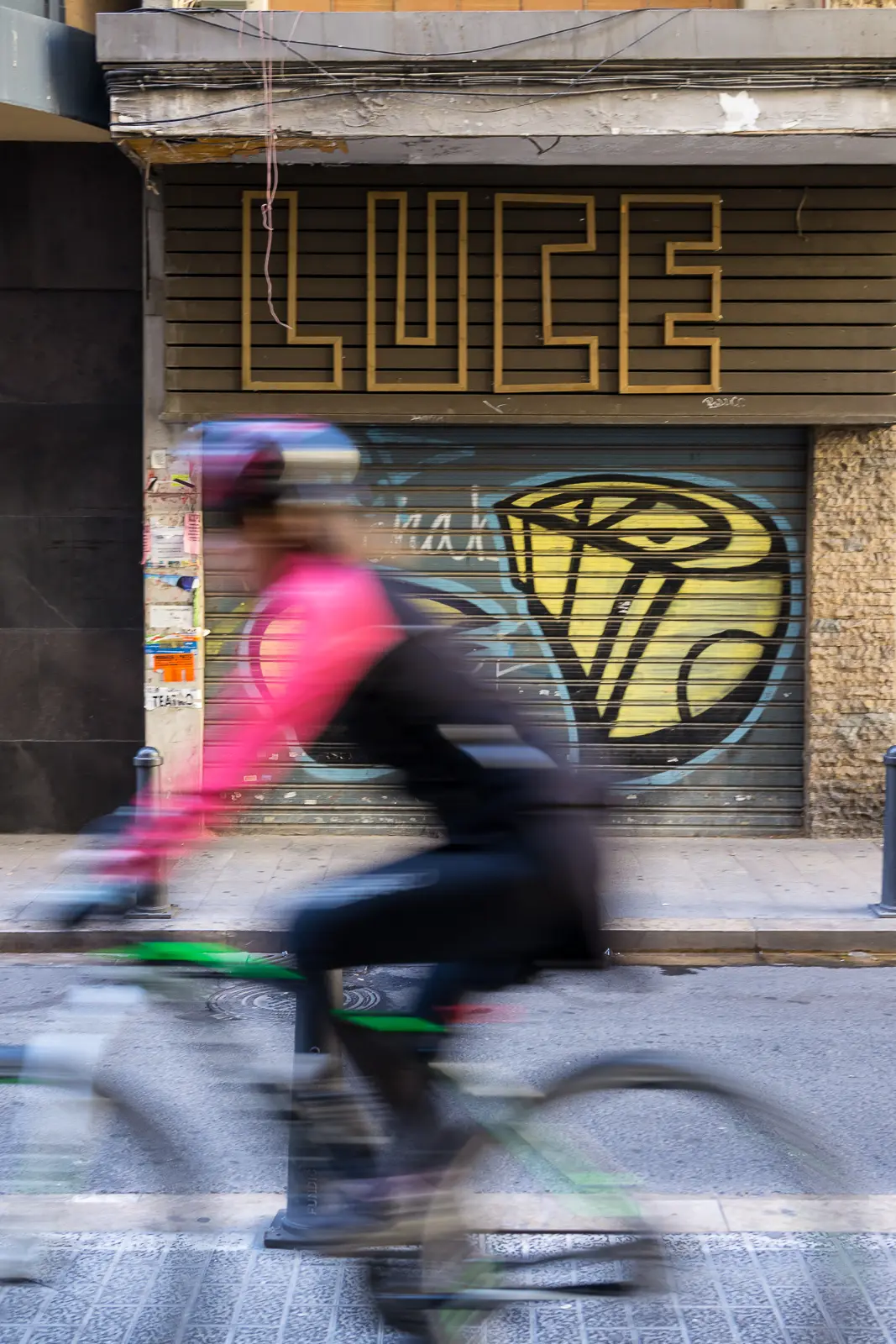
LUCE offers a documented local example through typography, walking and found materials. Small letters positioned above a street can redirect attention without behaving like a painted tag, a paper paste-up or a mural. The word, object and location work together.
Material changes how you should look. Move carefully around a three-dimensional object to understand its depth, but do not touch or remove it. Keep the surrounding architecture in the photograph so that the intervention is not separated from the place that gives it meaning.
Our guide to hidden street art in Valencia develops this closer way of looking. The category is broad because the practices are broad; precision comes from describing what is visible rather than forcing every object into a familiar label.
 VSA / Archive image
Permission, legality and quality are separate questions
Technique does not tell you whether permission was granted. A mural may be commissioned or unauthorised; a tag may appear on a legal wall; a paste-up may be installed with or without consent. Unless reliable documentation exists, describe the form without inventing its legal status.
Legality also does not provide an automatic measure of artistic quality. An authorised project can be ambitious or routine. An unauthorised mark can be formally accomplished while still creating conflict or damage. A responsible field guide can acknowledge both the visual culture and the rights of residents and property owners.
The same separation applies to labels. ‘Street art’ should not be used as praise and ‘graffiti’ as criticism. Graffiti writing has its own history, codes and formal achievements. Muralism, stencil work and character-led street art ask different questions; none needs to be presented as the mature version of another.
When attribution is uncertain, stop at description. A familiar colour or motif can suggest a comparison, but it does not prove authorship. Consult the artist directory and our guide to identifying work without guessing before attaching a name.
A six-question field method for Valencia
First, identify the main subject: a name, an image, a repeated character, a pattern or the architecture itself. Second, inspect the edge: sprayed softness, a cut stencil line, a paper seam, a sticker border or a projecting object can reveal how the work was made.
Third, change distance. Letter structure may become clearer from across the street; a paste-up’s fibres or a mosaic’s fragments appear only close up. Fourth, notice repetition. A recurring alias or figure may connect the work to a broader practice, but repetition alone still does not prove attribution.
Fifth, separate evidence from inference. Record the street and date, photograph the wider setting, and treat old images as historical records. Sixth, respect the place: remain in public space, keep doorways clear, avoid photographing residents as scenery and never damage a surface to obtain a better view.
Begin in El Carme if you want several languages in a compact walk, or compare it with the maritime fabric of Cabanyal–Canyamelar. Use the Valencia street-art map for orientation, then allow the street itself to challenge the categories in this guide.
Use the label to look harder, not to end the conversation
Graffiti writing foregrounds names and letters. Muralism works through large architectural surfaces. Stencils transfer an image through a cut template; paste-ups and stickers arrive as prepared material; characters build recognition through a returning figure. Street art and urban art gather many of these practices into broader, contested fields.
The boundaries remain porous because artists, tools and streets are porous. One work may combine letters, a character and a paste-up; one artist may move between tags, studio painting and commissioned walls. Classification is most useful when it makes those relationships visible.
Valencia rewards this patient reading. Instead of asking whether every surface is ‘art’ or ‘graffiti’ in the abstract, begin with what you can see, describe the technique carefully and leave room for uncertainty. The street becomes more interesting when its differences are preserved.
Field note: Read the form before judging the label: distinguish writing, murals, stencils, pasted material, stickers, characters and objects, then separate technique from permission and attribution.
Method and sources
- URBAN NATION Museum for Urban Contemporary Art: URBAN NATION museum glossary: graffiti, writing, murals and street-art techniques (opens in a new tab)
- Street Art Museum Amsterdam: Art & Terminology: What is the Street Art movement? (opens in a new tab)
- Art Crimes: The Words: A Graffiti Glossary (opens in a new tab)
- 1088press / Bologna University Press: Graffiti in China — glossary (opens in a new tab)
- David de Limón: David de Limón official website (opens in a new tab)
- L'Art Urbà: Photographic record of Clapas graffiti in Mislata (opens in a new tab)
- PichiAvo: Bacchus mural in Valencia (opens in a new tab)
- ProjecteSD: LUCE artist profile (opens in a new tab)
- Street Artwork: Chikitín artist profile (opens in a new tab)
- Valencia Street Art: Valencia Street Art editorial policy
Related reading
Continue exploring
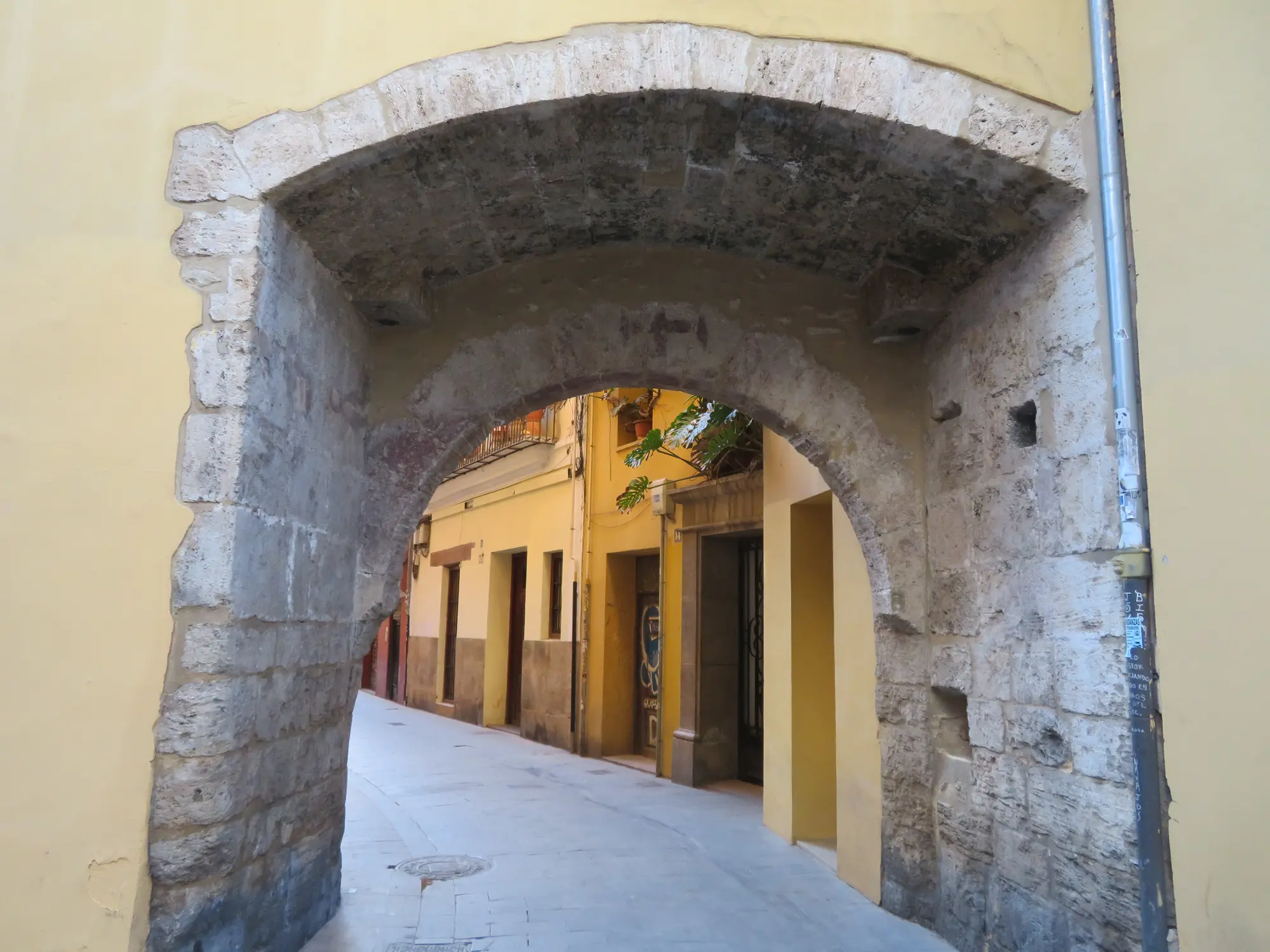 Portal de la Valldigna, El Carme · Wikimedia Commons
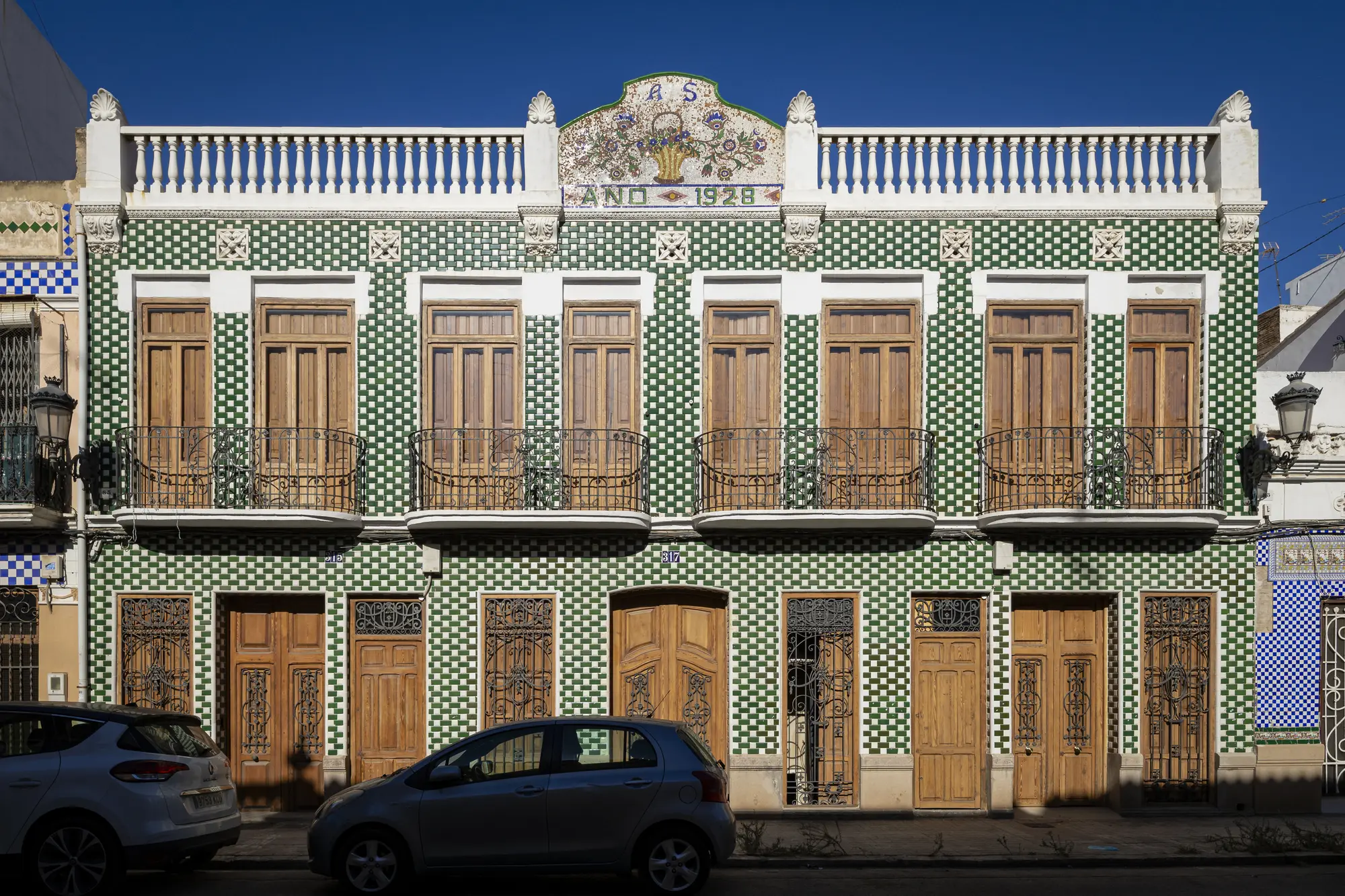 Les Casetes del Gerro, Cabanyal–Canyamelar · Wikimedia Commons
 Work by David de Limón · Official David de Limón website
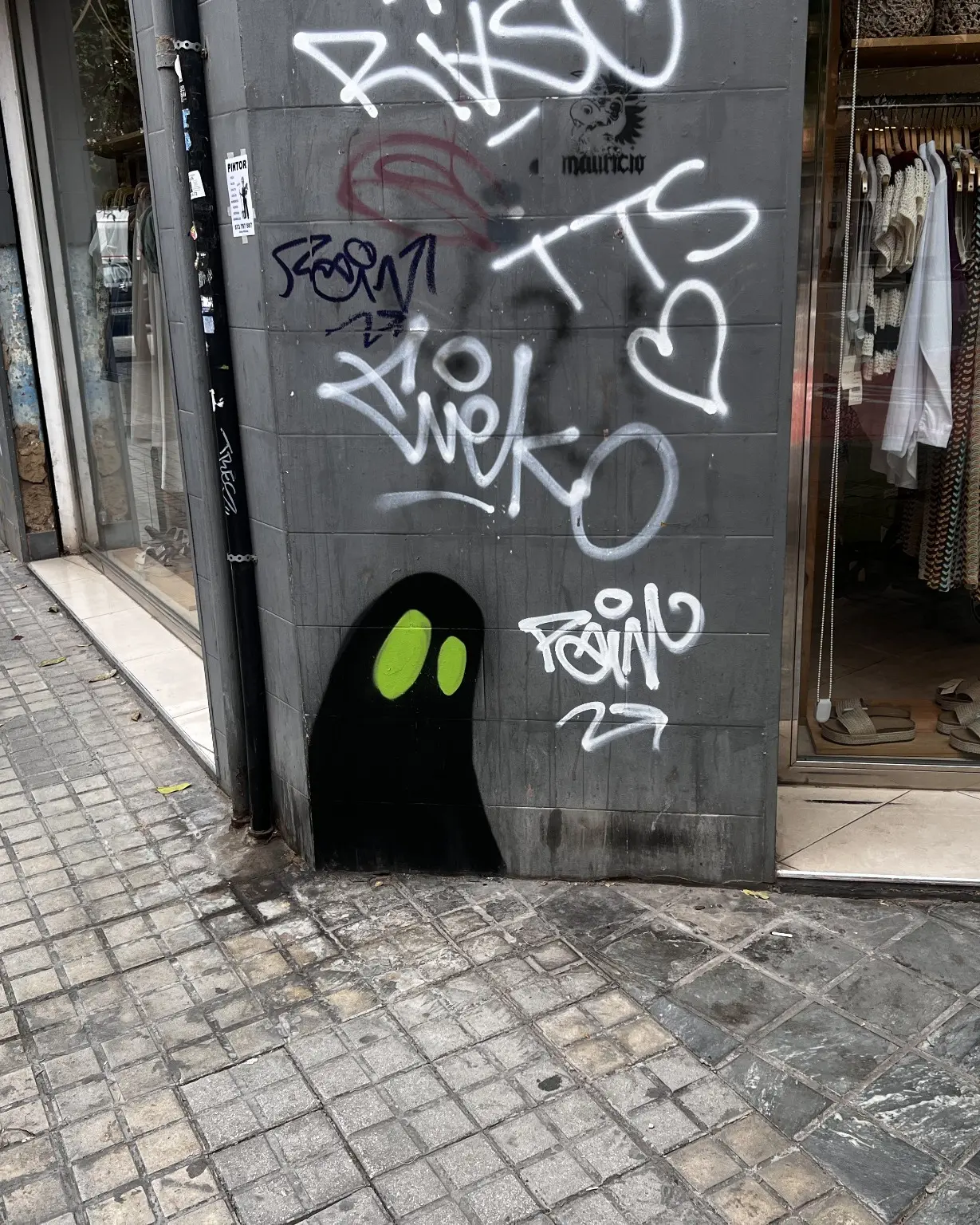 Work by La So0mbra · Official La So0mbra websiteWork by Clapas · L’Art Urbà / @photojo53
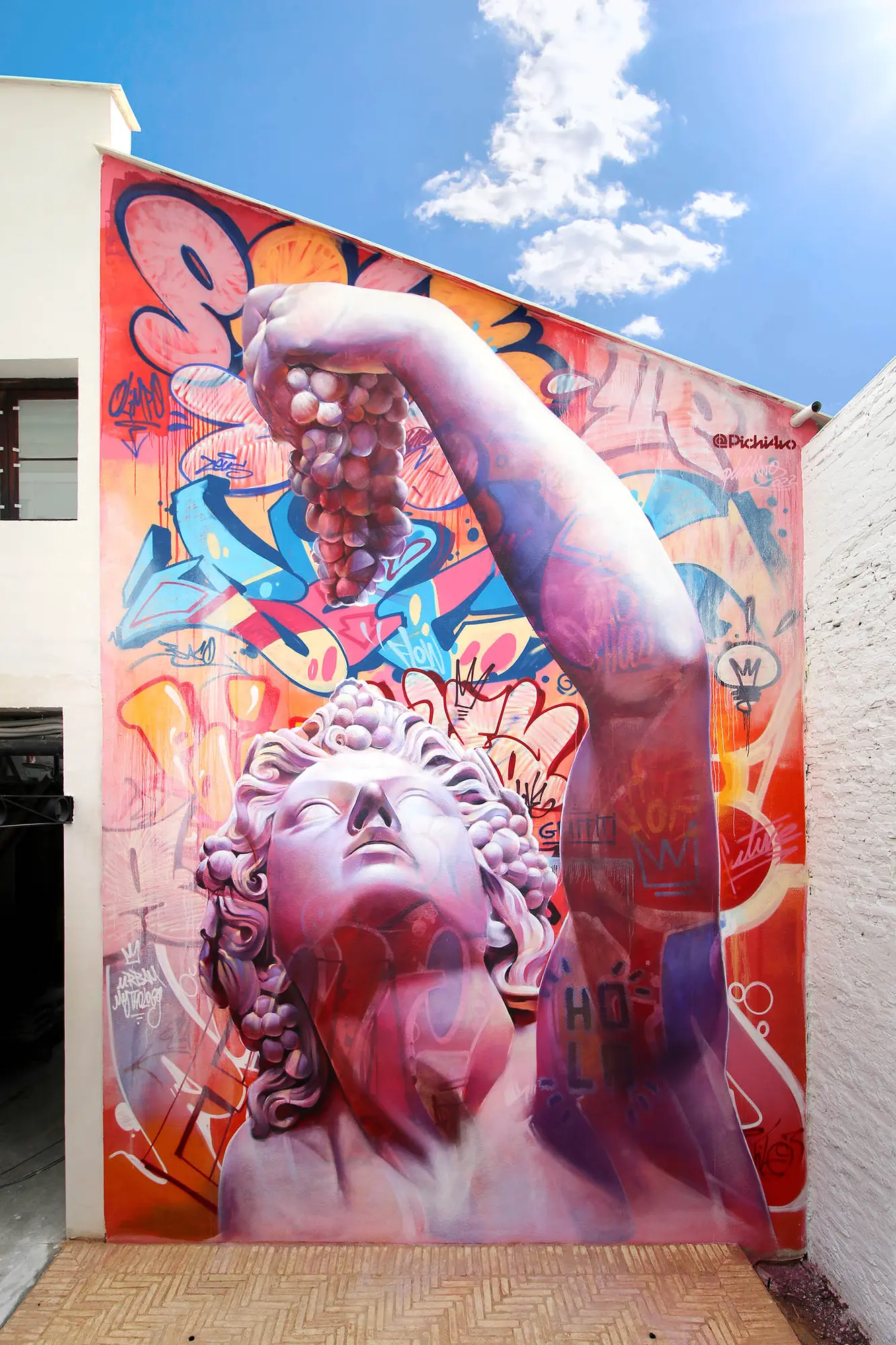 Work by PichiAvo · Official PichiAvo portfolioWork by LUCE · Wikimedia Commons
 Work by Chikitín · Wikimedia CommonsPortal de la Valldigna, El Carme · Wikimedia Commons
 Don’t shoot. People are sleeping! · Wikimedia Commons
 PRINCIPIOS: archive of Valencian urban art · Centre del Carme Cultura ContemporàniaDon’t shoot. People are sleeping! · Wikimedia Commons