The magic of small street art
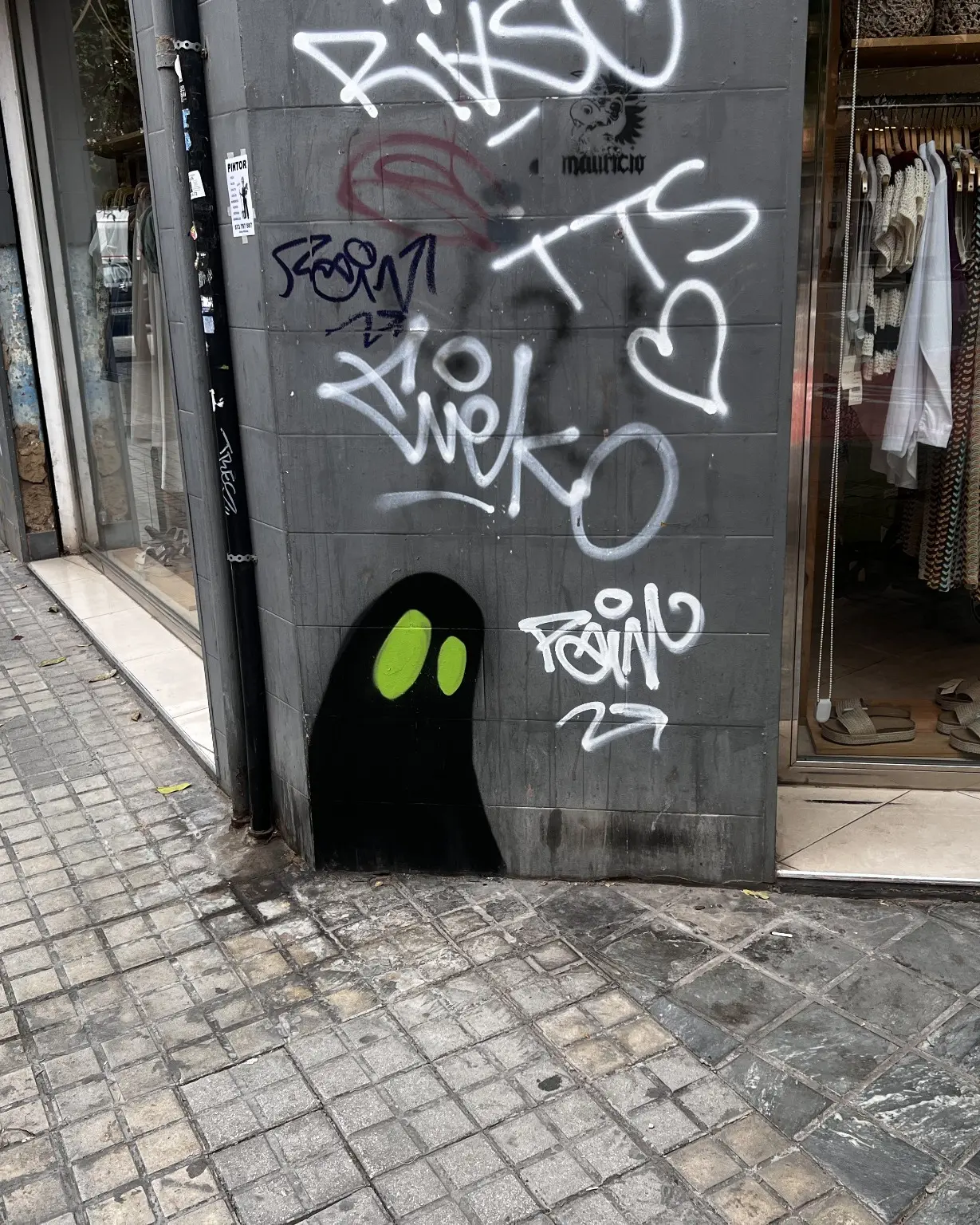
The magic is in the detail. That is the starting point for this guide, drawn from the local observations behind Valencia Street Art. A tiny intervention may attract almost no attention at first and still contain hours of making, a precise visual idea and a carefully chosen relationship with its surroundings.
Large murals can announce themselves from across a square. Smaller works ask for a different distance. You notice an unfamiliar texture, a shape projecting from a wall or a fragment that does not quite belong to the building. Moving closer changes the encounter: the thing you almost walked past becomes the reason to stop.
In El Carmen, within Ciutat Vella, this attentive way of looking adds another layer to a walk. The point is not to collect the largest number of photographs. It is to notice how a modest addition can change the meaning of an ordinary surface.
Creative freedom beyond large murals
Small does not mean quick or simple. Some techniques allow much of the work to happen at home or in a studio, before a piece meets the street. A paste-up, for example, can be drawn, painted or printed in advance. Its composition can develop over time rather than being completed entirely at the place of installation.
Reliefs and small sculptures involve a different set of decisions: material, depth, weight, assembly and the way an object will sit against its support. Preparation and installation are distinct stages, and the location can alter how the finished work is understood.
These possibilities do not describe every artist or every technique. Nor does an informal appearance tell us whether permission was obtained. What matters here is the room that certain processes offer for patient experimentation, even when the final work occupies very little space.
When street art becomes part of the architecture
A recess can become a frame; an edge can turn into a stage. With small urban interventions, the building sometimes contributes to the image as actively as the material placed on it. Look at the work and its support together: why this gap, this height or this change in the wall?
The local observations that prompted this article describe ceramic fragments used to suggest miniature doorways and cat-like presences inside architectural openings. The attraction is the shift in perception: a detail previously read as damage or empty space begins to suggest an imaginary interior.
A documented counterpart is Will Coles’s sculpture captioned “Hola! in Valencia” in his own street portfolio. Its photograph shows a small sculptural head set into a wall opening. The surrounding edges help frame the encounter. That image records a particular installation; it does not establish that it remains there today.
Three approaches to Valencia’s smallest spaces
Mosaic, cast sculpture and cork relief offer different ways to bring a small object into conversation with the street. Their materials and preparation matter as much as their scale.
Verdejo Mosaic — ceramic micro-worlds
The local account of Verdejo Mosaic describes ceramic interventions that begin with small architectural opportunities: an opening in a façade, a gap with an unexpected depth, or an overlooked corner. Fragments are brought together to suggest another world inside the existing one.
In these observations, tiny doors seem to lead somewhere beyond the wall, while cat-like forms become apparent only when a passer-by approaches. The building is more than a backdrop. Its opening supplies the threshold, and the work changes what that threshold appears to contain.
This is the kind of detail that rewards a second look. First you see the surface; then you recognise a scene. The transformation depends on the relationship between the ceramic composition and its setting, rather than on size alone.
Will Coles — sculpture hiding in plain sight
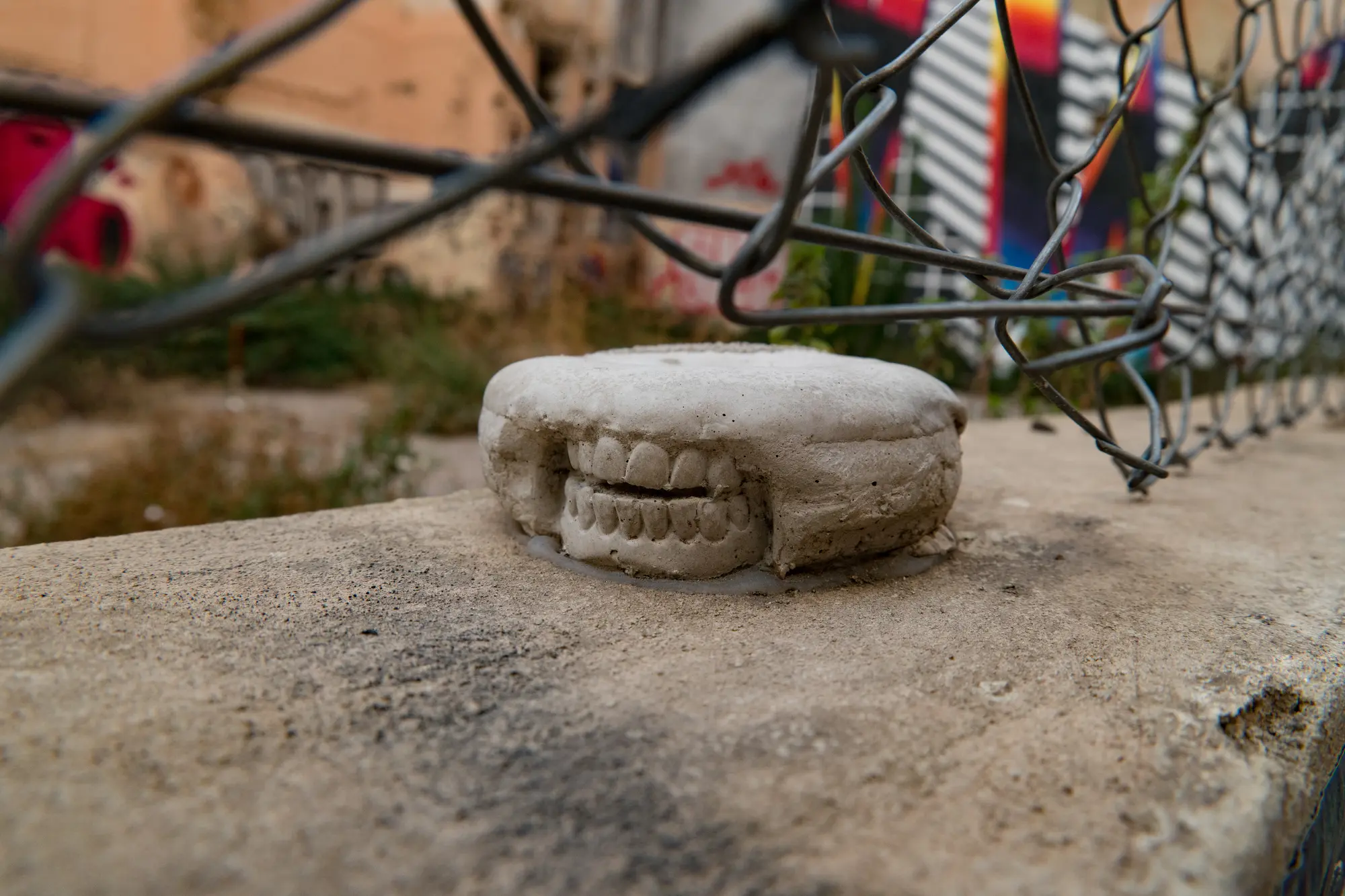
Will Coles, whose official website links the account @mrwillcoles, brings sculpture into everyday public space. His artist statement describes concrete casts of familiar objects, often carrying words that disturb their apparently ordinary meaning.
That material distinction matters: his street practice should not be described generally as ceramic. Cast form, surface and language work together, drawing attention to subjects including consumerism and environmental destruction.
A small three-dimensional work also changes how you look. Approach from another angle and its depth becomes clearer; stand back and it returns to the surrounding street. His documented Valencia installation offers a useful example of how an object can feel both inconspicuous and unexpectedly present.
BikeDeSuro — cork bicycles with an environmental message
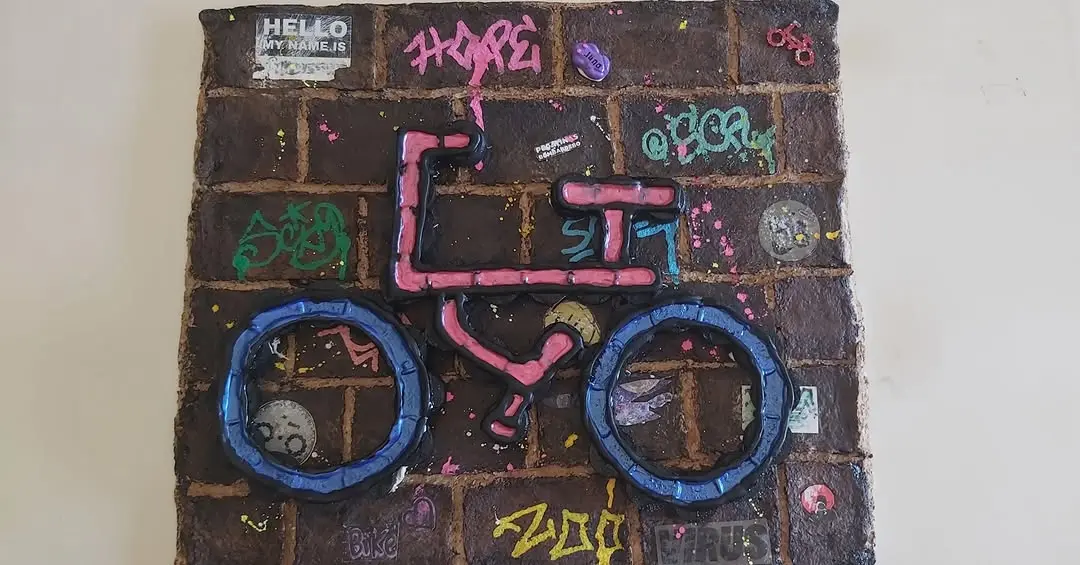
BikeDeSuro makes small bicycle reliefs from reused wine corks. In an interview with UP Magazine, the artist describes preparation, slicing, drying and careful assembly: a patient process behind an object that a passer-by might notice only briefly.
The material is part of the message. A familiar discarded object becomes the structure of a bicycle, connecting creative reuse with cycling culture. FestIN’s account of the artist’s work explicitly identifies sustainability and care for the environment as its aims.
Look for the relationship between texture and form. Recognising a bicycle is the first moment; noticing what it is made from is the second. The ecological idea is carried by the material transformation as well as by the subject.
El Carmen: discovering street art in unexpected places
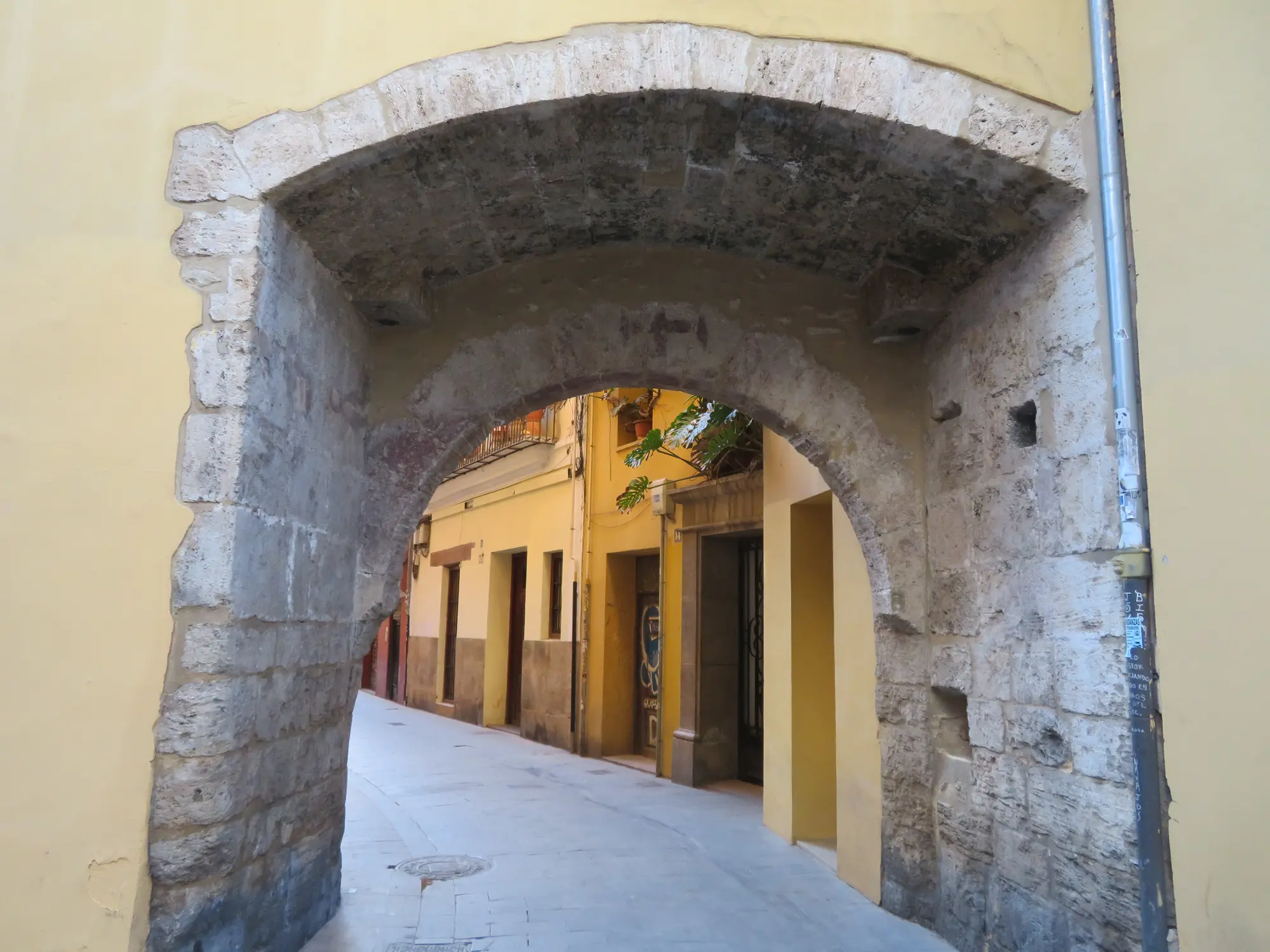
El Carmen, also known as El Carme, provides the setting for this way of exploring Valencia. Within the historic district of Ciutat Vella, its streets bring architecture and small interventions into close view. The neighbourhood guide offers orientation; this article offers a way of paying attention.
Allow yourself to leave the busiest pedestrian line and look along quieter public streets. Notice the space around doorways, changes in texture and the edges between architectural elements. Some discoveries sit near eye level; others require you to look higher or lower. There is no reliable rule that every work will occupy the same kind of place.
This is a neighbourhood where people live and work. Keep entrances clear, stay in public space and give other pedestrians room. A good encounter does not require touching a fragile object or stepping into a private opening to obtain a photograph.
The changing life of small urban interventions
Small street art can disappear, weather, be removed or remain in place for years. Neither fragility nor durability should be assumed from scale alone. The material, position and life of the building all contribute to what survives.
An old photograph is evidence of an encounter at a particular time. It is not a promise of what you will find on your walk. Coles’s own account of sculptures being taken from public space is one reminder that disappearance can have several causes.
This changing character gives each visit its own possibilities. Someone may notice a work you passed without seeing; you may find an addition absent from their photographs. The value of a walk is not diminished because it fails to reproduce someone else’s collection.
How to discover Valencia’s hidden street art
Begin with the neighbourhood map, then slow down enough for a few details to interrupt your plan. Look at one stretch of wall from more than one distance. Ask what the material contributes and whether the architecture is doing part of the storytelling.
When you photograph a work, take a wider view as well as a detail so its relationship with the street remains visible. Record when you saw it. Use the artist directory to explore documented practices, and resist attaching a name solely because a piece resembles another artist’s work.
The most memorable discovery may be a doorway that appears to open into an imaginary room, a sculpture that briefly unsettles an ordinary wall, or a bicycle made from something once thrown away. Leave time for that possibility. Valencia’s smaller interventions reward curiosity, and the magic often begins with the detail you almost missed.
Field note: Look closely, keep the work in its architectural context and treat dated documentation as a record, not a guarantee of what survives.
Method and sources
- Verdejo Mosaic: Verdejo Mosaic: official biography (opens in a new tab)
- Verdejo Mosaic: Verdejo Mosaic: official portfolio and materials (opens in a new tab)
- Will Coles: Will Coles: artist statement and materials (opens in a new tab)
- Will Coles: Will Coles: official website and @mrwillcoles account (opens in a new tab)
- Will Coles: Will Coles: street portfolio, including Hola! in Valencia (opens in a new tab)
- Ajuntament de València: Official El Carme neighbourhood map (opens in a new tab)
- UP Magazine: Bike de Suro interview and project profile (opens in a new tab)
- FestIN Valencia: Bike de Suro recycled-cork urban-art exhibition (opens in a new tab)
- Valencia Street Art: Valencia Street Art editorial policy
Related reading