Start with context
Read the area page before setting out. It explains the kinds of surfaces and visual languages worth noticing without promising a fixed list of works.
On the ground
This Valencia street art map is an editorial starting point, not a fixed inventory. Choose a neighbourhood, open its verified guide and expect the street to have changed since the last review.
Interactive orientation
Choose a starting area, compare the character of each walk and open a stable landmark in OpenStreetMap. Individual works may have changed since review.
Markers identify stable starting areas, not the exact position of temporary artworks. Open each guide before visiting.
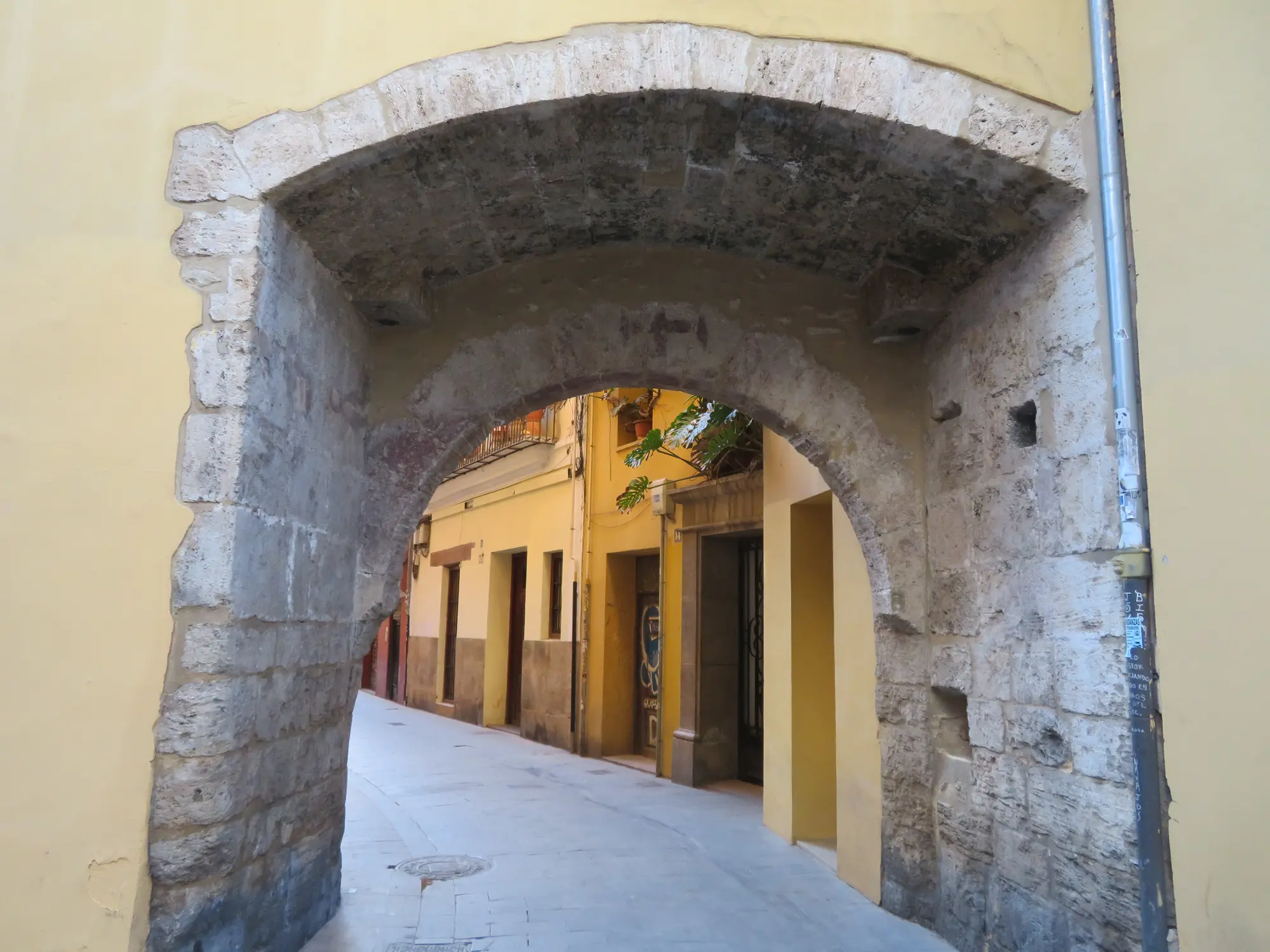
The most immediate first walk: dense streets, layered walls, writing, shutters and recurring characters around Portal de la Valldigna and Plaça del Tossal.
Reviewed 30 September 2026A compact El Carme street with documented work by Julieta XLF, Deih and David de Limón, leading towards the large mural walls beside the Red Cross.
Reviewed 6 October 2026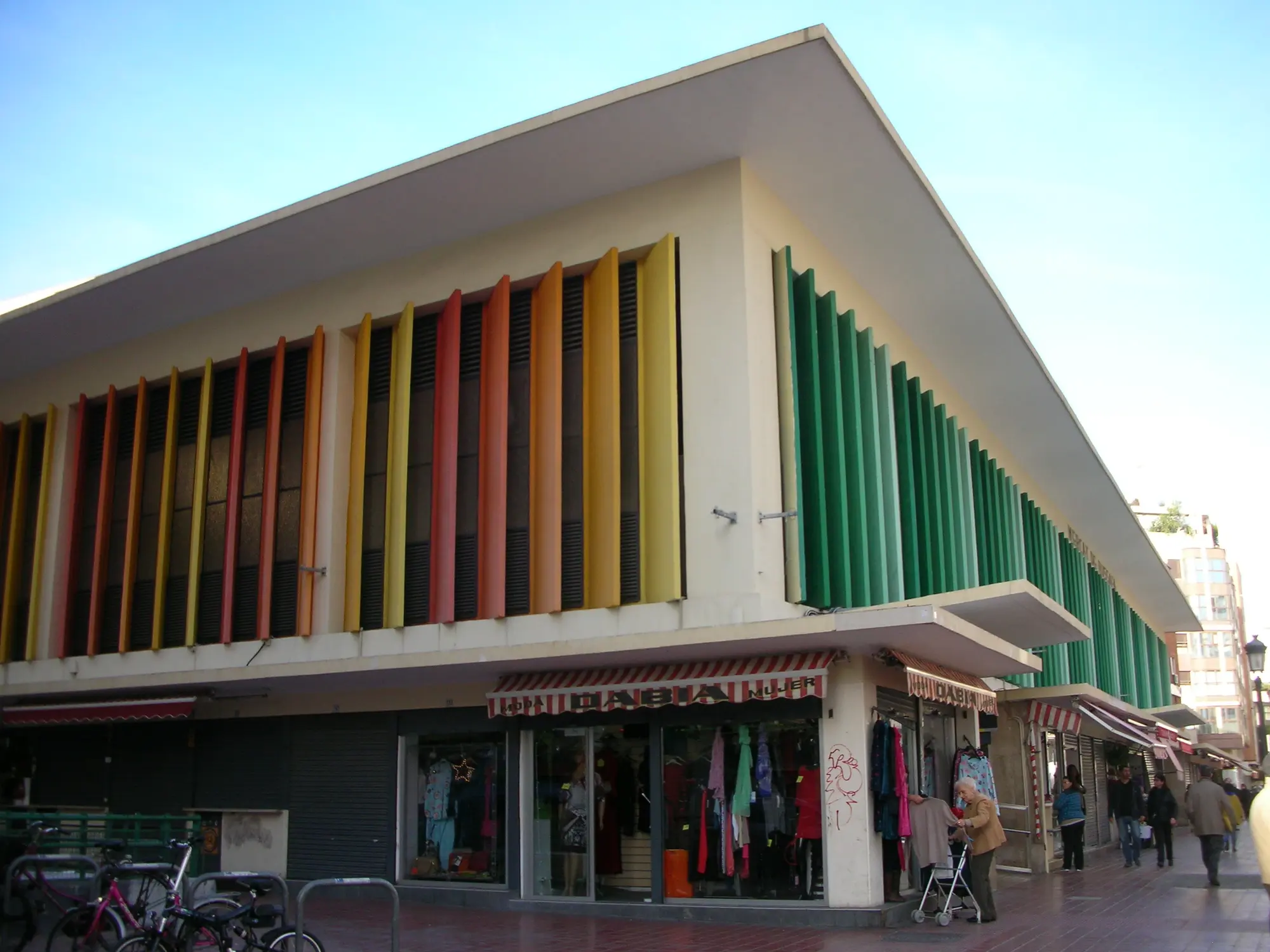
Begin at Mercat de Russafa, then use Cadis, Sueca, Dénia, Cuba and Literat Azorín as an open framework for shutters, paste-ups and changing walls.
Reviewed 5 October 2026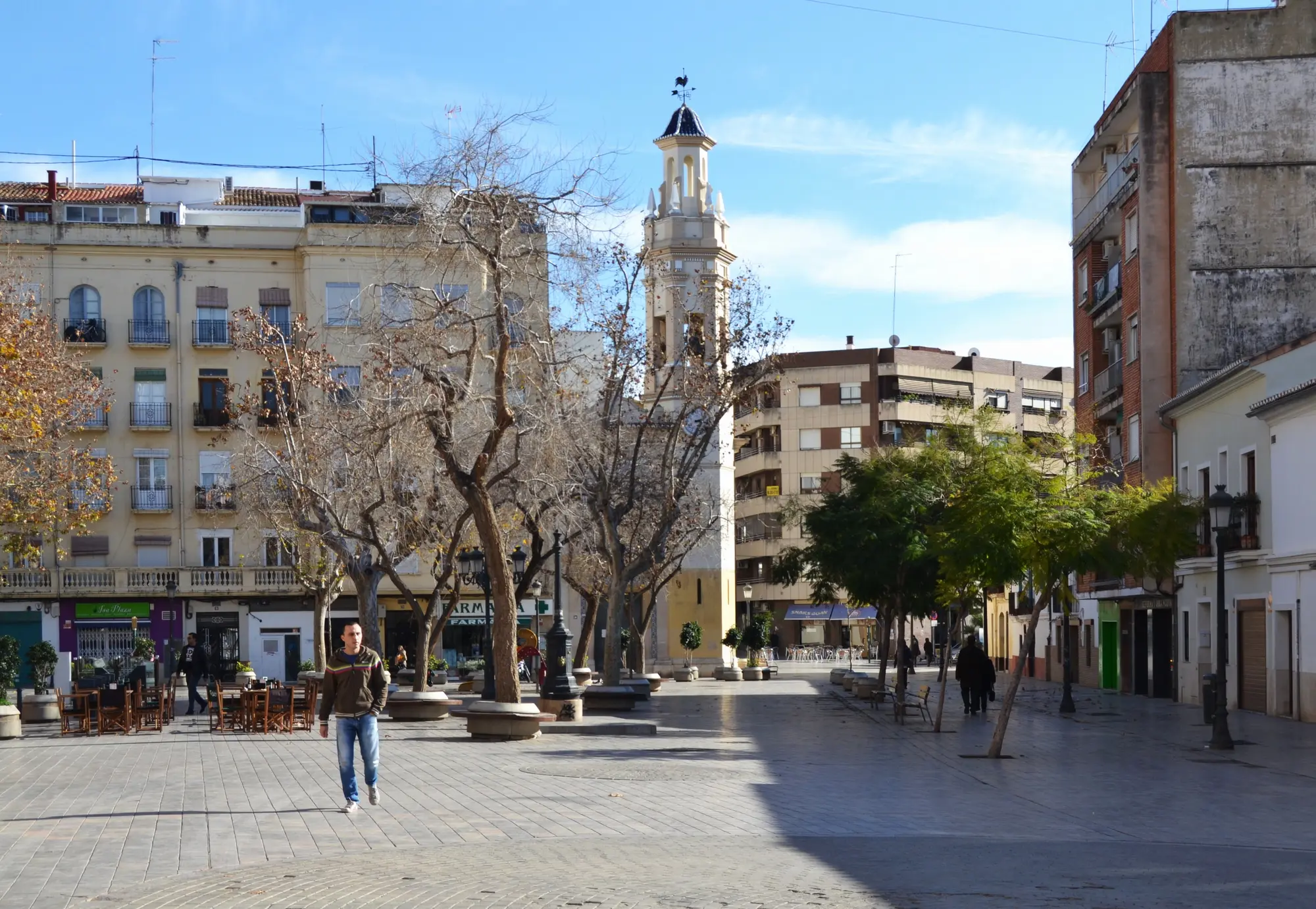
Begin at Plaça de Patraix, then continue towards the Municipal Newspaper Library for Cachetejack’s 2026 Heartbeat of the Ocean mural.
Reviewed 6 October 2026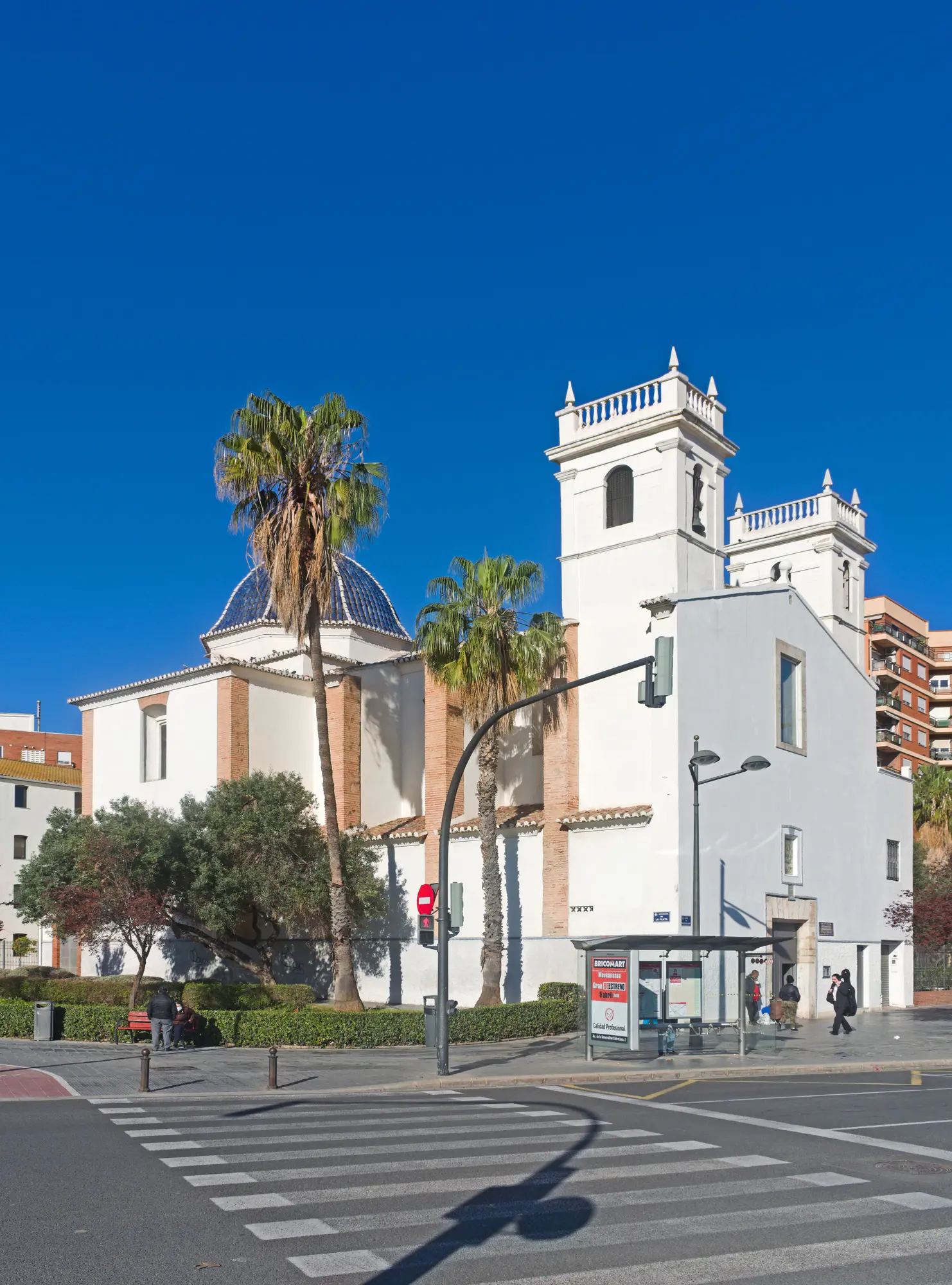
A concentrated 2026 mural walk around Plaça de Vicente Alcober Coloma and Carrer de Pepita Samper, where the Liga Nacional de Graffiti produced more than ten works.
Reviewed 6 October 2026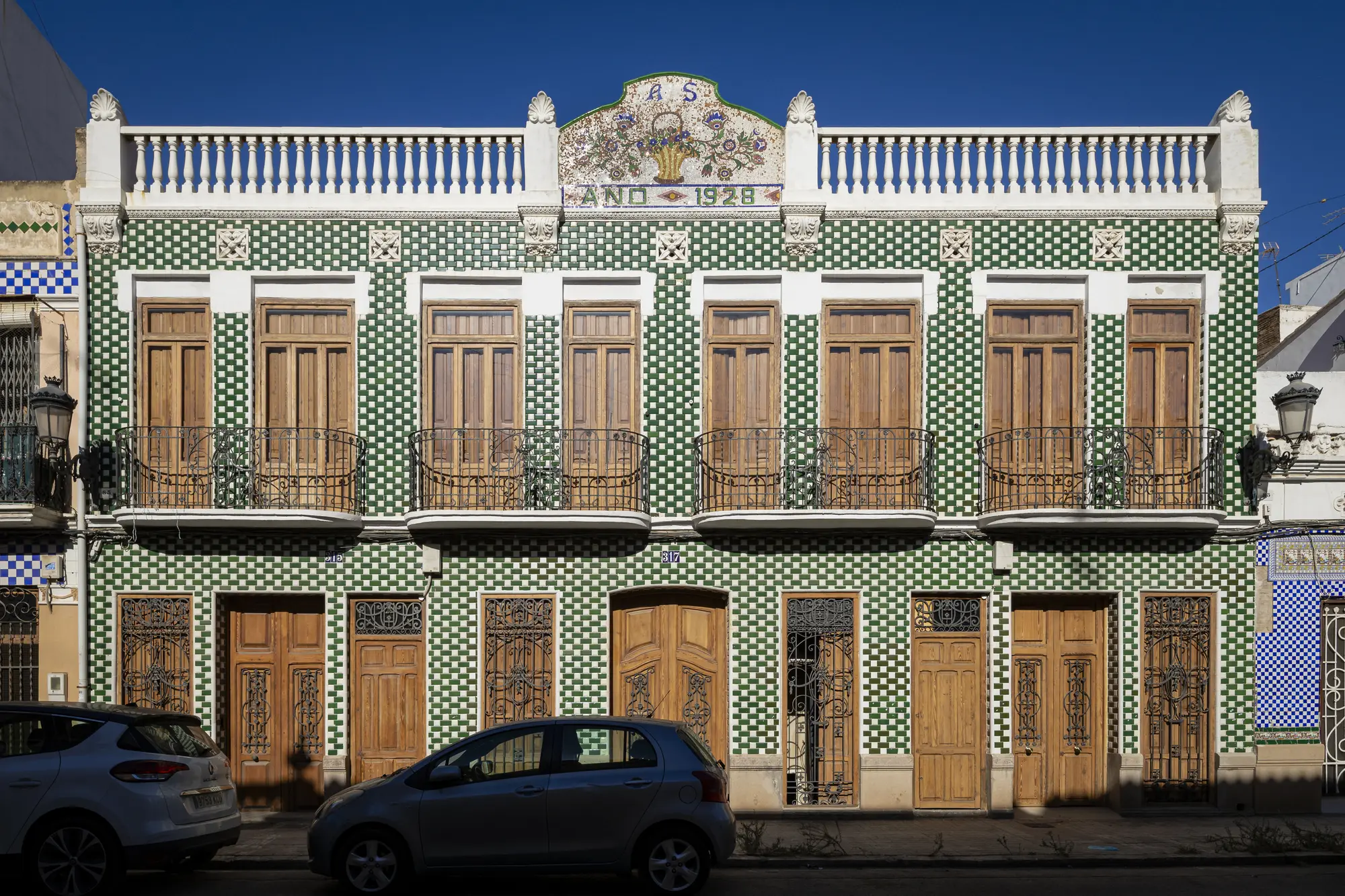
A slower architectural walk through tiled façades, painted shutters and graphic interventions. Start near Plaça del Rosari and read the residential setting first.
Reviewed 27 September 2026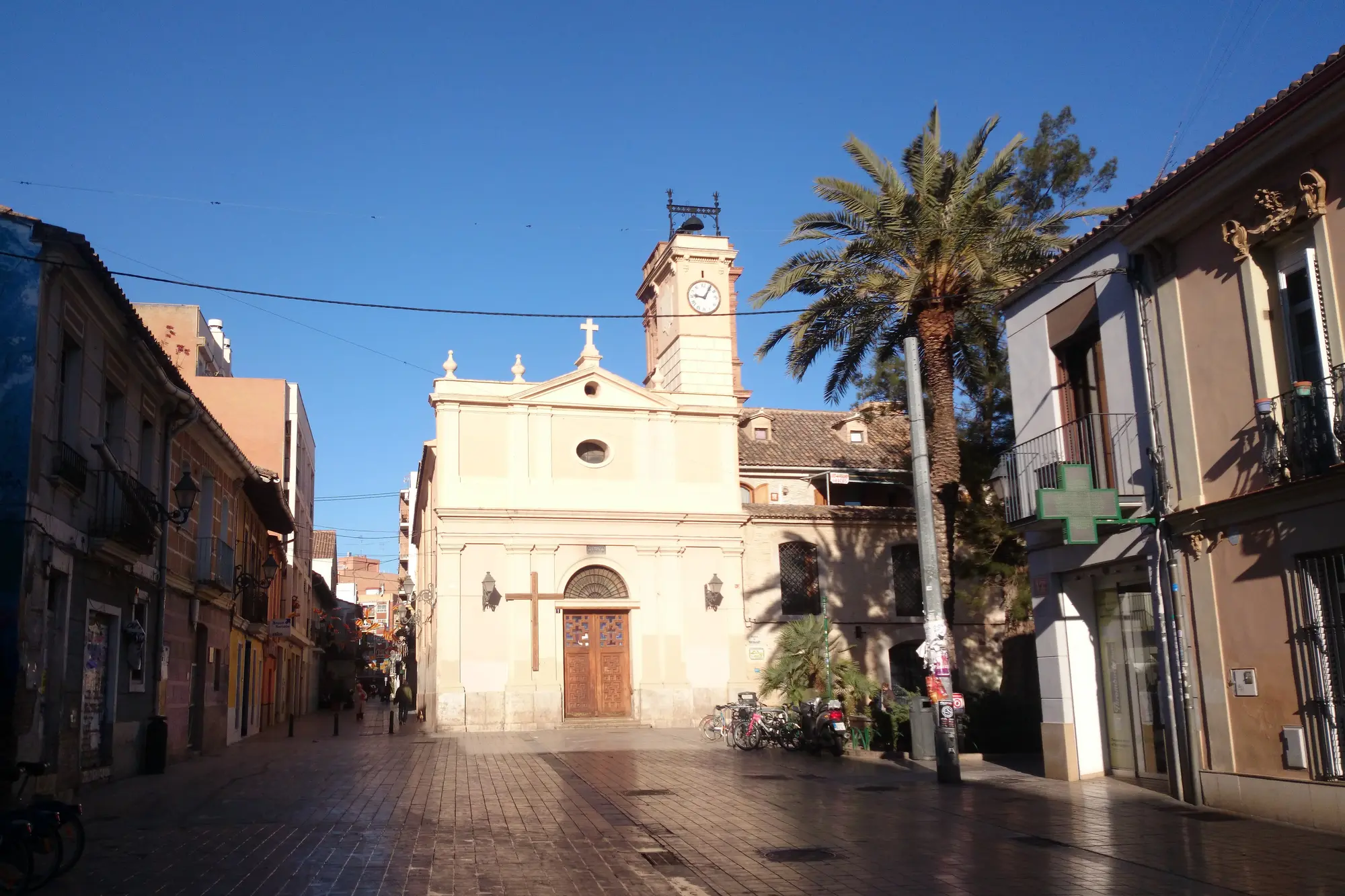
Start at Plaça de Benimaclet, then move through the historic centre towards Masquefa, Francesc Martínez and Enric Navarro for changing murals and smaller interventions.
Reviewed 6 October 2026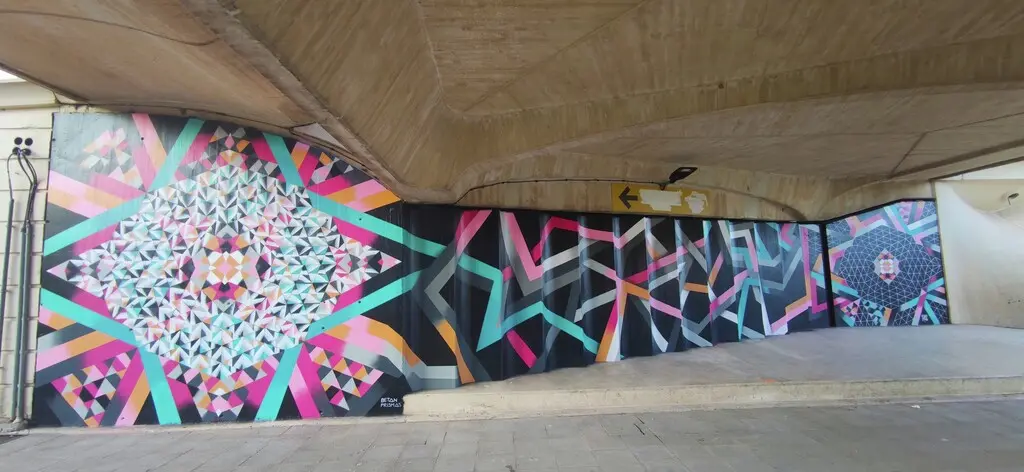
A long linear route through the Túria Garden, connecting interventions on bridge bases, sports structures, service buildings and stairs. Best explored in sections or by bicycle.
Reviewed 30 September 2026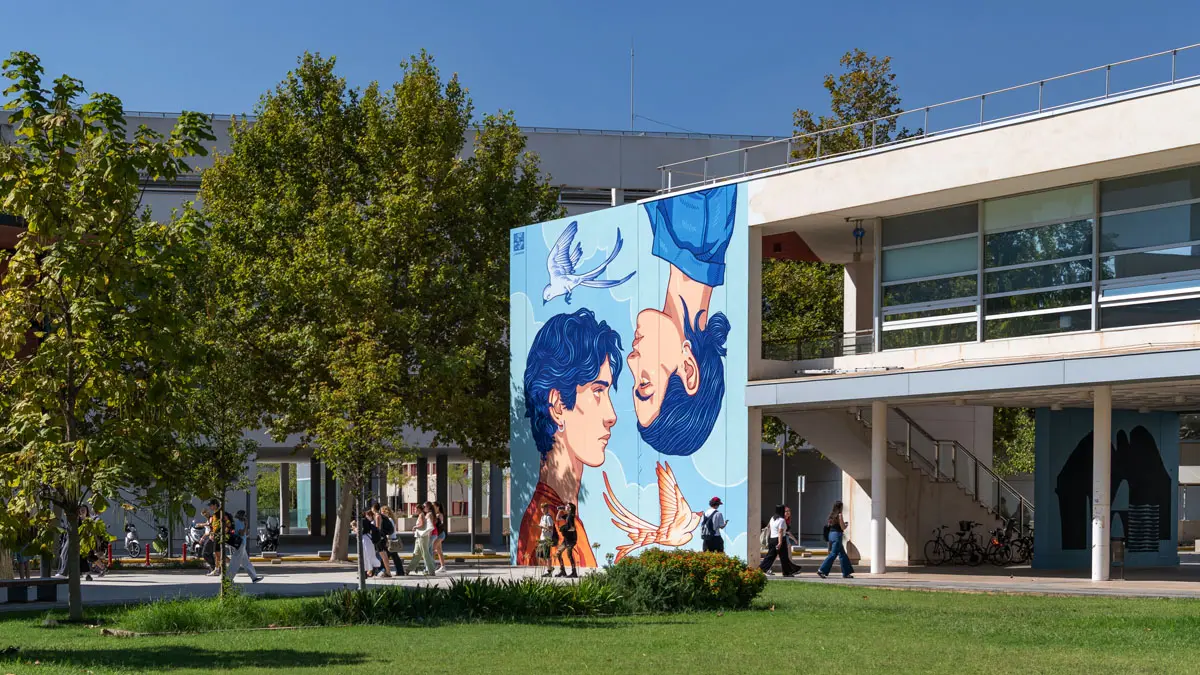
An annual encounter and changing open-air archive across the Campus de Vera, with editions documented from 2006 to the present.
Reviewed 6 October 2026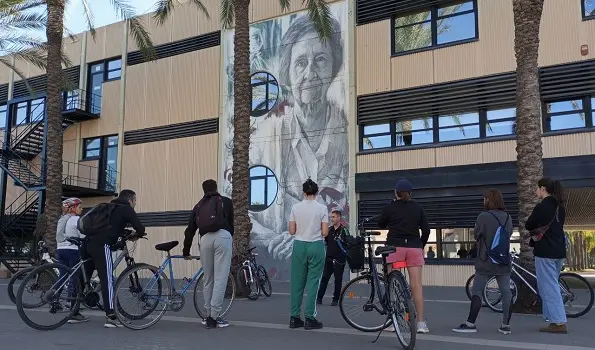
Three official cycling itineraries connect thirteen murals pairing women scientists with women artists across Valencia.
Reviewed 6 October 2026Current map coverage
Each published area has its own review date, municipal map and contextual guide. Coverage grows only when the neighbourhood can be documented without turning temporary works into permanent promises.
El Carme · Wikimedia CommonsEl Carmen, known locally as El Carme, is a dense historic quarter where narrow streets and layered walls reward slow looking.
Guide reviewed 6 October 2026
Cabanyal–Canyamelar · Wikimedia CommonsEl Cabanyal–El Canyamelar is a maritime neighbourhood whose distinctive streets and façades create a different setting for public art.
Guide reviewed 27 September 2026
Russafa · Wikimedia CommonsRussafa—widely searched as Ruzafa—is a compact neighbourhood where market streets, shutters, cultural venues and changing walls reward a slower, street-level look.
Guide reviewed 5 October 2026
Benimaclet · Wikimedia CommonsBenimaclet keeps the scale of a former village while student life, neighbourhood culture and changing murals give its streets a distinct visual rhythm.
Guide reviewed 6 October 2026
Monteolivete (Montolivet) · Wikimedia CommonsMonteolivete—Montolivet in Valencian—is now a key mural stop after the Liga Nacional de Graffiti brought more than ten live-painted works to its residential streets in 2026.
Guide reviewed 6 October 2026
Patraix · Wikimedia CommonsPatraix combines a former village centre around its main square with residential streets and a growing layer of commissioned public art, including Cachetejack’s 2026 ocean mural.
Guide reviewed 6 October 2026
Plan your visit
Continue with a visual guide, a self-guided walk or a curated riverside route.
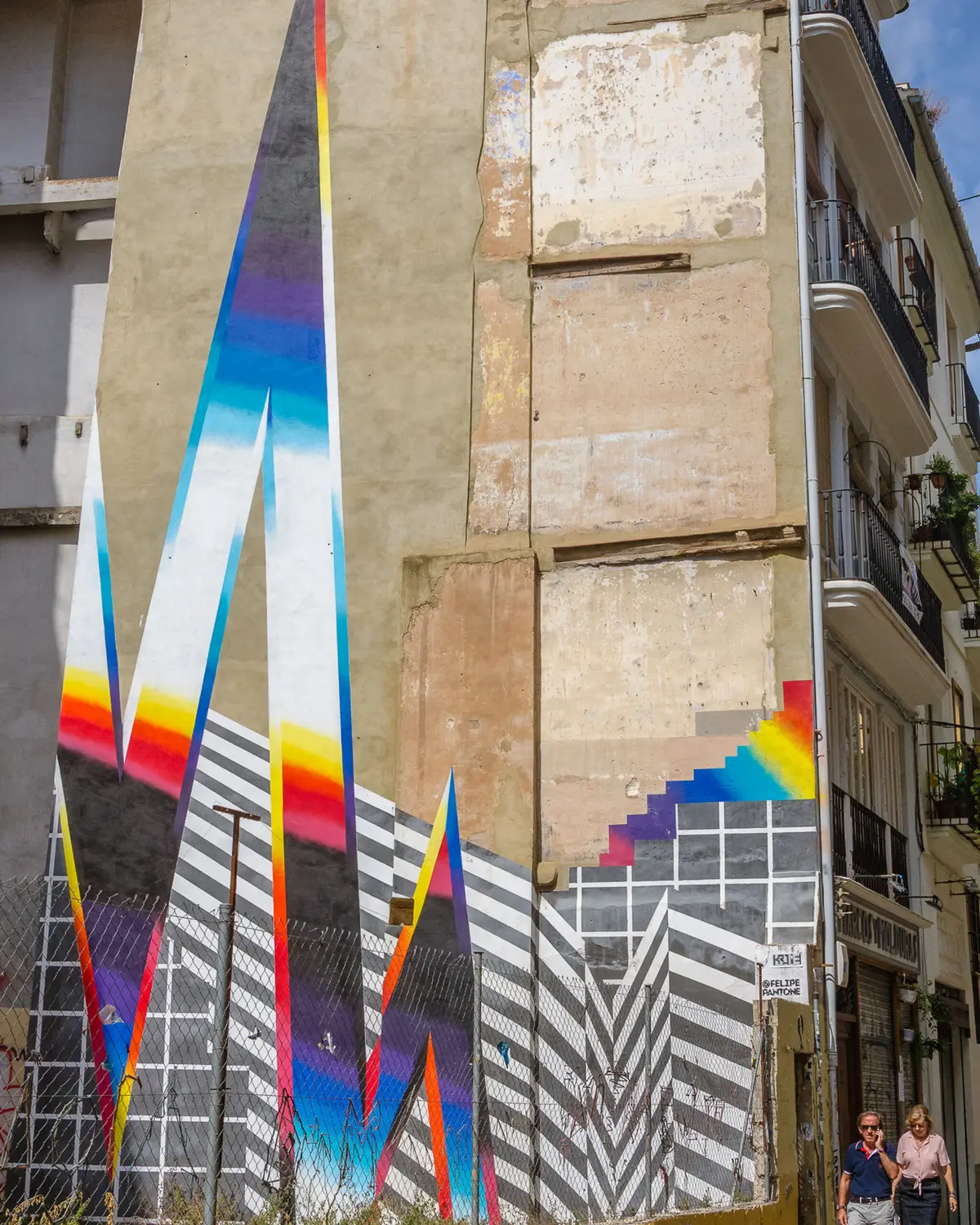 Work by Felipe Pantone · Street Art Cities
The best street art in Valencia is not one permanent wall. Begin with El Carmen, compare the maritime streets of El Cabanyal, follow the Túria’s abstract route and learn a few visual languages before you walk.
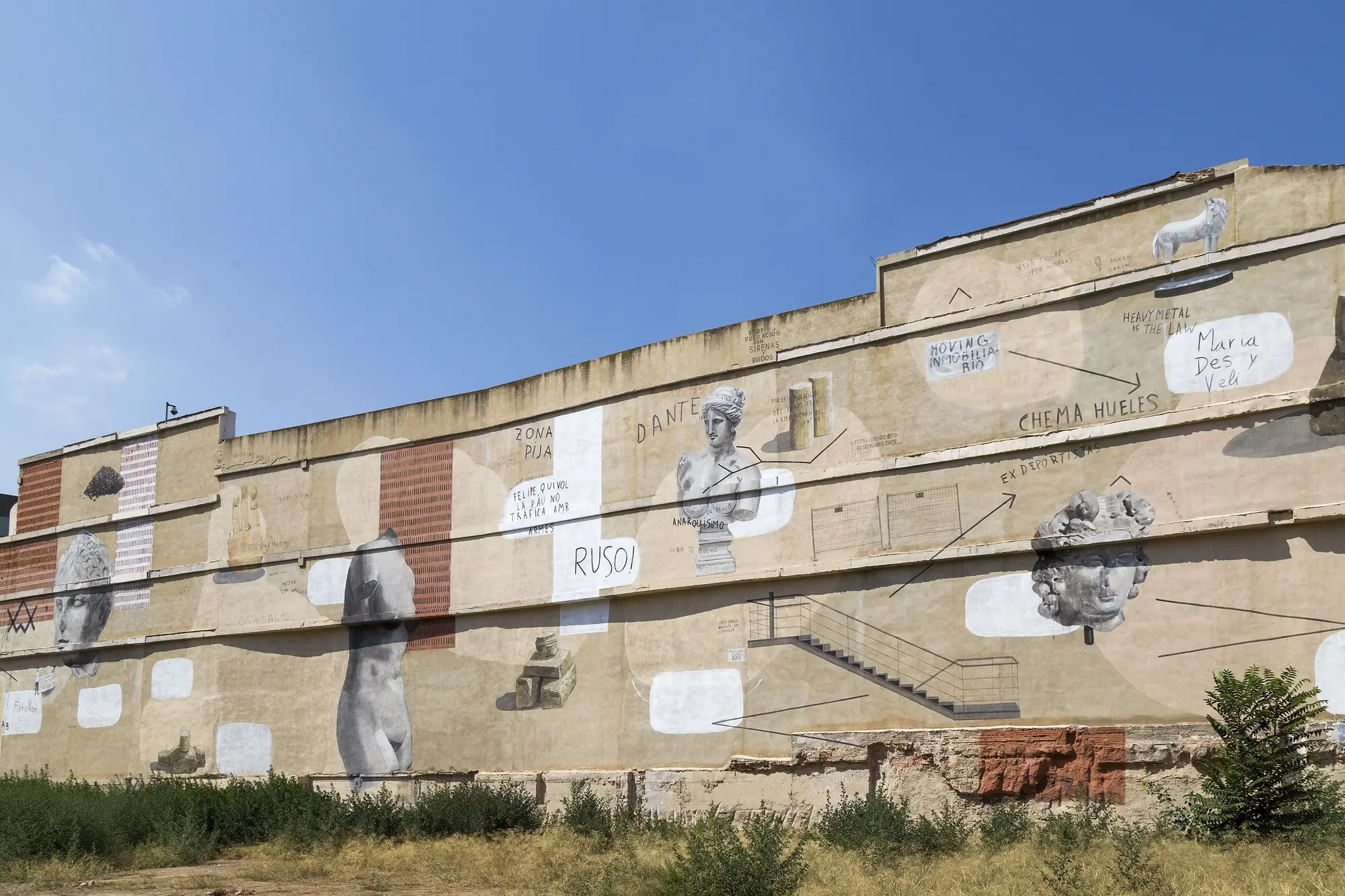 Work by Escif · Wikimedia Commons · IVAM
Walk from Torres de Serranos to IVAM through the layered streets of El Carmen, with six stops, a live map and a method for finding street art without assuming that yesterday’s walls are still there.
Work by Sandra Betancort · Visit ValènciaAcross almost ten kilometres of the Túria Garden, Abstracte links twelve mural interventions through colour, geometry and the architecture of the former riverbed.
Work by Lula Goce · Universitat Politècnica de ValènciaDones de Ciència turns walls across Valencia into a distributed public collection: each mural pairs a woman scientist with a woman artist. The official self-guide connects thirteen works through three cycle-friendly itineraries from Torrefiel to Pinedo.
Street art is temporary by nature. Works can disappear, be covered or change between visits, so every guide prioritises durable context over promises about individual walls.
Use the guides
The area pages provide orientation. The street provides the current evidence.
Read the area page before setting out. It explains the kinds of surfaces and visual languages worth noticing without promising a fixed list of works.
Walk slowly and look at side streets, shutters, corners and changes in scale. The most revealing encounter may not be the largest.
If you photograph a work, note the date and area. A signature, style or repeated motif can suggest authorship, but it is not proof on its own.
Look around the work, not only at it.
Notice the surface, nearby marks, scale, sightline and how the piece meets the life of the street. Context is part of what makes urban art urban.