A gallery inside a former river
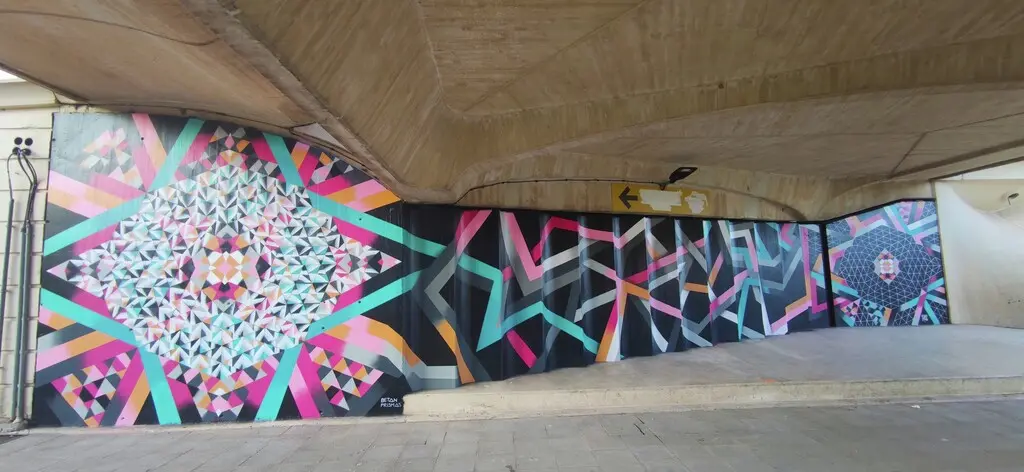
Abstracte, un riu d’art was presented in 2021 as a sequence of twelve abstract mural interventions distributed across the bases of bridges, sports facilities and gardeners’ service buildings in Valencia’s former riverbed. The route extends through almost ten kilometres of the Túria Garden, between the Parque de Cabecera end and the Monteolivete bridge area.
The project was promoted by the cultural association Zedre with the Ajuntament de València and support from Pinturas Montó. Instead of separating art from the park, it uses the long green corridor as both exhibition space and wayfinding structure: visitors encounter the works while walking, running or cycling through the city.
Twelve interventions across the Túria Garden
The official route order brings together Sandra Betancort, Álex Marco, AALL (Aaron Mr. Simon and Lluís Salvador), Rubén Viard, Capi Cabrera, Murone, Rubén Tortosa, Roice183, Nico Barrios, Zurik, Ángel Toren and Kaufman.
Sandra Betancort’s intervention beneath the 9 d’Octubre bridge was the first to be completed. Farther along the route, the supports shift between sports buildings, bridge bases, garden service huts and stairs. Rubén Tortosa’s work beneath Pont de Fusta, for example, enlarged the visual error of a printer’s ink injection into an architectural image; the UPV record connects it with a quotation from Hito Steyerl’s The Wretched of the Screen.
Walking—or cycling—the route
The full route is designed to be followed on foot or by bicycle. Cycling makes the nearly ten-kilometre sequence easier to connect in one outing; walking a shorter stretch makes it easier to study the relationship between paint, surface and surrounding park architecture.
Visit València’s route page is the most useful starting point for orientation. Begin from the Parque de Cabecera side for the documented west-to-east sequence, or choose a smaller group of works around the central bridges. The project belongs to an active public landscape, so access, vegetation, maintenance and the condition of individual surfaces can change.
Urban art, but not a substitute for graffiti culture
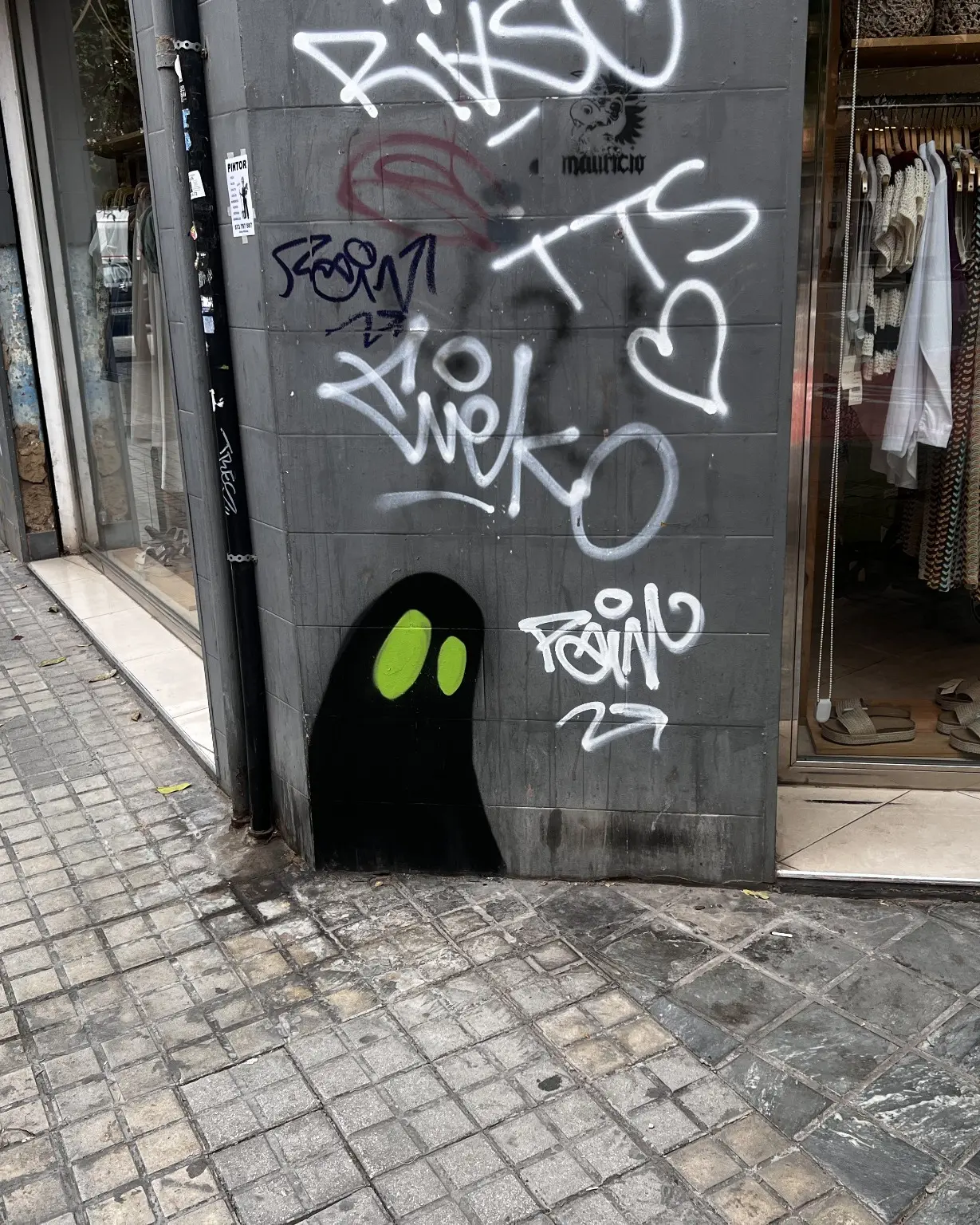
Abstracte is a commissioned public-art route with an organising body, institutional collaboration and a defined curatorial premise. That context distinguishes it from unsanctioned writing and independent interventions elsewhere in Valencia, even when some participating artists draw on graffiti experience.
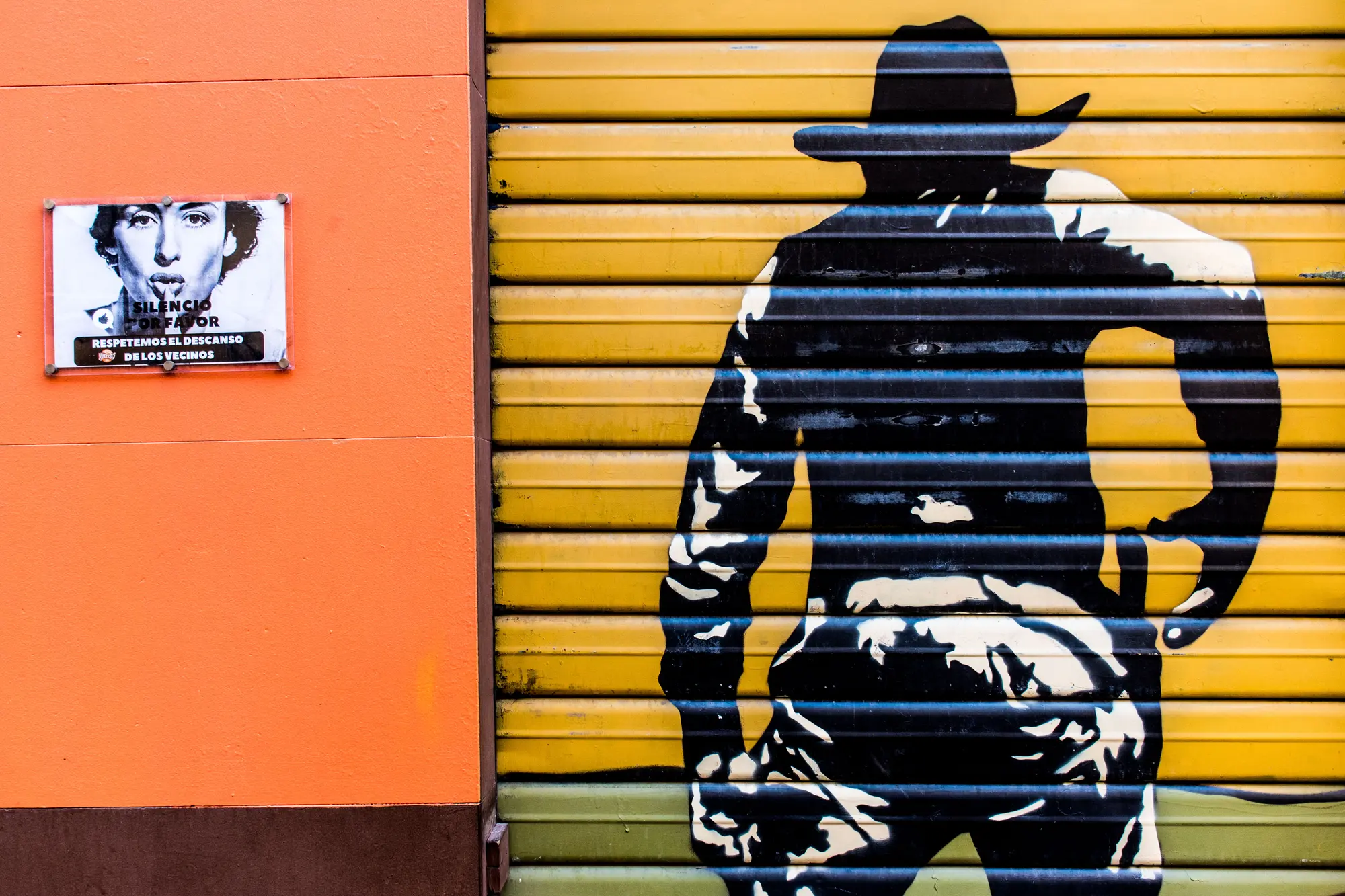
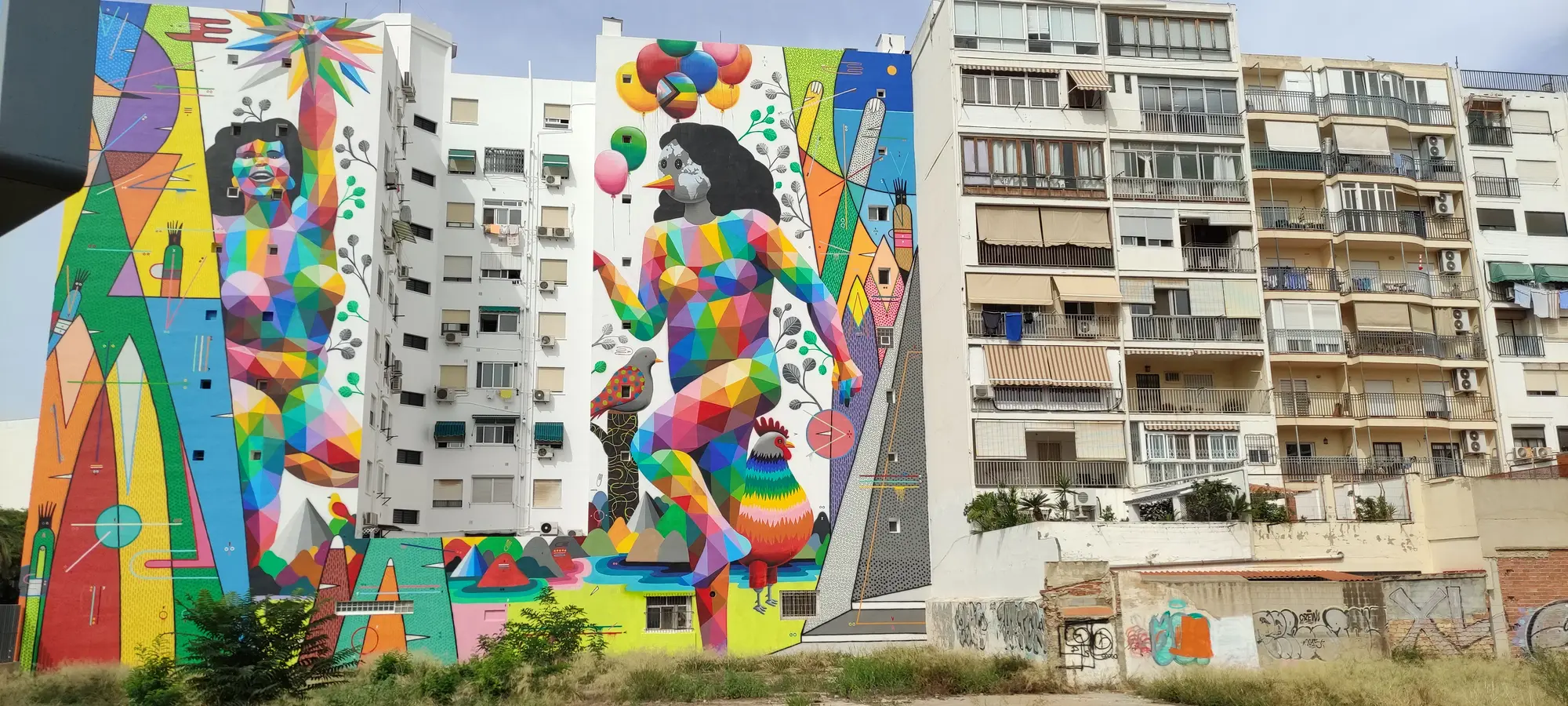
The distinction matters because the city’s visual culture contains both. Abstracte shows what coordinated mural practice can do across a continuous landscape; it should be read alongside, not in place of, the smaller, less predictable and sometimes unauthorised work encountered in Valencia’s streets.
A route is also a dated record
The official route documents a project completed in 2021. It does not guarantee that every surface will appear exactly as it did at launch. Weather, maintenance, later interventions and the everyday use of the park can all alter what a visitor finds.
Use the published itinerary as orientation rather than a promise of permanence. Notice what survives, what has changed and how each work meets the landscape now. That gap between project record and present encounter is part of reading art in public space responsibly.
Field note: Follow the official route as a framework, then look beyond the checklist: compare support, scale, movement and the current condition of each intervention.
Method and sources
- Visit València: Graffiti route: Abstracte, un riu d’art (opens in a new tab)
- Zedre: Abstracte, un riu d’Art project and artist route (opens in a new tab)
- Pinturas Montó: Abstracte, un riu d’art presentation in the Túria Garden (opens in a new tab)
- Universitat Politècnica de València: Rubén Tortosa mural for Abstracte, un riu d’Art (opens in a new tab)
Related reading