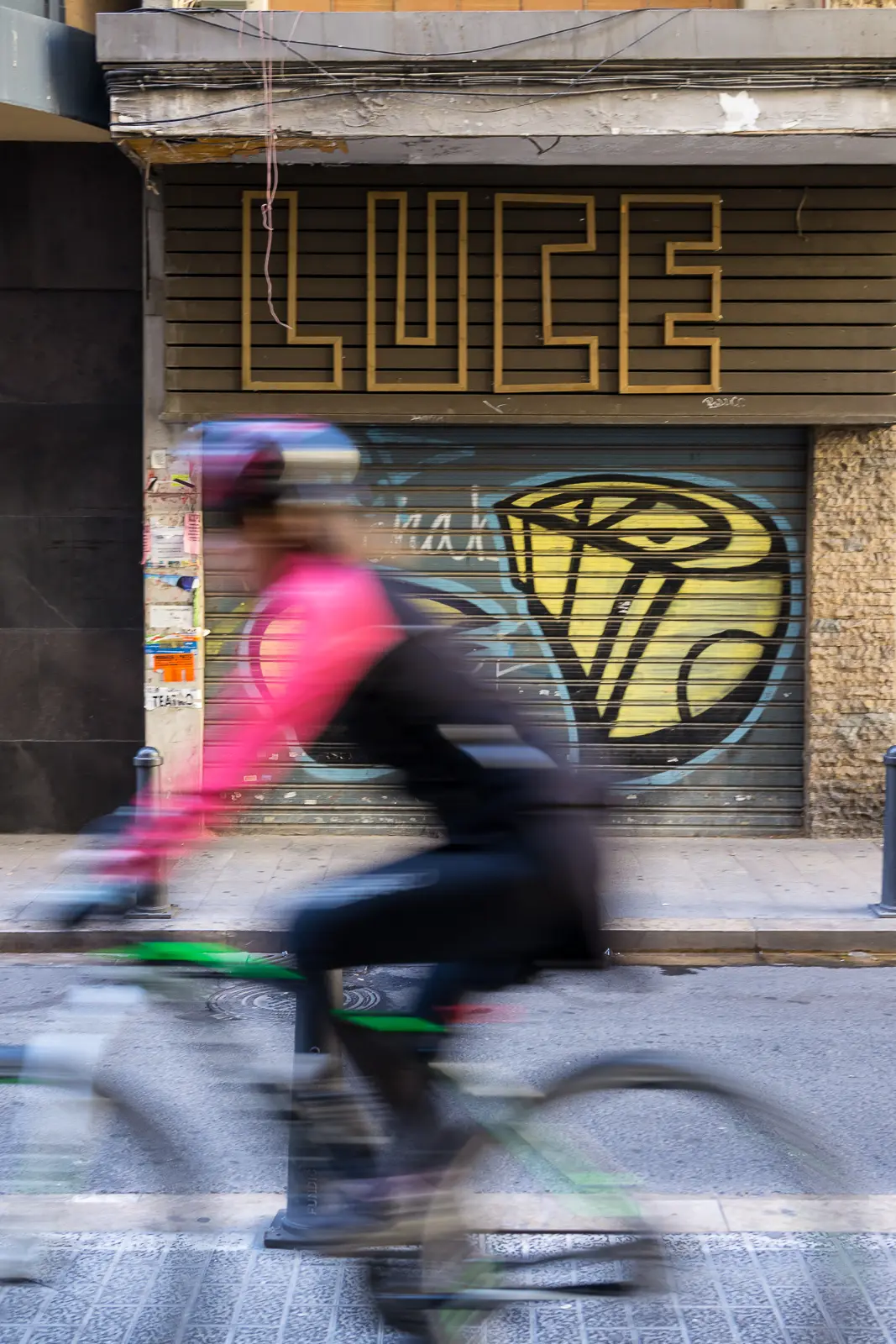
Lens 01
Writing
Tags, throw-ups and pieces centred on names, letterforms, style, repetition and recognition within graffiti culture.
A field guide
Before asking who made a piece, look at how it occupies the wall: the letterform, scale, repetition, surface and relationship to the street all change what you are seeing.
Graffiti and its place in the city
Graffiti writing is not simply the rough stage before a mural becomes respectable. Names, letters, placement and repetition carry their own histories, skills and social codes. Valencia’s wider scene makes more sense when those practices stay visible in the story.
Tags, throw-ups and pieces centred on names, letterforms, style, repetition and recognition within graffiti culture.
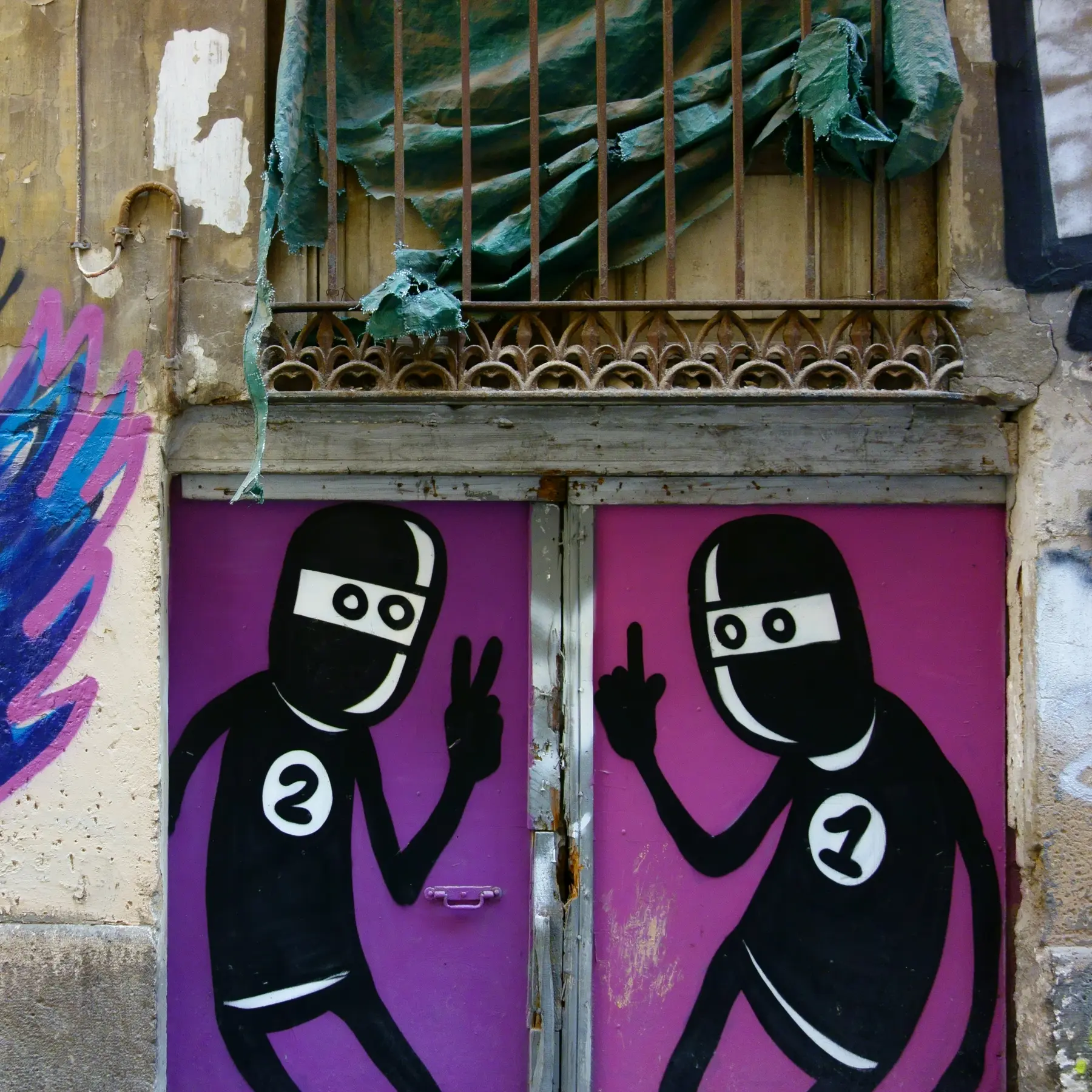
Compact images that can recur across different walls, creating familiarity through a recognisable visual vocabulary.
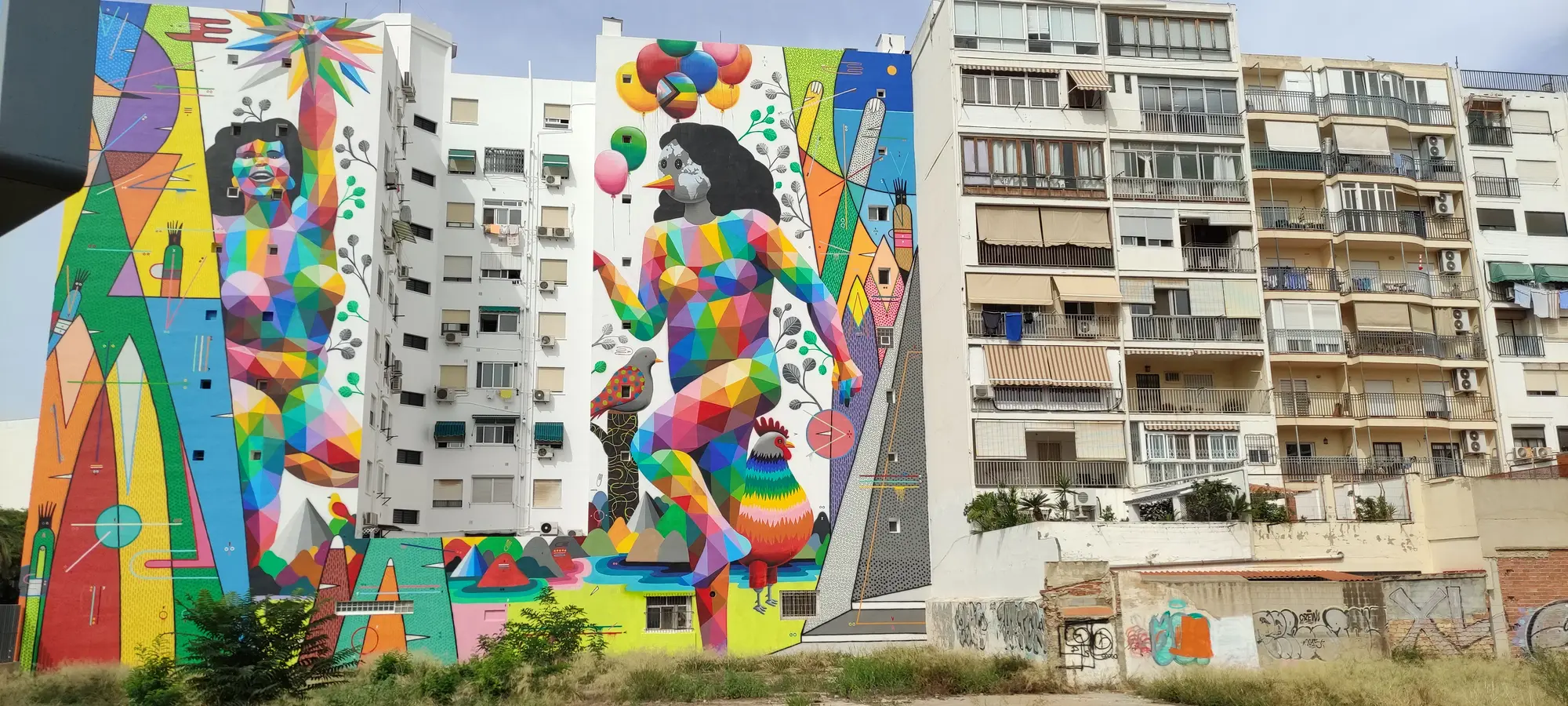
Large-format painting that may be commissioned or independent, narrative or abstract, and read across an entire street.
A stencil describes a method. A character describes a recurring subject. Muralism describes scale and a wall-based format. Graffiti writing centres lettering and names. Artists can move between these languages, combine them or refuse the categories altogether.
The labels on this site are therefore tools for looking—not verdicts about where an artist belongs. Published examples are tied to a documented work, image credit and date rather than treated as timeless evidence.
VSA / Archive imageA wall is never neutral. Stone, shutter, party wall, campus façade and temporary hoarding each create different viewing distances and different relationships with daily life. The same visual language reads differently in a narrow old-city street and on a broad institutional wall.
This also means that a photograph needs context. A date, location and source tell us what was documented; they do not prove that a work is currently visitable or that it was authorised.
The evidence points to continuity, variety and exchange: an urban-art generation active since the early 2000s, recurring platforms such as Poliniza Dos, practitioners with international trajectories, and programmes that expand beyond mural painting into installation, architecture and performance.
That supports the idea of a recognisable Valencia scene. The available evidence is not sufficient to present a formal ‘Valencian School’ as an established art-historical fact. This publication keeps that question open and treats it as research rather than branding.