‘Exciting’ is an editorial judgement, not a ranking
Calling Valencia one of Europe’s most exciting street-art cities is not a claim that it has the largest murals, the oldest graffiti tradition or a measurable place above Berlin, Paris, Bristol or Lisbon. The word describes an experience: a relatively compact city in which several visual cultures remain visible at once and continue to change.
A visitor can encounter letter-based graffiti, tags, throw-ups, stencil work, paste-ups, stickers, small installations, high and difficult-to-reach placements, recurring characters and large painted compositions during the same day. These forms do not share one history, permission model or audience. Their proximity is precisely what makes Valencia rewarding to read.
This article therefore makes a cultural case rather than offering another list of the ‘best’ walls. The practical Valencia street-art guide explains where to begin; here the question is why the city’s scene feels unusually alive once you start walking.
El Carmen is the essential first chapter
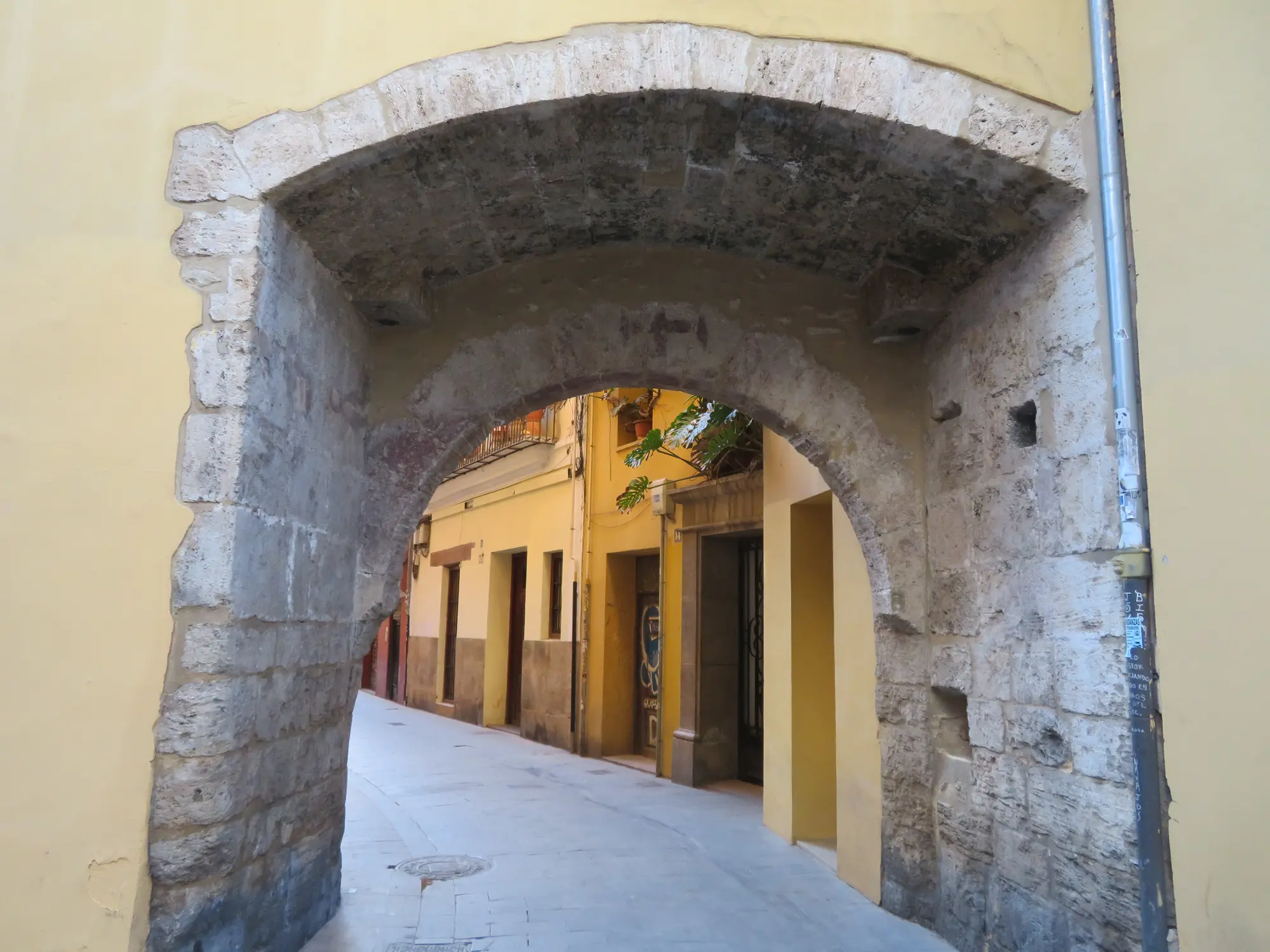
El Carmen—El Carme in Valencian—is fundamental to understanding Valencia’s public visual culture. Its medieval street pattern compresses walls, shutters, doorways, party walls and corners into short sightlines. Work is rarely encountered as an isolated object: a character may sit beside older lettering, a paste-up may meet a repaired façade, and a large wall can appear at the end of a narrow lane.
Visit València presents El Carmen as a place where history and urban art meet, while the official municipal map confirms the dense fabric that makes the area legible on foot. The architecture is not a neutral backdrop. It controls scale, viewing distance and the kinds of surface available to artists, from temporary metal shutters to masonry carrying years of paint and removal.
That density is also why the neighbourhood should not be treated as a permanent outdoor museum. It is residential, commercial and historic space before it is a visitor attraction. The useful metaphor is a living archive: some images survive long enough to become landmarks, while other surfaces change between visits.
 VSA / Archive image
The strength lies in range, not uniformity
Valencia does not have one visual formula that can be called its house style. The scene’s energy comes from adjacency. Lettering sits beside figurative painting; a precisely cut stencil may appear near an improvised sticker cluster; photographic collage, mosaic, wood, ceramic and other small objects can interrupt the expectation that street art must be painted on a wall.
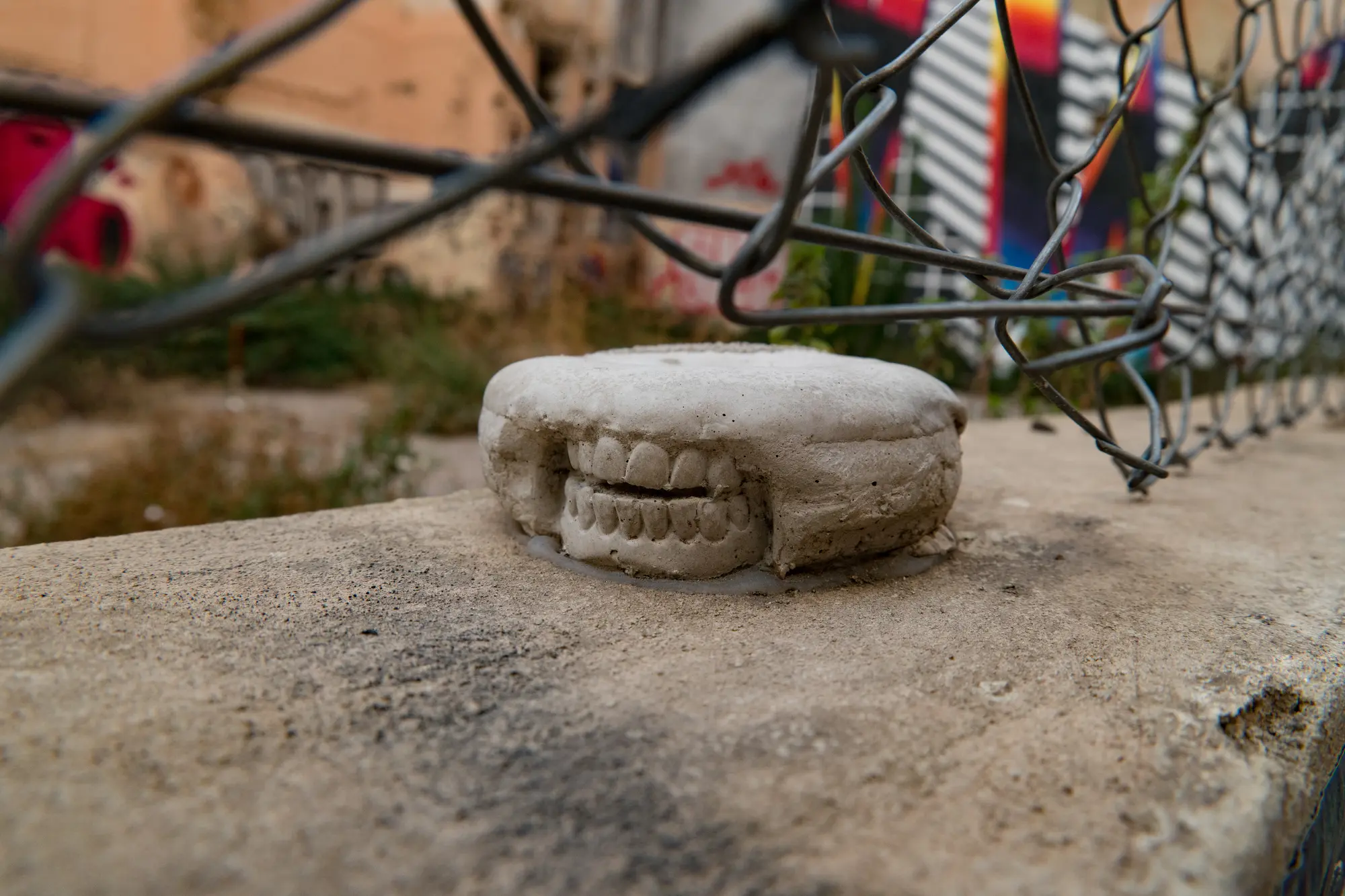
Scale changes just as quickly. Some interventions demand distance, while others are discovered only because the viewer notices a ledge, drainpipe, doorway or gap between signs. The small tooth-like sculpture photographed near Carrer de la Corretgeria is a useful archival example: it redirects attention from the wall as a whole to the city’s edges and fittings, even though the Commons record does not identify its maker.
This diversity changes how the city is explored. Looking only for spectacular murals misses much of the scene; photographing every anonymous mark as a named artwork invents certainty that is not there. Valencia rewards an eye that can move between composition, letterform, repeated motif, material and placement without forcing all of them into the same category.
 VSA / Archive image
XLF helped make difference part of the city’s identity
Local recollection often places El Carme among the decisive meeting grounds and visible surfaces for Valencia’s early crews. Documented accounts add an important qualification: Deih and Xelon trace the mid-1990s RHB group to friendship and painting in Mislata, before the broader XLF network brought together people connected with graffiti, fine art, design, photography and other creative fields.
That distinction matters because there is no need to invent a single birthplace. El Carme became a highly visible arena, but the relationships that fed it crossed neighbourhoods, studios and disciplines. XLF is central not because every member painted alike, but because lettering, characters, science-fiction imagery, illustration, stencil work and colour could develop through a shared network.
The result can still be felt in how Valencia is read today. A crew can provide continuity without imposing uniformity, and recognition can grow through distinct personal languages rather than one repeated brand. The city’s scene became easier to recognise precisely because its artists did not all solve the wall in the same way.
Characters expanded the conversation without replacing letters
Traditional letter-based graffiti remains part of Valencia’s visual grammar. Alongside it, the late 1990s and early 2000s brought increasingly visible characters and colourful compositions from artists whose practices reached audiences beyond writing culture. This should not be narrated as a simple upgrade from letters to pictures: lettering is a demanding artistic language, and many writers continue to pursue it as their central practice.
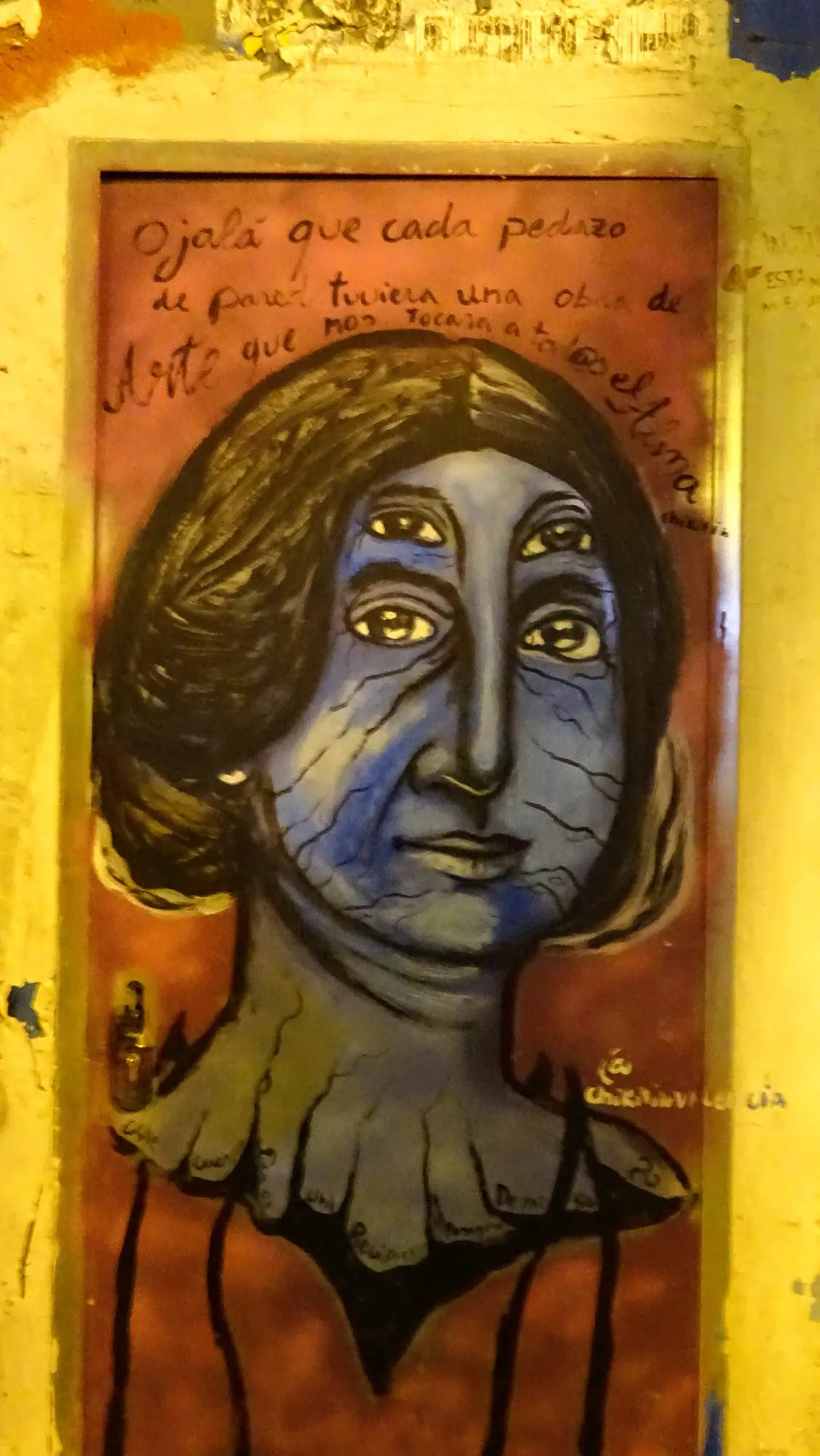
What changed was the breadth of public recognition. A repeated figure can be understood across languages and noticed by residents who do not read a complex piece of lettering. Characters by artists such as David de Limón or Chikitín, and newer recurring figures including La So0mbra, show how repetition builds familiarity through many modest encounters rather than one monumental image.
From long observation of the city, it is reasonable to suggest that colourful figures and accessible compositions helped some previously empty or neglected surfaces feel more familiar to neighbours. It would be too strong to claim that characters alone caused public acceptance of street art. Attitudes also depend on permission, property, maintenance, local relationships and the quality of individual work.
 VSA / Archive image
A city can be stable and alive at the same time
Valencia contains walls and interventions that have been respected for years, as well as fast-changing zones where paint, posters, repairs and new pieces continuously alter the surface. These conditions are not contradictory. Together they produce an open-air collection with enough continuity to reward return visits and enough instability to prevent it from becoming a frozen catalogue.
Longevity can indicate admiration, legal protection, a sympathetic owner, a difficult position or simple chance; disappearance can result from weather, renovation, overpainting or conflict. Neither outcome proves artistic value by itself. A responsible publication records the date of an image and avoids promising that an intervention remains visible without a recent check.
This balance is one of Valencia’s strongest qualities. Visitors can learn recurring names and motifs, yet the city keeps resisting completion. There is always another layer, a changed shutter or a newly occupied gap that makes yesterday’s map incomplete.
The scene is concentrated enough to discover on foot
Urban art is especially compelling when the route between works remains part of the experience. Valencia’s historic centre offers that continuity: architecture, everyday commerce and public images can be compared without treating each wall as a separate destination. The relatively flat city and its Mediterranean climate make walking practical during much of the year, although summer heat and occasional heavy rain still require sensible planning.
Visit València describes a Mediterranean climate with mild winters and an annual average temperature of 19°C. Those conditions do not guarantee comfort at every hour, but they help explain why street-level exploration can be more than a brief seasonal activity. Early daylight walks are usually better for context, visibility and respect for residential streets.
Compactness also encourages comparison. After El Carme, the different street rhythms of Russafa, the maritime façades of El Cabanyal and the coordinated interventions along the Túria reveal that ‘Valencia street art’ is not one neighbourhood enlarged to city scale. Use the area guide and map to choose one contrast rather than rushing through all of them.
Carrer de Llíria offers a focused way to begin
Within El Carme, Carrer de Llíria deserves a deliberate pass. Official artist and reporting sources document work associated with Julieta XLF, Deih and David de Limón along the street. These references make it useful for comparing a large composition with recurring characters and different generations of Valencia-linked practice, while individual surfaces must still be treated as changeable.
Do not stop after the documented points. Turn into the less commercial lanes around the neighbourhood and slow down. Small installations, paste-ups, stickers and older interventions are often discovered outside the most photographed lines. The aim is not to disclose every location or turn private doorways into a checklist; it is to notice how long-lived work and new additions share the same compact fabric.
The El Carme guide gives orientation rather than guarantees. Keep entrances clear, avoid photographing residents as scenery and verify signatures before assigning a name. Then use the artist directory to move from visual recognition to documented context.
Why Valencia stays interesting after the first walk
Valencia stands out because its scene can be entered quickly but not exhausted quickly. El Carme offers immediate density; XLF and other networks provide historical depth; letters, characters, stencils, paste-ups and installations demand different kinds of attention; and the street keeps revising the record.
The city is therefore most convincing not as a ‘capital’ declared by slogan, but as a place where public visual culture remains active, legible and contested. Its best evidence is the relationship between work and street: a mural held by architecture, a familiar figure returning at another scale, or a small intervention that changes what the viewer notices next.
Start with the Valencia Street Art home guide, open the interactive area map and choose one neighbourhood. The strongest argument for Valencia is made at walking pace, one carefully observed surface at a time.
Field note: Valencia’s distinction comes from a compact, active and visually diverse scene: begin in El Carme, compare forms rather than ranking them, and expect the city to change between visits.
Method and sources
- Visit València: Visit València: El Carmen history and urban art (opens in a new tab)
- Visit València: Visit València: Mediterranean climate and average temperature (opens in a new tab)
- Julieta XLF: Calle Liria project (opens in a new tab)
- Street Artwork: Deih mural at Carrer de Llíria 5 (opens in a new tab)
- Street Art Cities: David de Limón works on Carrer de Llíria (opens in a new tab)
- Ajuntament de València: Official El Carme neighbourhood map (opens in a new tab)
- Centre del Carme Cultura Contemporània: PRINCIPIOS exhibition, 2025 (opens in a new tab)
- Centre del Carme Cultura Contemporània: PRINCIPIOS exhibition guide: How it all began (opens in a new tab)
- Centre del Carme Cultura Contemporània: PRINCIPIOS podcast: Deih, Mislata and the formation of XLF (opens in a new tab)
- Xelon XLF: Xelon on RHB, Mislata and XLF (opens in a new tab)
- Valencia Street Art: Valencia Street Art editorial policy
Related reading
Continue exploring
Portal de la Valldigna, El Carme · Wikimedia Commons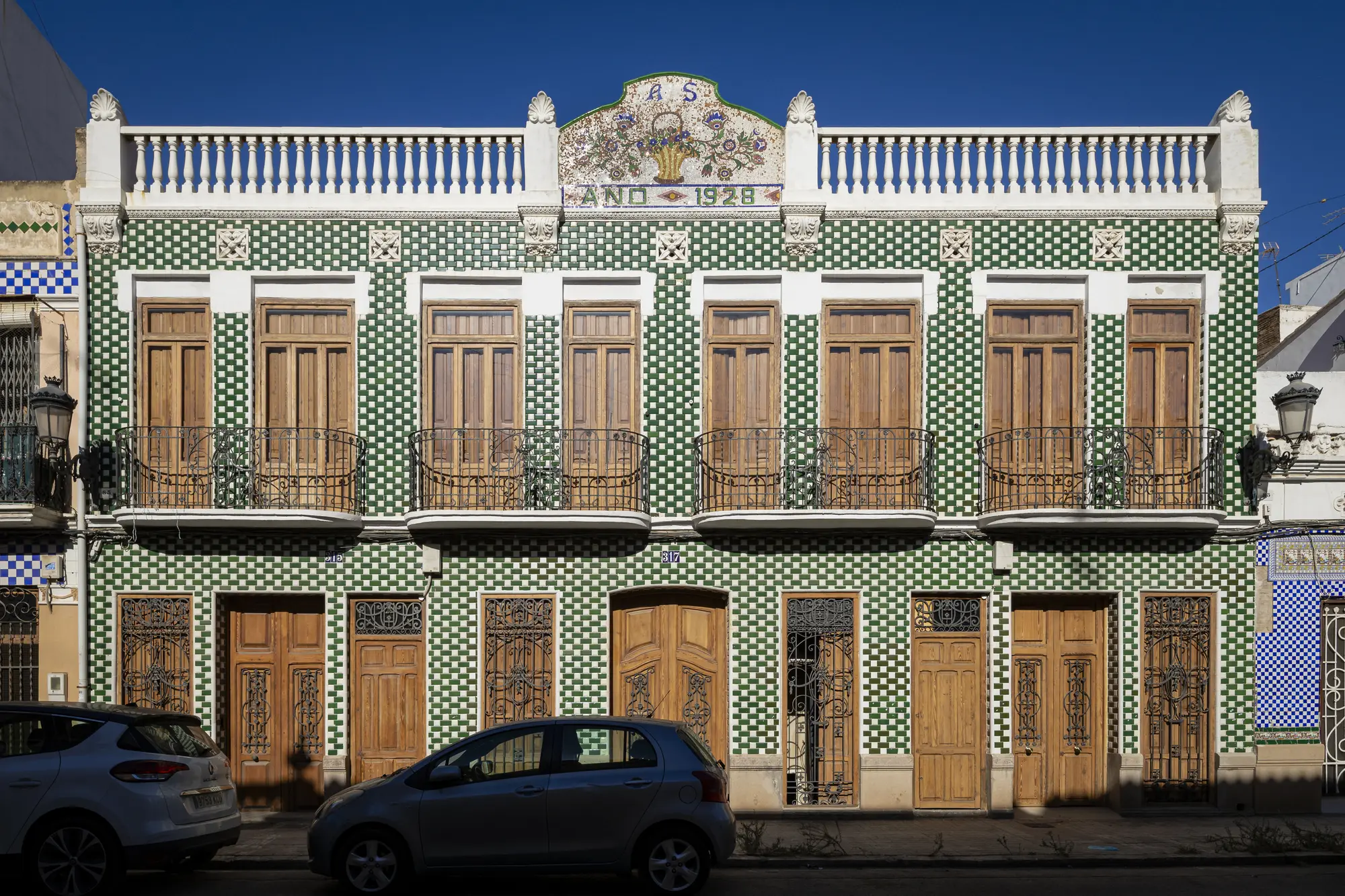 Les Casetes del Gerro, Cabanyal–Canyamelar · Wikimedia Commons
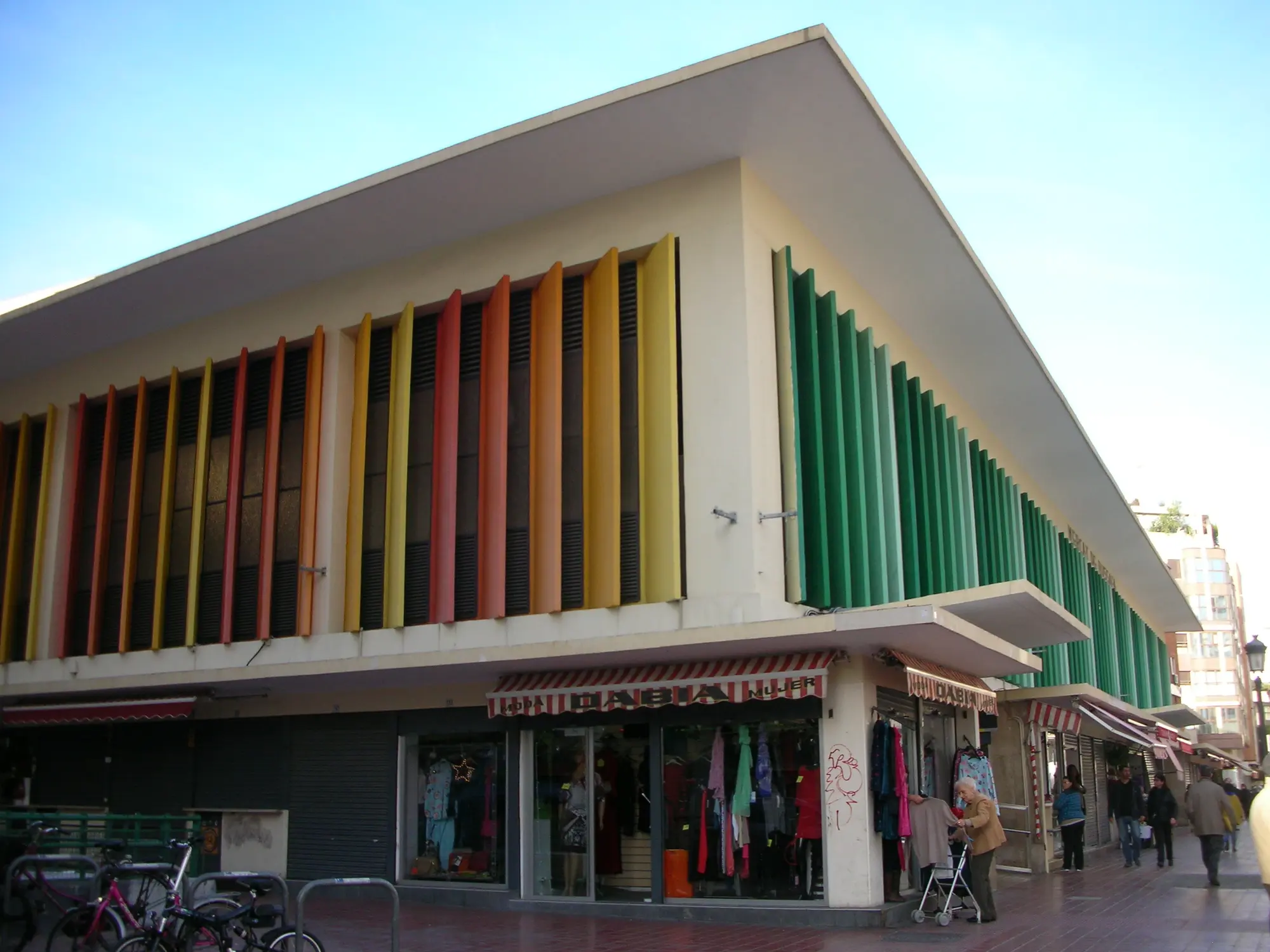 Mercat de Russafa · Wikimedia Commons
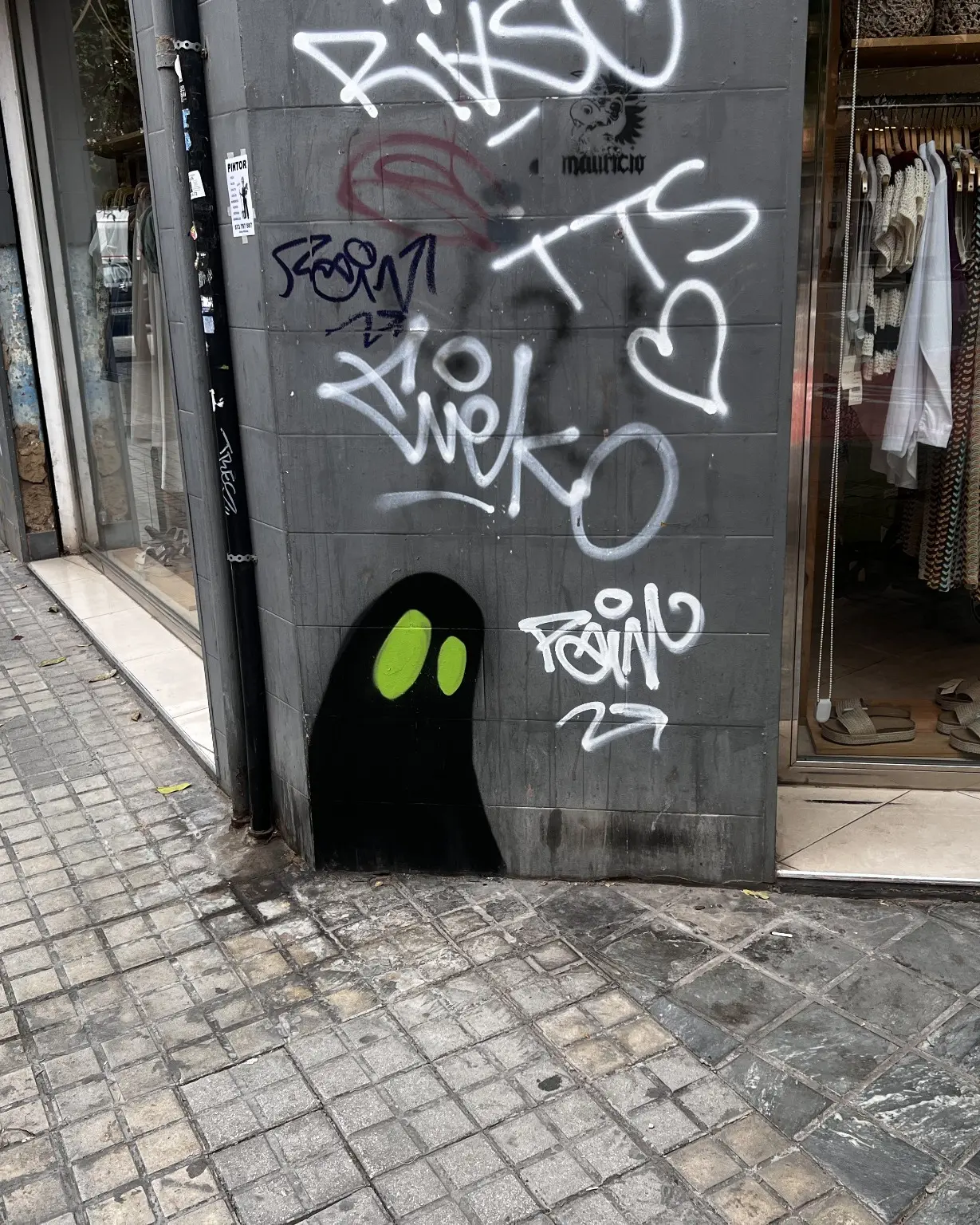 Work by La So0mbra · Official La So0mbra website
 Work by David de Limón · Official David de Limón website
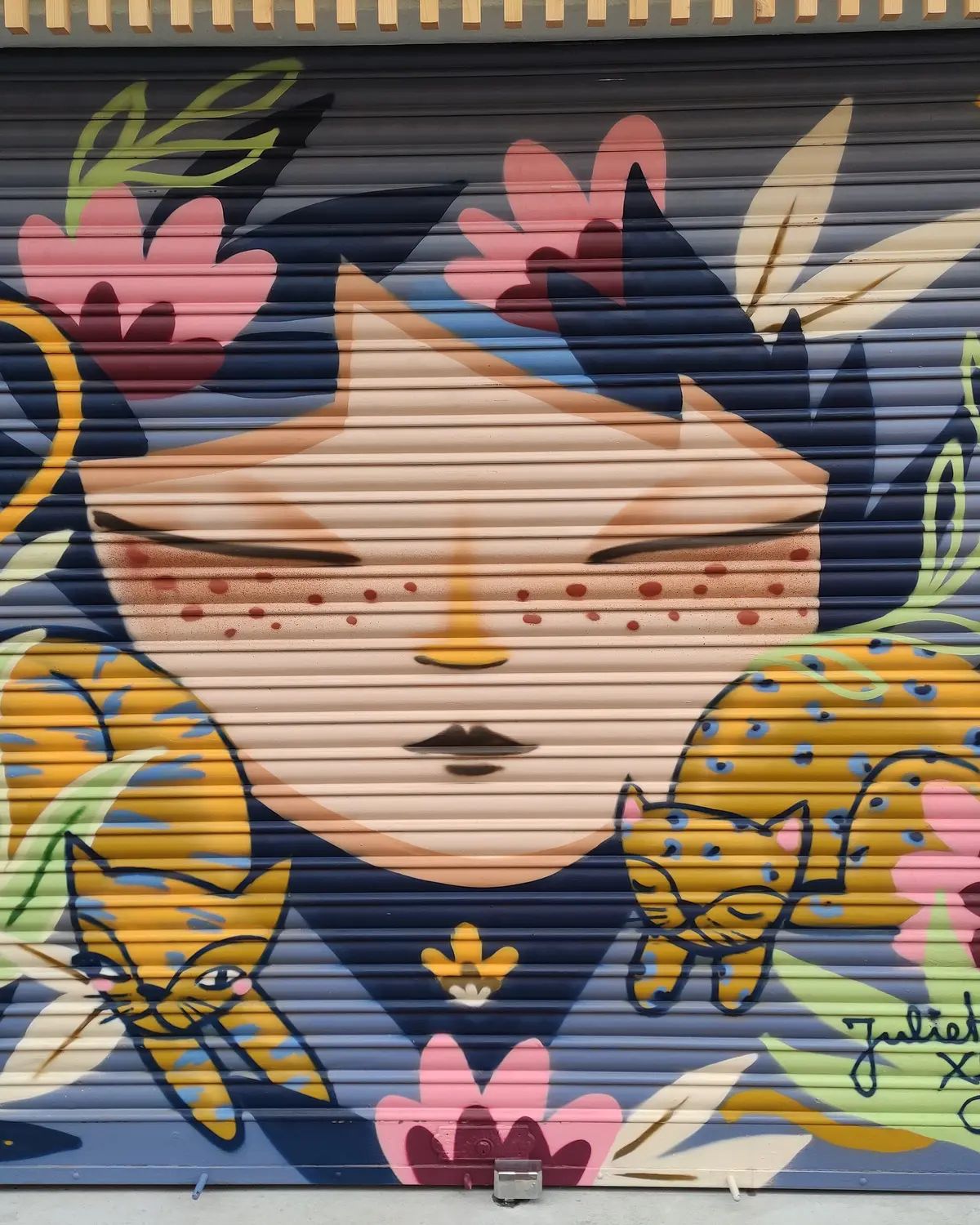 Work by Julieta XLF · Wikimedia Commons
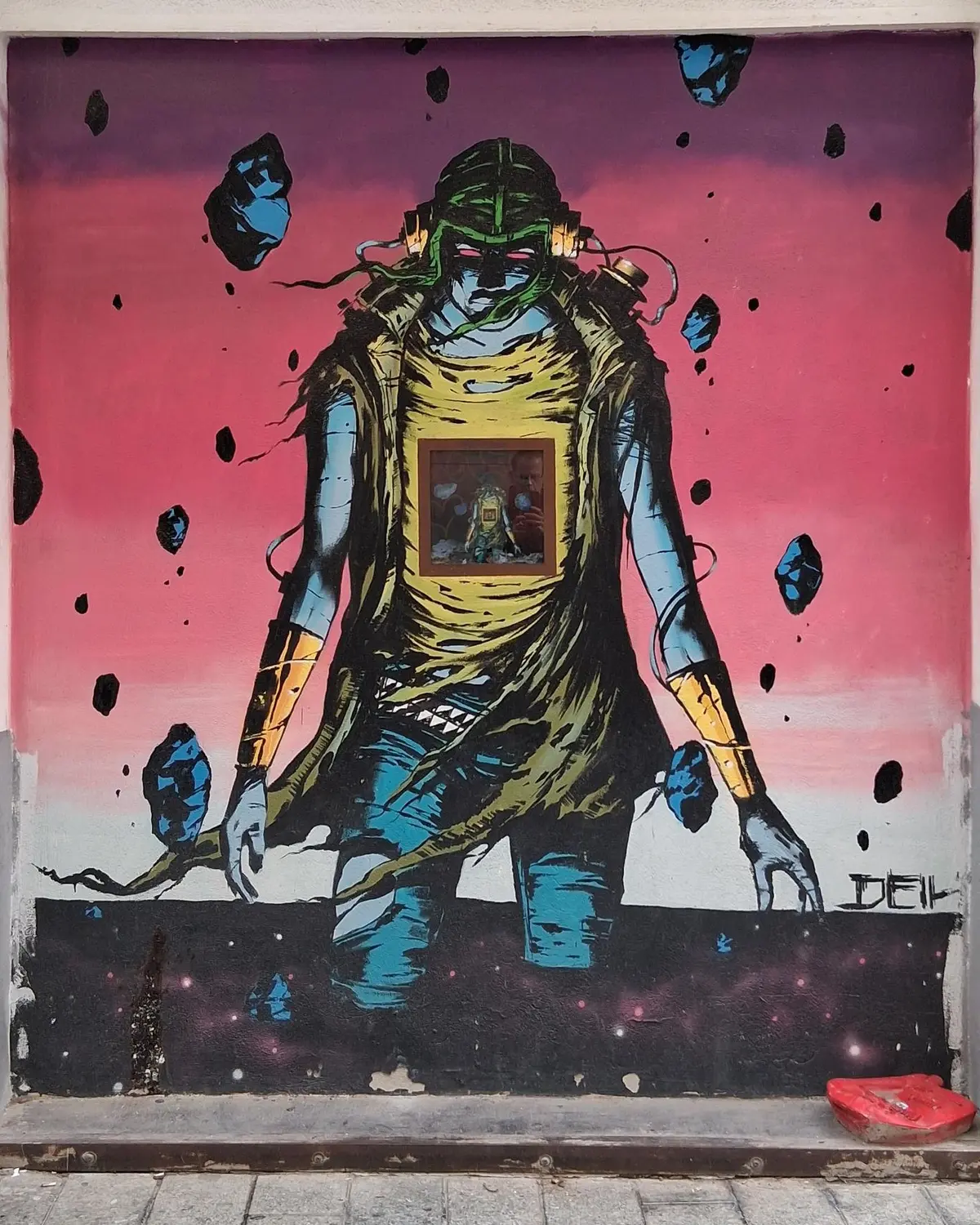 Work by Deih · Street Art Cities
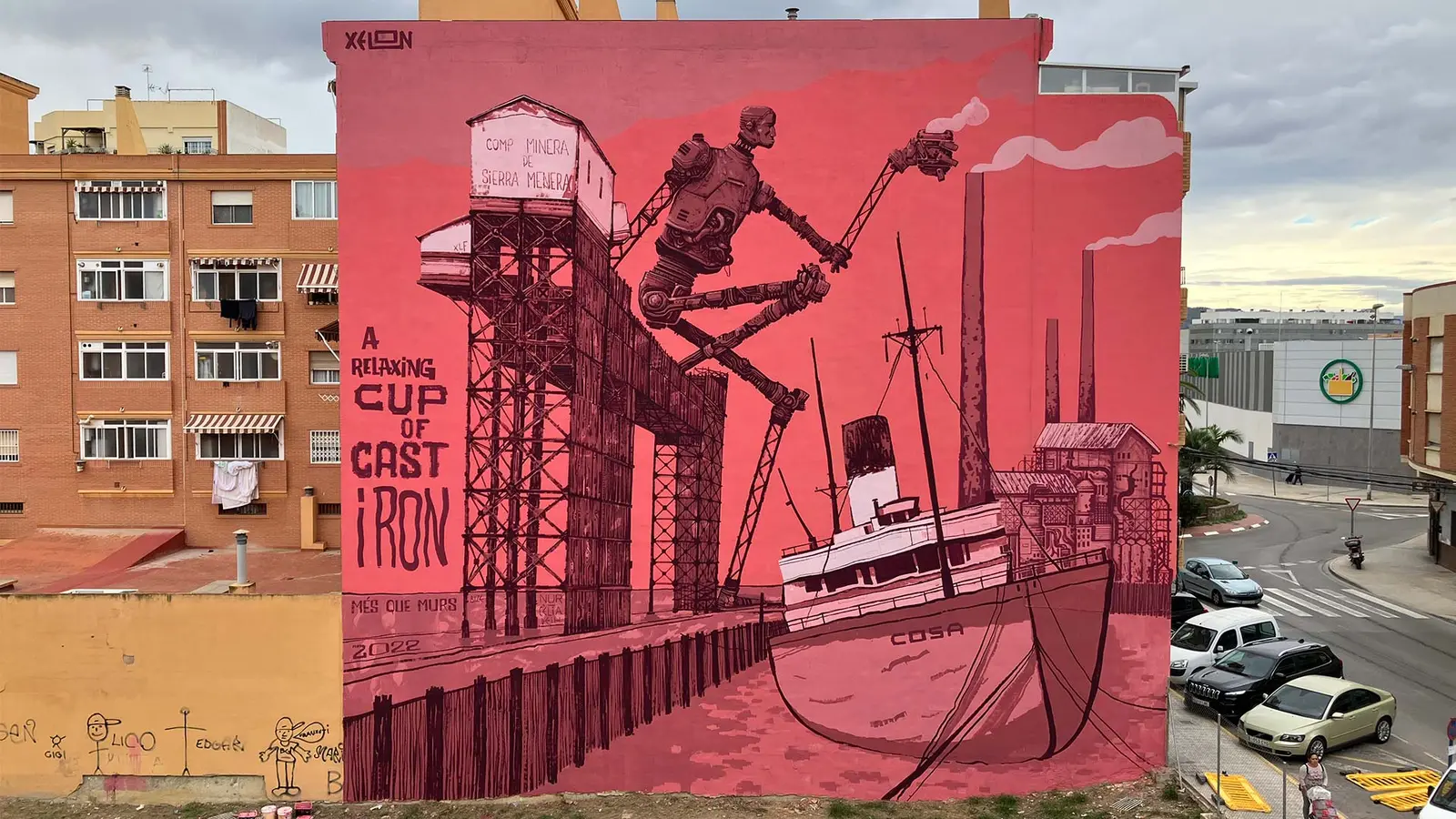 Work by Xelon · Official Xelon portfolio
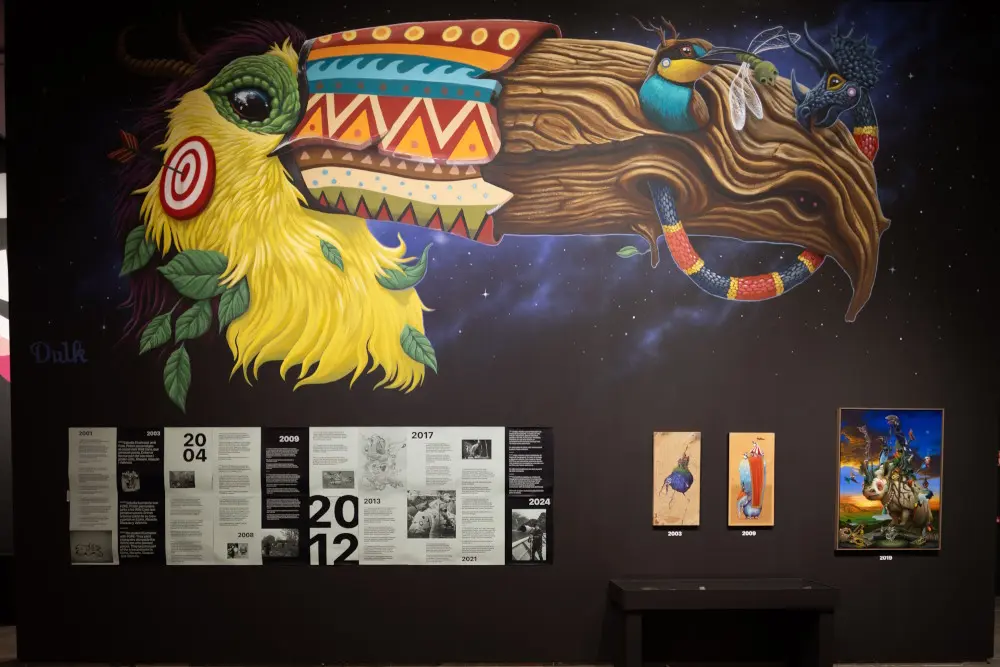 PRINCIPIOS: archive of Valencian urban art · Centre del Carme Cultura Contemporània
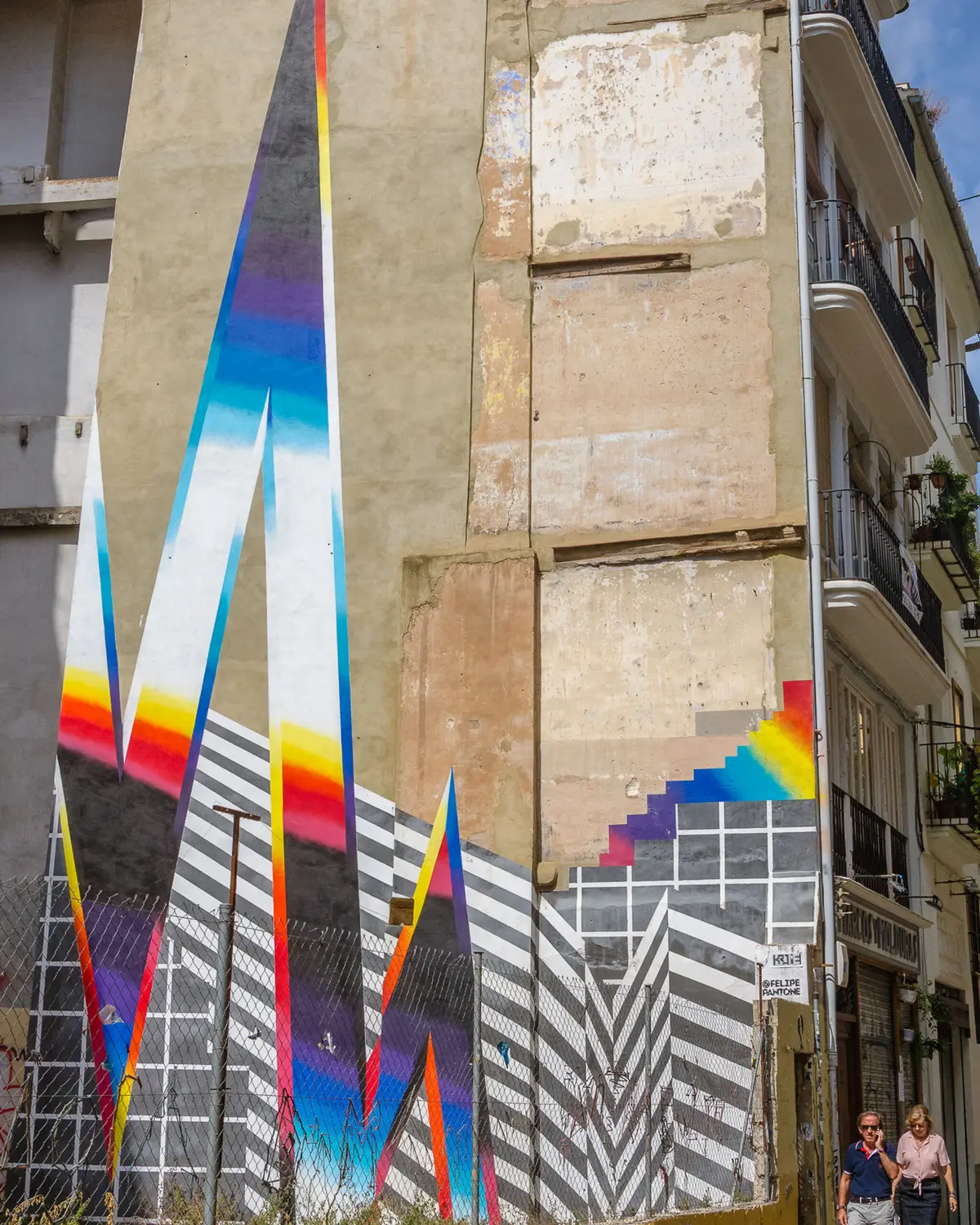 Work by Felipe Pantone · Street Art Cities
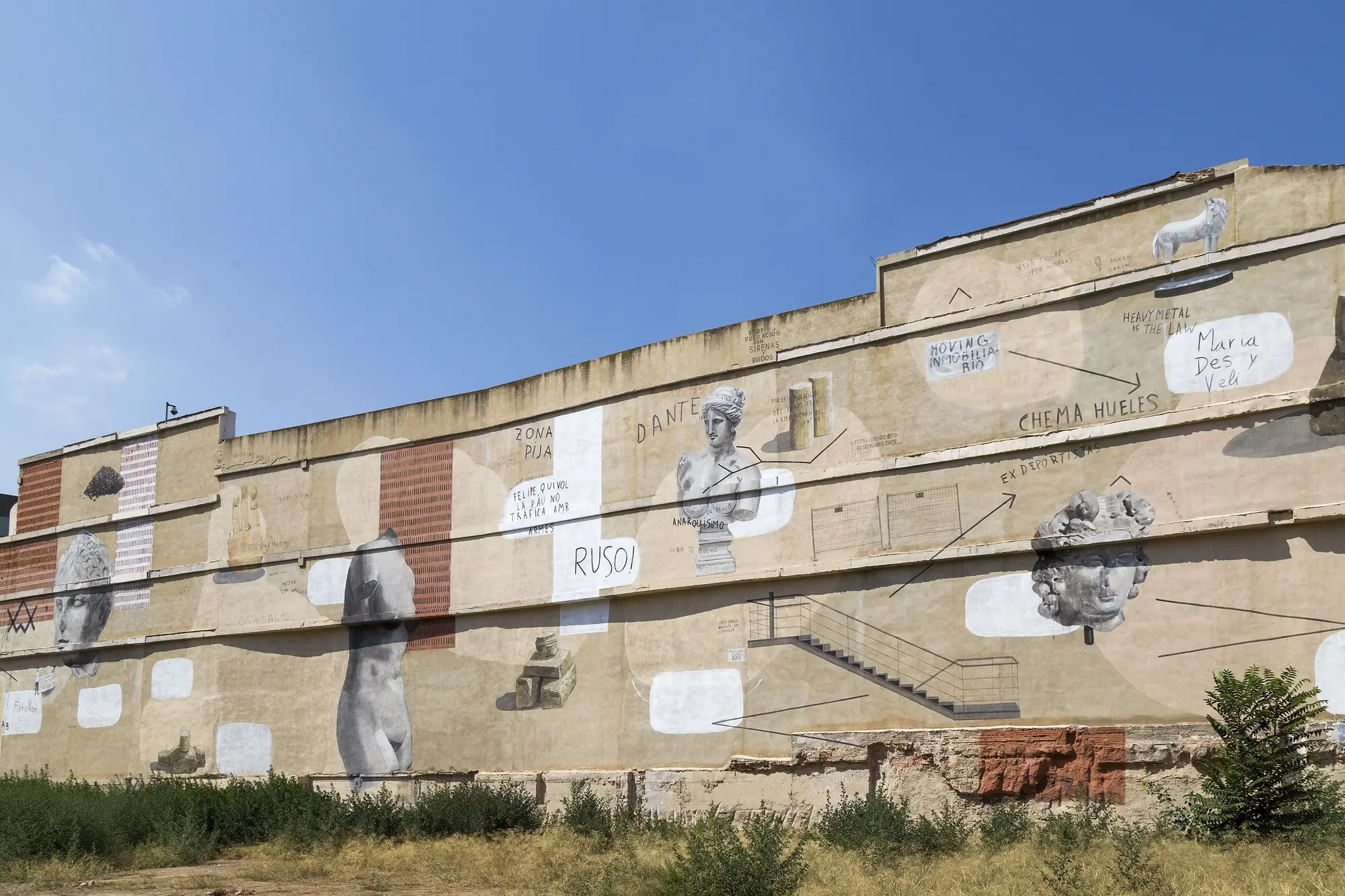 Work by Escif · Wikimedia Commons · IVAM
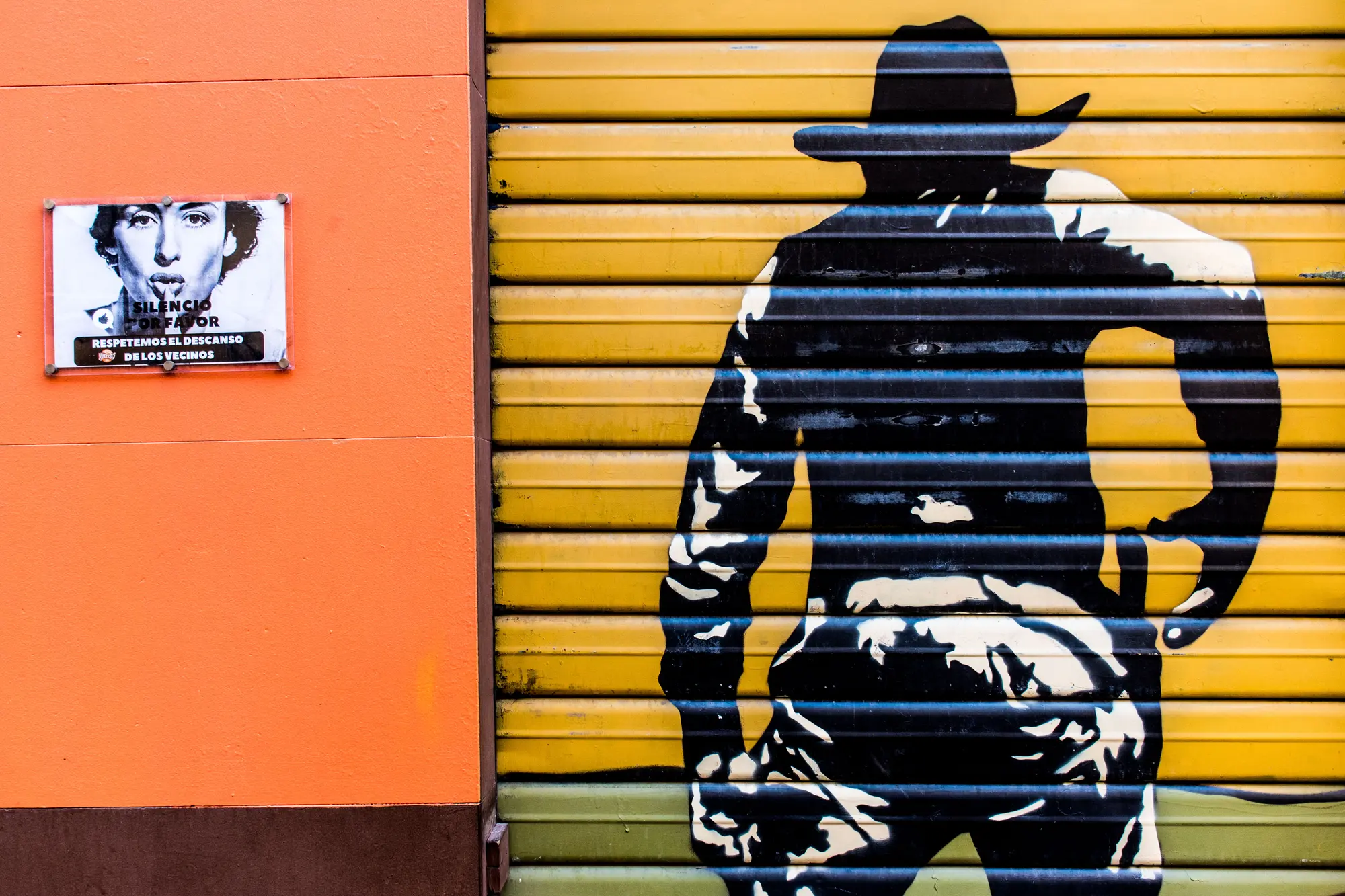 Don’t shoot. People are sleeping! · Wikimedia Commons