Ruzafa and Russafa: one neighbourhood, two useful names
Russafa is the official Valencian spelling; Ruzafa is the Spanish form and the version many visitors use when searching. Both refer to the same compact neighbourhood in l’Eixample, immediately south of central Valencia. Keeping both names in view makes maps and local references easier to follow without treating them as separate destinations.
This article is not a checklist of murals. The neighbourhood changes too quickly for that promise. It is a method for reading how public images sit within market streets, active shopfronts, residential façades and a dense grid that can be explored on foot.
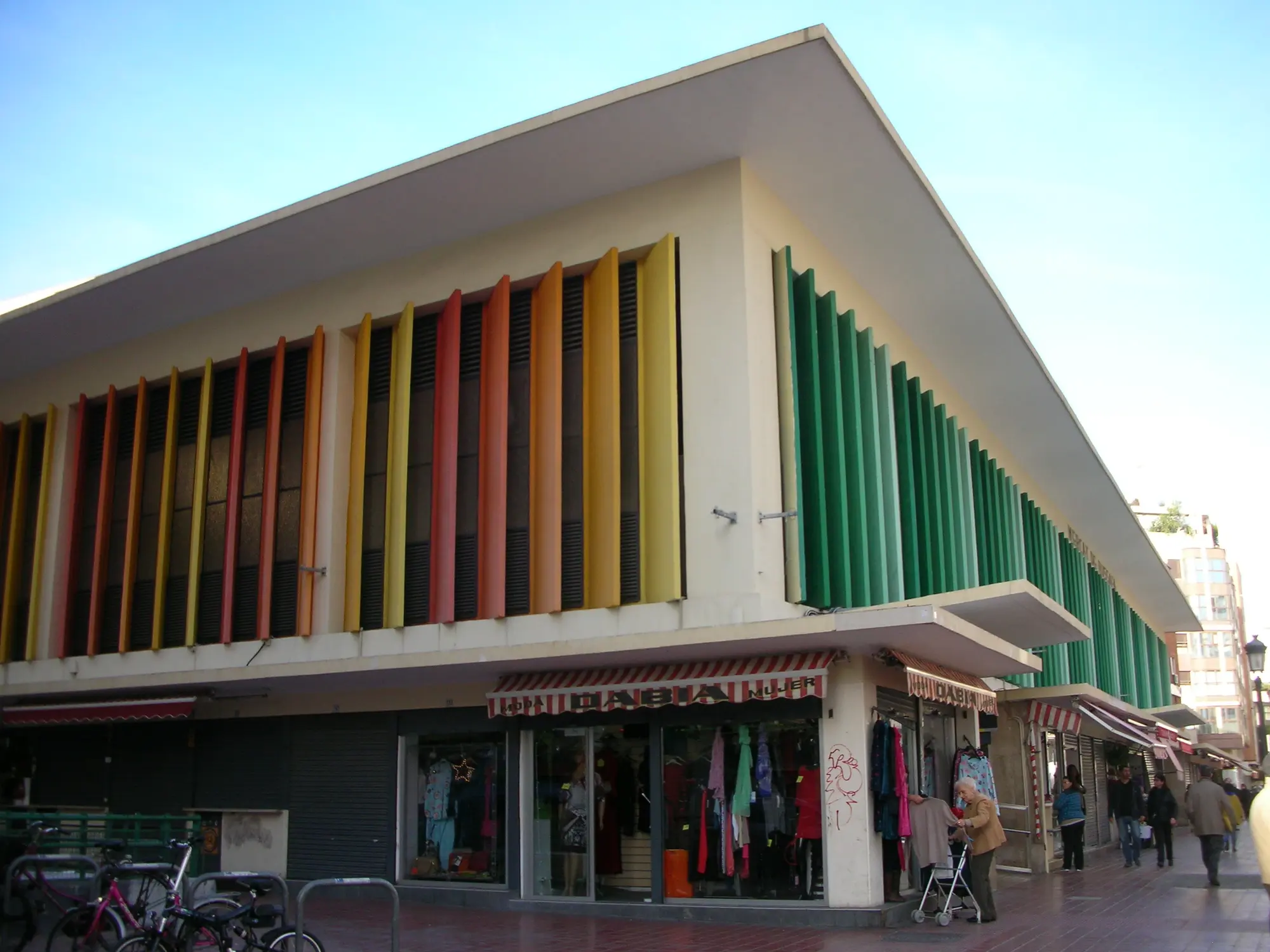 VSA / Archive image
Begin with architecture, not attribution
Mercat de Russafa and Plaça del Baró de Cortés provide a stable point of orientation. From there, the official neighbourhood map shows a close network of streets including Cadis, Sueca, Dénia, Cuba, Puerto Rico and Literat Azorín. The grid matters because it produces short sightlines, frequent corners and constant shifts between open junctions and narrower commercial stretches.
Before looking for a signature, notice the support: a metal shutter, rendered wall, doorway, construction hoarding, pasted poster or repaired surface. Scale and placement affect how a work is read. A small intervention beside a shop sign behaves differently from a large image visible across an intersection.
Shutters give the streets a daily rhythm
Ruzafa’s visual record changes with opening hours. A closed shutter can carry a complete painted composition; once the business opens, that image may disappear above the entrance and reveal a different street. The same walk therefore produces different evidence in the morning, during trading hours and later in the day.
This does not make one time objectively better. Daylight is best for understanding architecture, colour and context, while closed shutters may reveal works that are invisible when shops are operating. A responsible visit adapts to the neighbourhood’s working life rather than expecting every surface to be available on demand.
Read layers before searching for a masterpiece
The most informative surface may contain several moments at once: paint beneath a newer image, a partly removed paste-up, stickers around a drainpipe, or a repair that interrupts an older composition. These layers show how limited street space is occupied, maintained and reused.
Treat damage, overpainting and fading as evidence of time, not simply as faults. Street art is exposed to weather, property maintenance and new interventions. Record the date of a photograph and avoid describing an older image as currently visible unless its condition has been checked on site.
A documented reference: Vinz Feel Free in Russafa
A 2014 photograph from Russafa documents Riezgozocyal by Valencia-born artist Vinz Feel Free. The work combines a photographed human body with a painted bird head and visible collage logic, offering a clear example of how street practice can move between photography, drawing, painting and wheatpaste.
Use that image as a historical and visual reference, not as a promise that the original intervention survives. Vinz’s recurring human-animal hybrids can help train the eye, but resemblance alone is not enough to attribute a newly encountered work. Look for a signature, reliable documentation or confirmation from the artist’s official channels.
A walking framework around the market streets
Start at Mercat de Russafa and Plaça del Baró de Cortés. Make a first pass through Cadis, Sueca and Dénia, then compare the different commercial rhythm around Cuba and Puerto Rico. Literat Azorín gives a useful return line towards the market. These streets form an orientation framework confirmed by the municipal map, not a guaranteed sequence of surviving artworks.
Move in short loops rather than following one rigid line. At each junction, alternate between a wide architectural view and close observation of shutters, corners and pasted surfaces. If little is visible, continue walking: absence is part of an honest record, and no wall should be treated as owed to the visitor.
Photograph the work without erasing the neighbourhood
Begin with one contextual image showing the work in relation to the façade or street, then make a closer photograph if access is clear. Do not block entrances, photograph through residential windows or treat customers and residents as background figures. Where a business is operating, its use of the pavement takes priority over the ideal camera angle.
Keep attribution factual. A familiar character, palette or technique is a clue rather than proof. Save the street name, date and visible signature, then compare the evidence with the artist profiles and cited sources on this site.
Use Ruzafa as a comparison, not the whole city
Ruzafa’s compact grid and commercial surfaces offer a different reading from El Carme’s historic fabric, El Cabanyal’s maritime façades or the coordinated murals of the Túria Garden. The contrast is useful: Valencia’s street-art scene is defined partly by how practices change with architecture and neighbourhood life.
Continue with the practical Ruzafa area guide for the official map, then use the Valencia street-art map and artist directory to compare places and visual languages. The aim is not to complete a fixed collection but to become more precise about what you see, what you can verify and what has already changed.
Field note: Start at the market, read the street before naming the artist, and let shutters, layers and opening hours shape the visit. Ruzafa is most rewarding when treated as a working neighbourhood whose visual record changes every day.
Method and sources
- Ajuntament de València: Official Russafa neighbourhood map (opens in a new tab)
- Visit València: Russafa neighbourhood guide (opens in a new tab)
- Street Artwork: València street-art artist directory (opens in a new tab)
- RexRomae: Vinz Feel Free biography (opens in a new tab)
- Valencia Street Art: Valencia Street Art editorial policy
Related reading
Continue exploring
Mercat de Russafa · Wikimedia Commons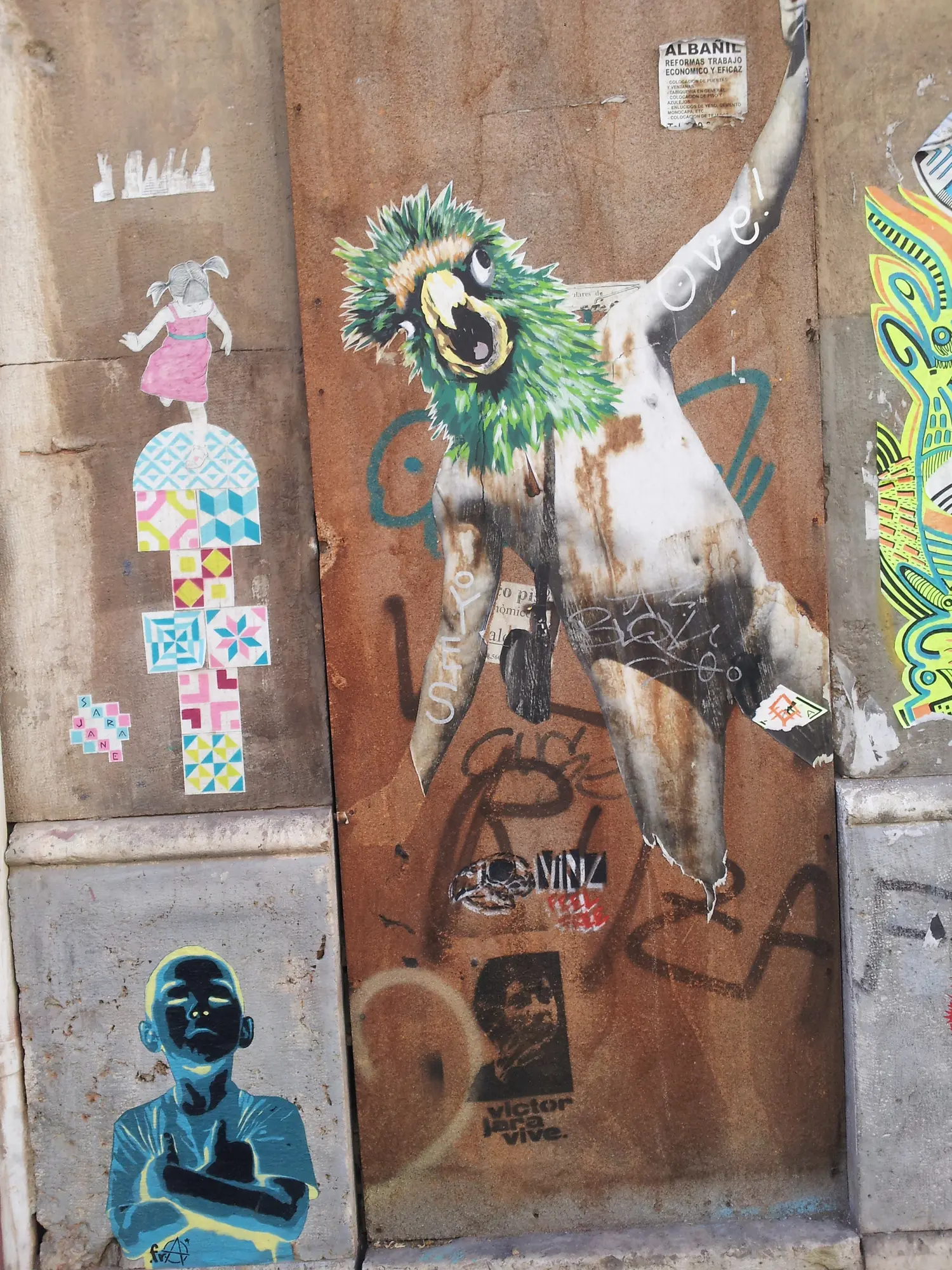 Work by Vinz Feel Free · Wikimedia Commons
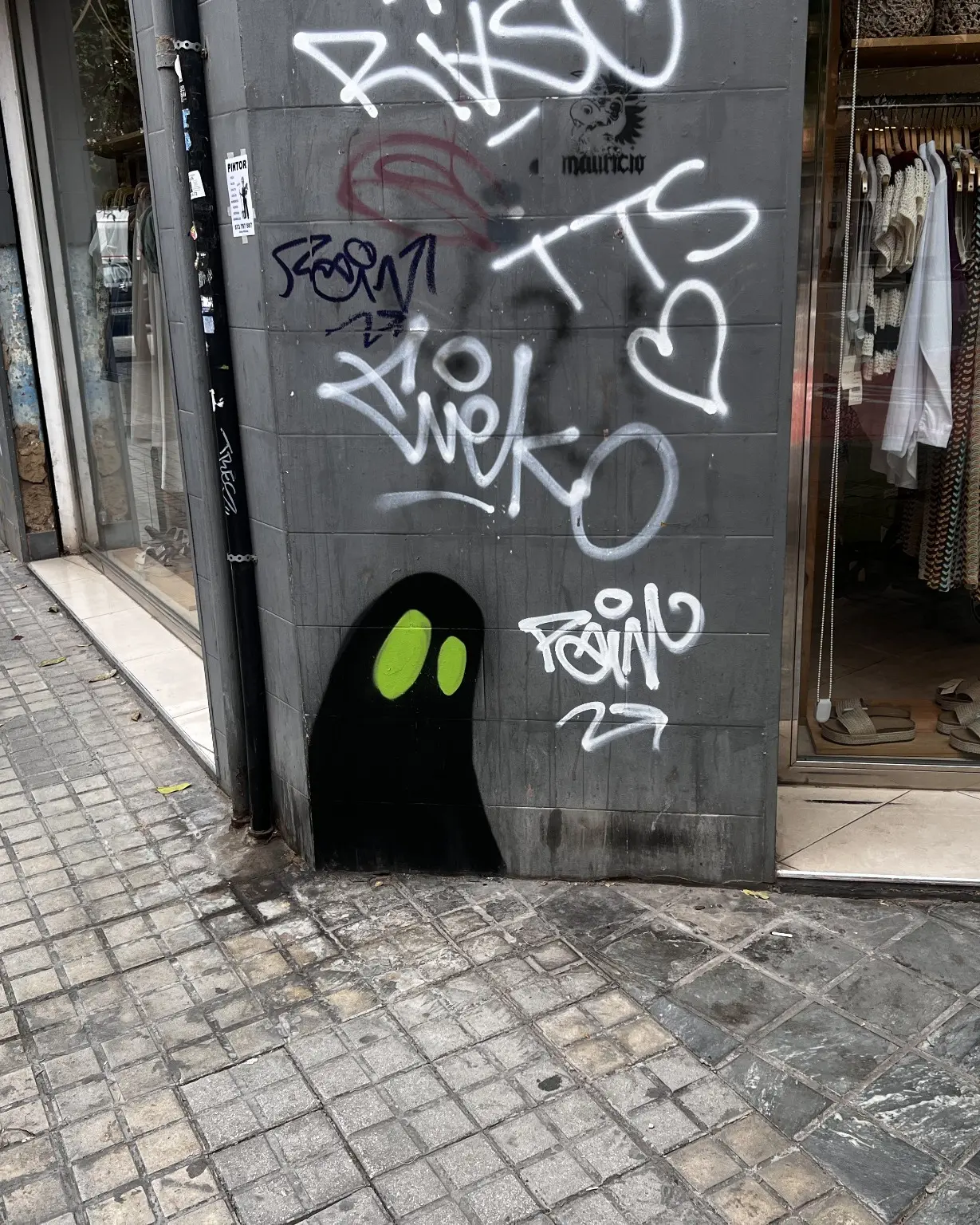 Work by La So0mbra · Official La So0mbra website
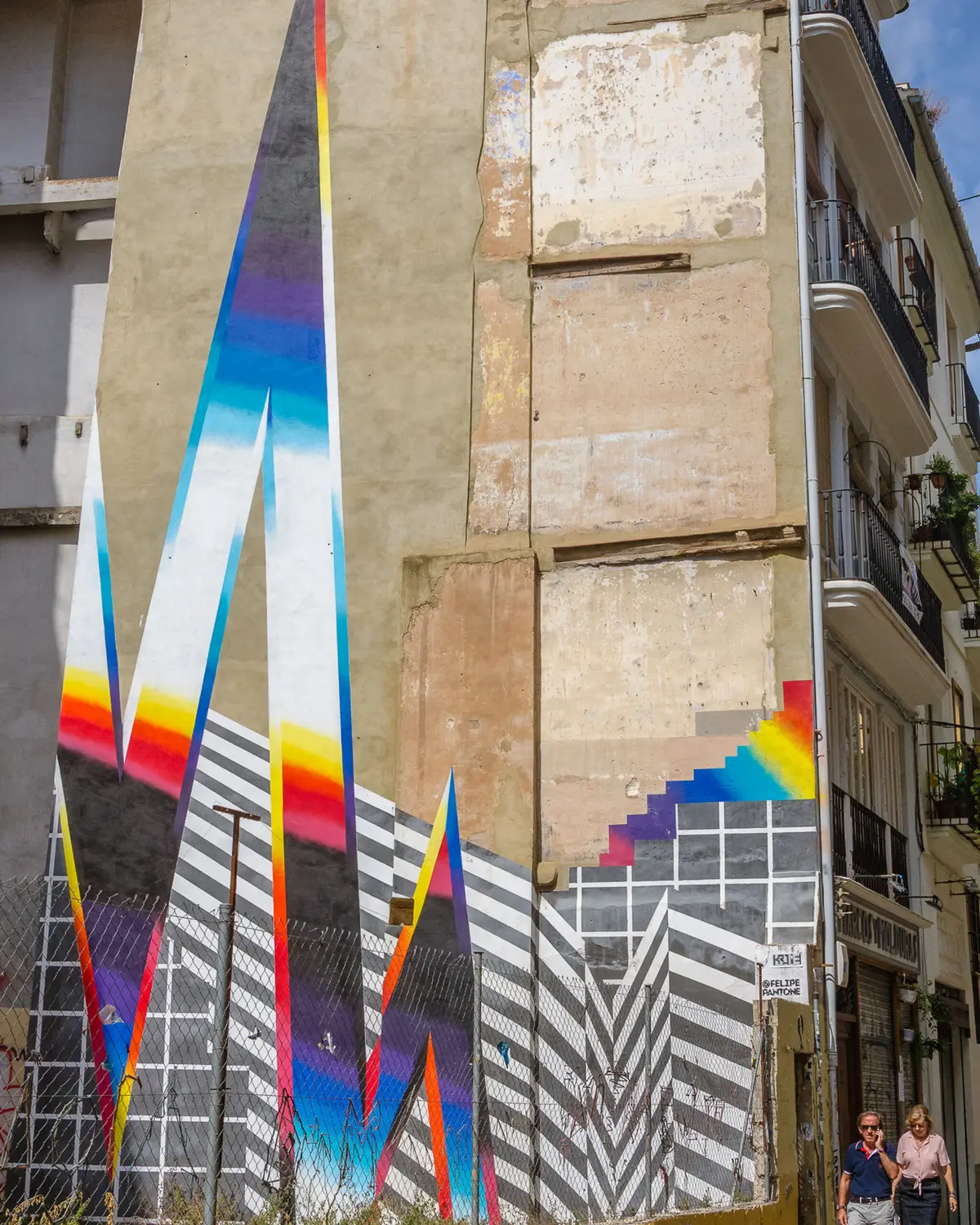 Work by Felipe Pantone · Street Art Cities
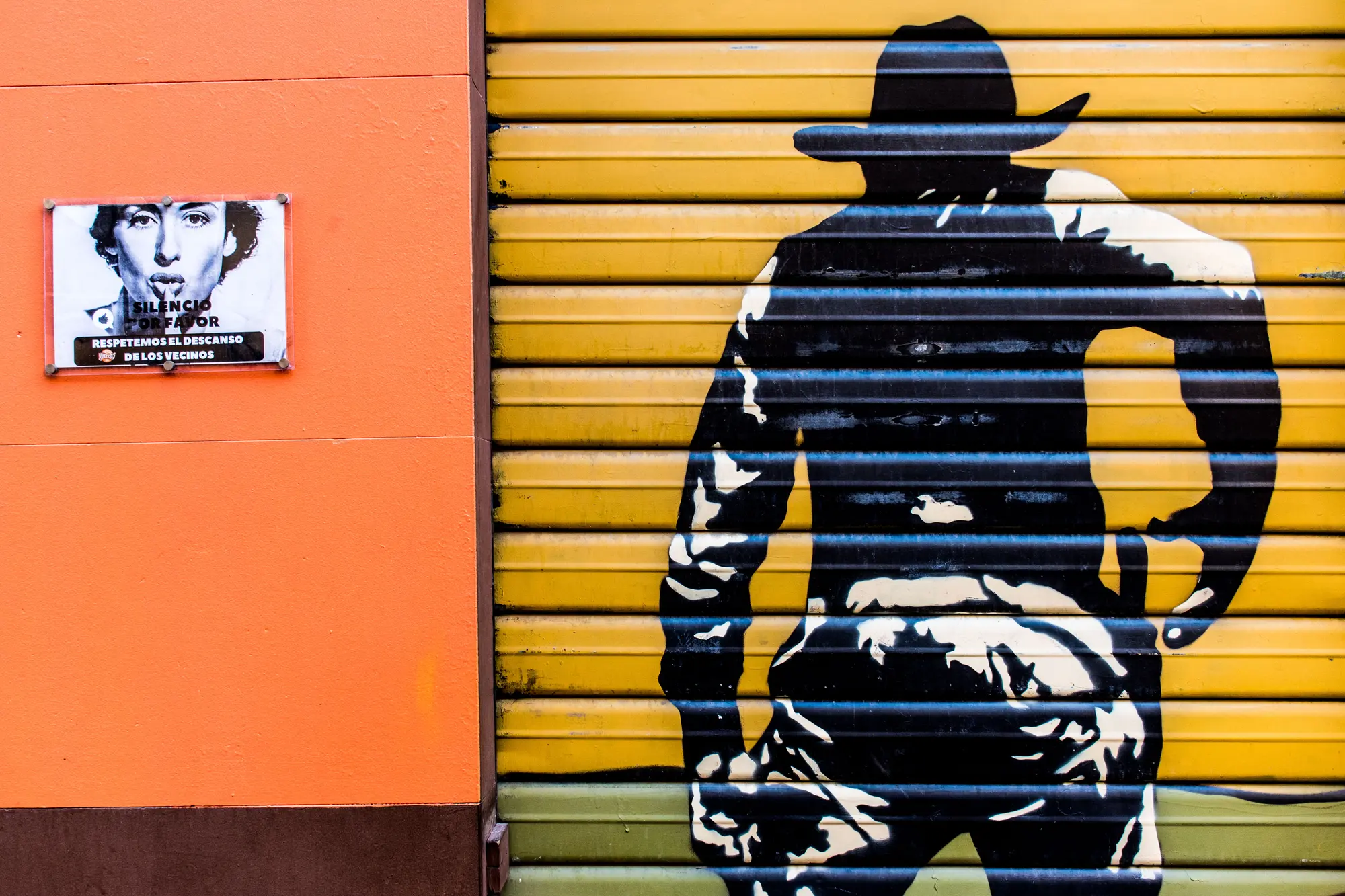 Don’t shoot. People are sleeping! · Wikimedia Commons
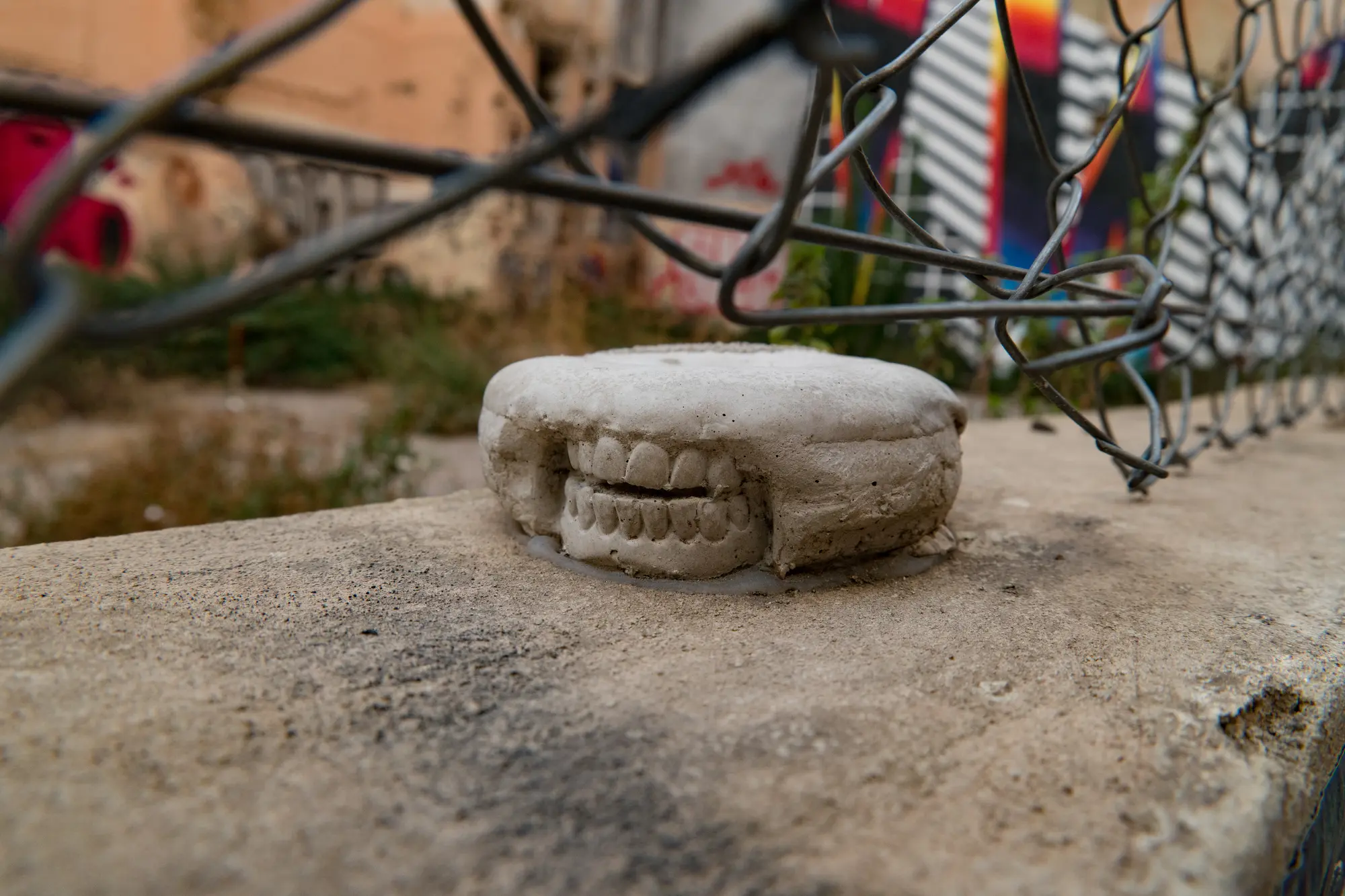 Valencia Spain Street Art · Wikimedia Commons
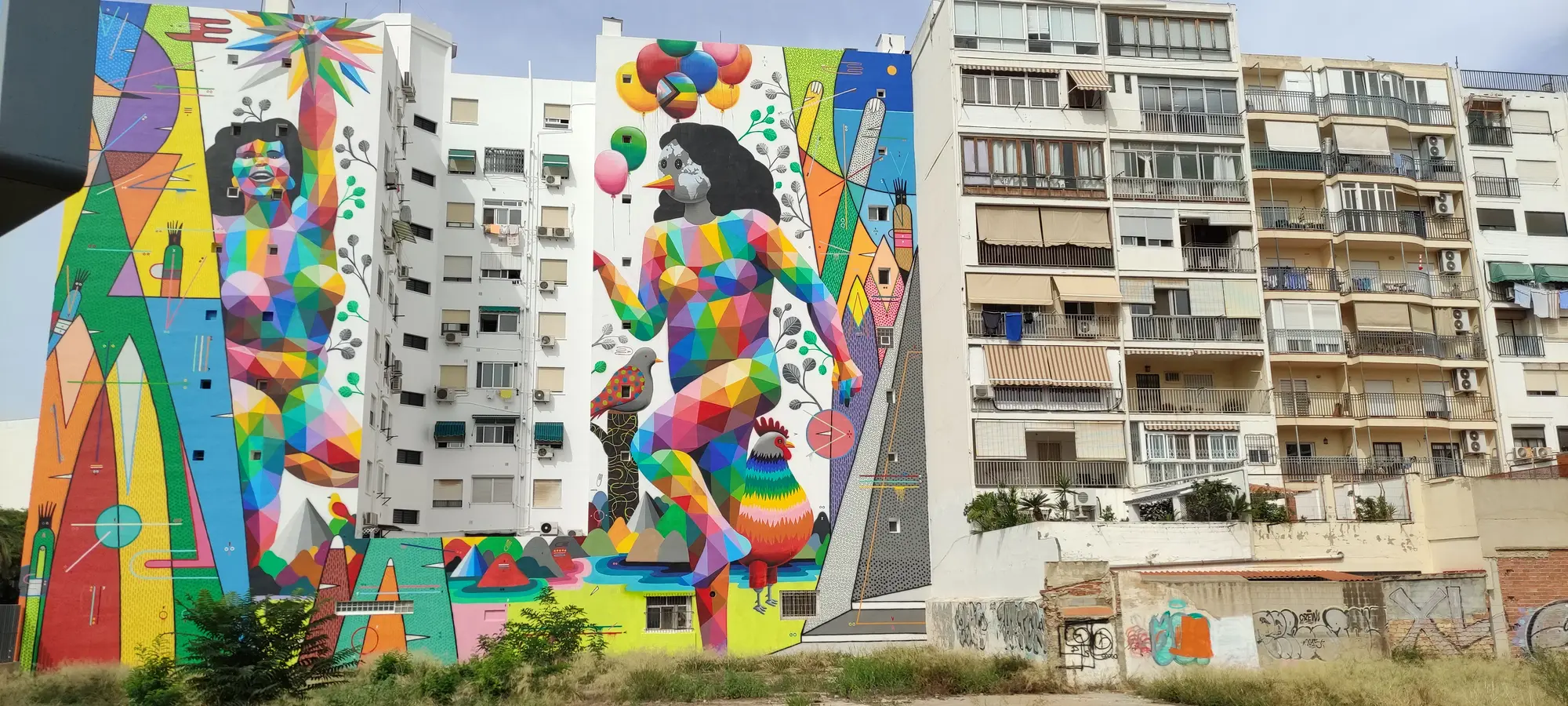 Work by Okuda San Miguel · Wikimedia Commons