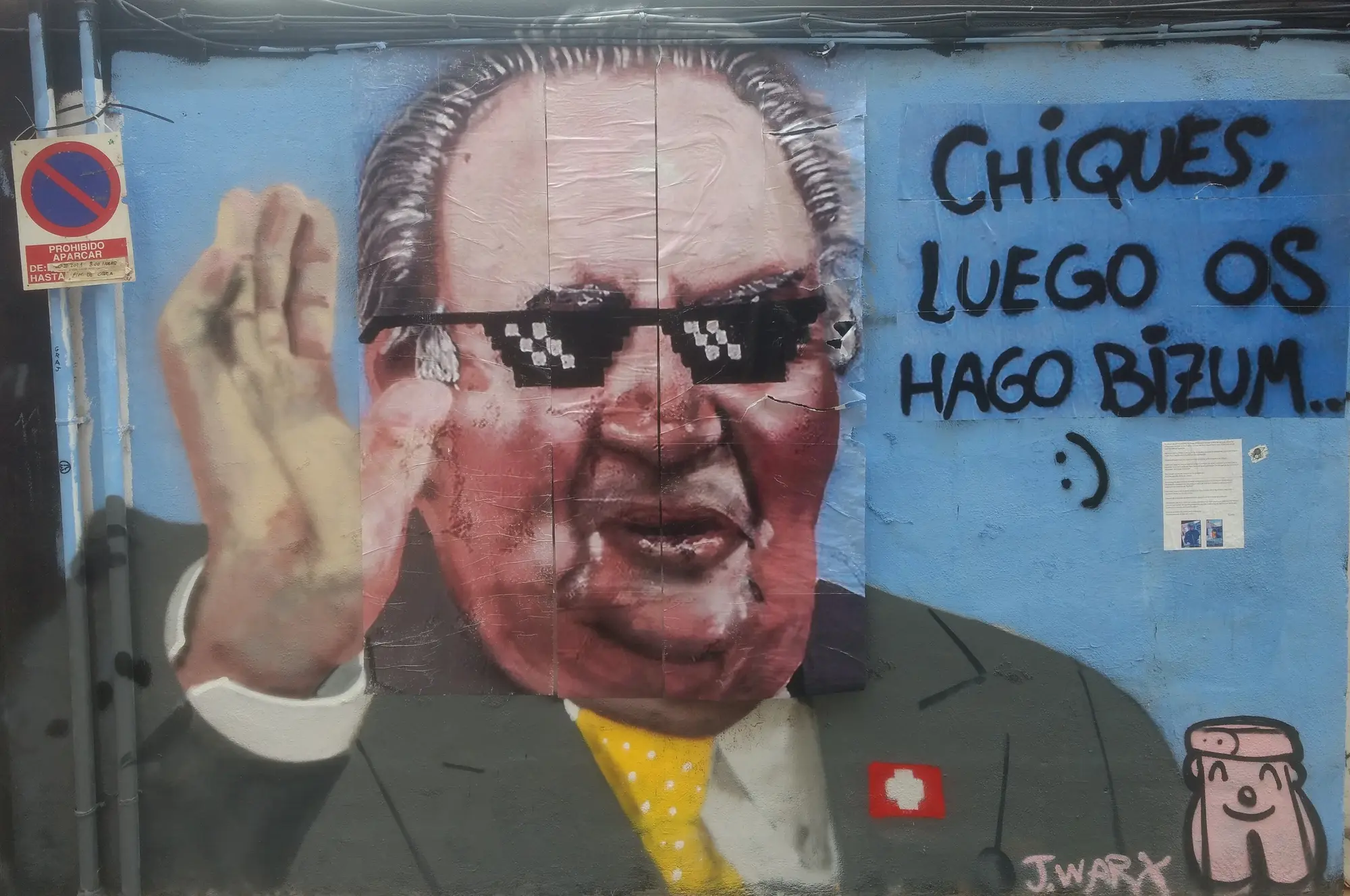
A separate identity for a more direct kind of street work
J. Warx was born in Valencia in 1994 and grew up in Benimaclet. Biographical records place the beginning of his graffiti practice in 2013, while a 2020 interview distinguishes the newer J. Warx identity from the more traditional graffiti name Ropes.
The separation allowed him to work outside the conventions he associated with lettering. The newer murals favour an immediately readable image and a compact line of text, often completed quickly and placed where an unplanned encounter can produce a response.
Irony as a way of reading the present
Politicians, members of the royal family, television personalities and internet figures appear alongside language borrowed from everyday conversation and meme culture. The point is not portraiture alone: the recognisable face gives a current issue an immediate route into the street.
The 2020 Benimaclet mural ‘Chiques, luego os hago Bizum’ placed Juan Carlos I beside a mobile phone after his departure from Spain. Its meaning depended on timing, colloquial language and the public’s knowledge of the news, demonstrating how quickly J. Warx converts an event into a local visual exchange.
From viral jokes to the housing crisis
Later work gives sustained attention to problems affecting the artist’s generation, especially access to housing. A raccoon living in a bin, a dog carrying an estate-agent tick and a figure trapped in a housing maze use absurdity to make structural frustration legible without turning the wall into a slogan sheet.
Humour remains essential, but it is not an escape from the issue. The joke creates recognition first; the imbalance behind it remains after the punchline has been read.
Benimaclet as home ground, Valencia as the field
Benimaclet is central to the practice: it is where J. Warx grew up, kept a studio and placed several documented works. Reporting also locates murals in El Carme and El Cabanyal, allowing the same topical language to appear in neighbourhoods with very different surfaces and rhythms.
The works are deliberately temporary. Walls may be altered, erased or rebuilt, and the topical reference itself can age. That instability is part of the practice rather than a defect in an outdoor collection.
Collaboration and the institutional route
Since 2021, J. Warx has also worked with Ós Gat on public-art projects in Spain and Mexico, combining mural painting, sharper graphic devices and shared social commentary.
His selection for Poliniza Dos 2026 places that current practice inside the UPV’s long-running urban-art encounter. It is a useful contrast with the rapid, unauthorised topical works: the voice remains recognisable while the site, process and institutional conditions change.
Official links
Sources
- El País: J. Warx: social criticism, housing and irony across Valencia (opens in a new tab)
- El País · Verne: J. Warx: Valencia street art, current affairs, humour and memes (opens in a new tab)
- Tornem: J. Warx artist profile for Cridem pel Clima (opens in a new tab)
- Universitat Politècnica de València: Poliniza Dos 2026 participating artists (opens in a new tab)
- Wikimedia Commons: J. Warx Juan Carlos ‘Bizum’ mural in Benimaclet (opens in a new tab)
- Valencia Street Art: Valencia Street Art editorial policy
Related reading
Continue exploring
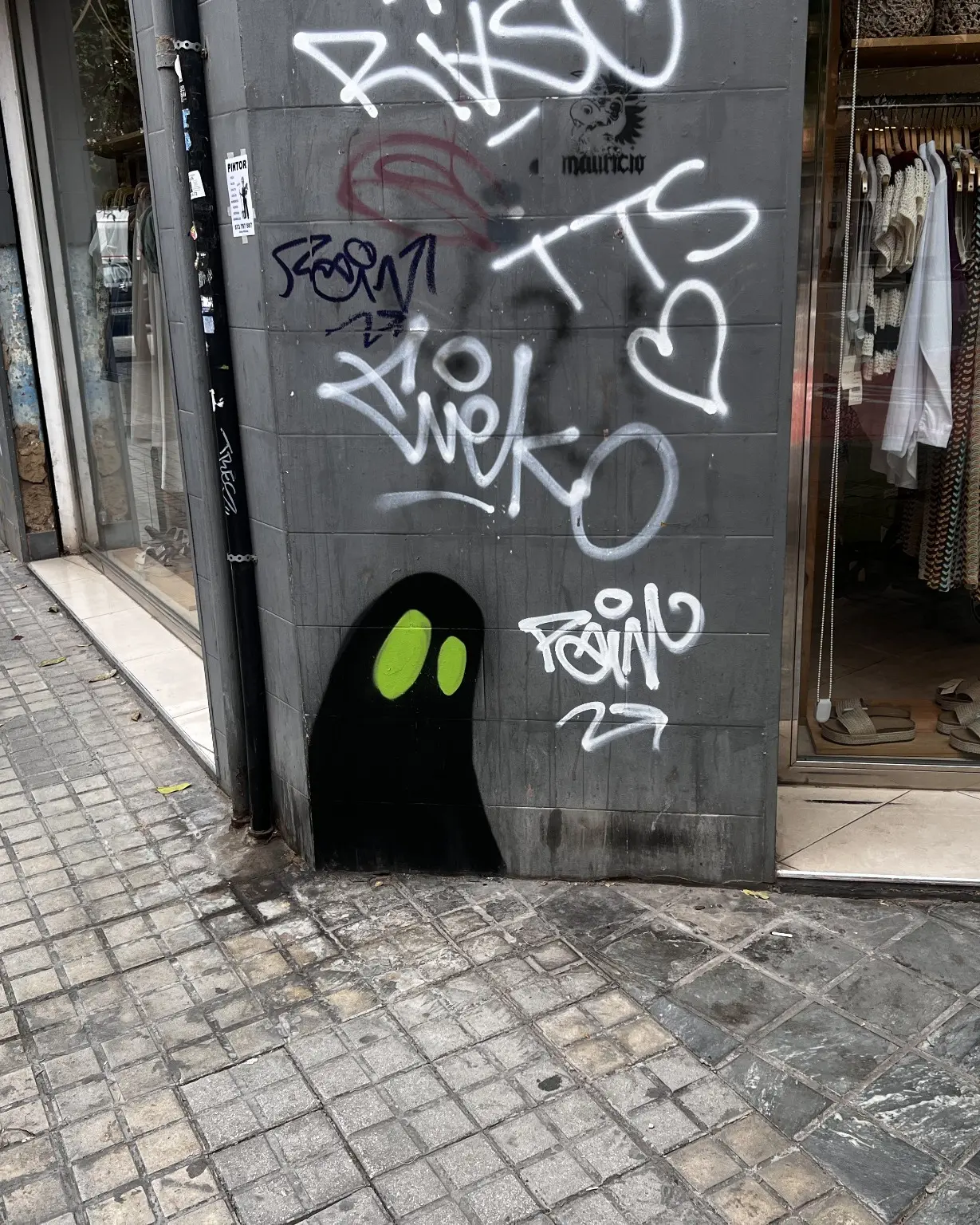 Work by La So0mbra · Official La So0mbra website
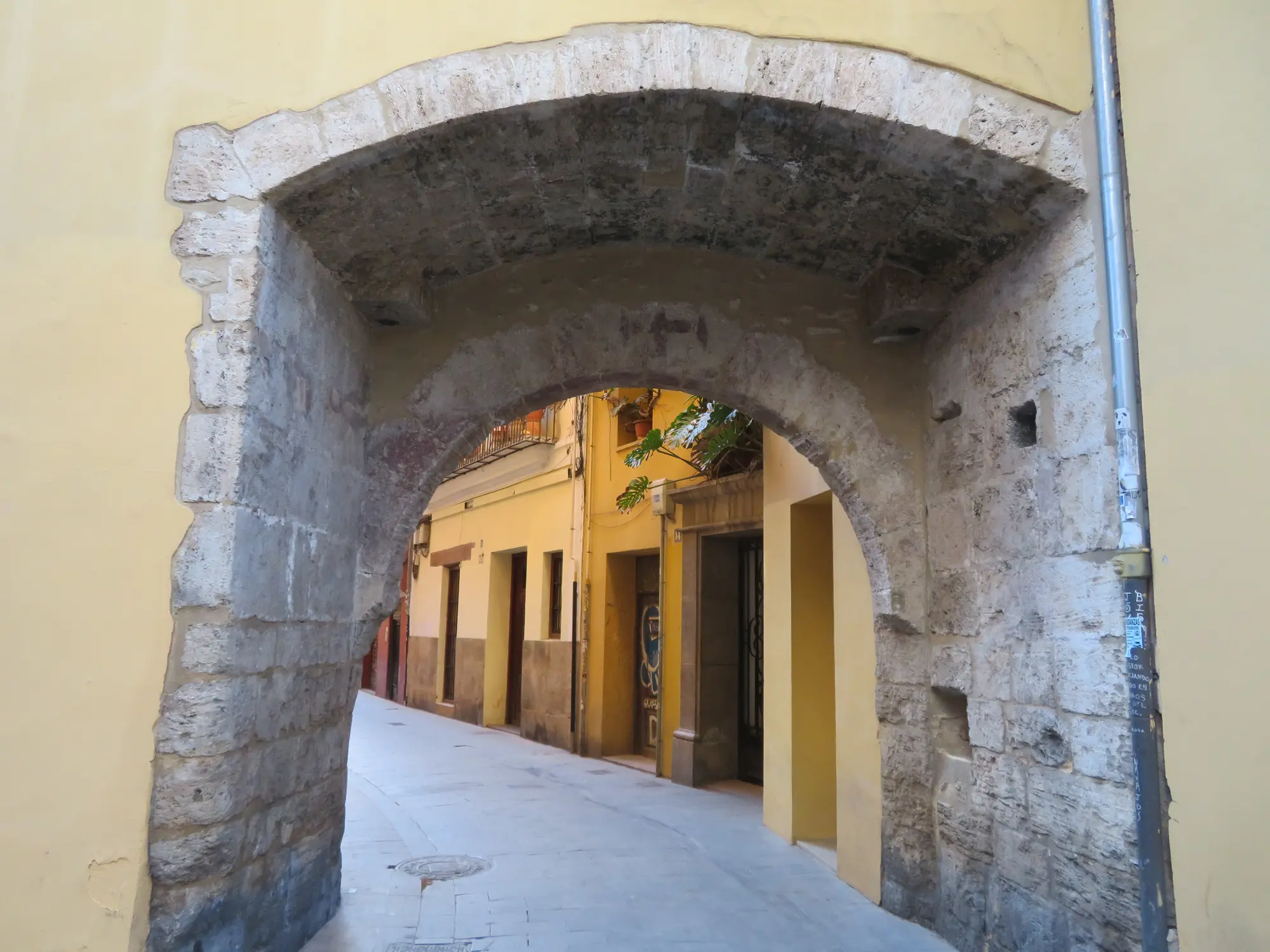 Portal de la Valldigna, El Carme · Wikimedia Commons
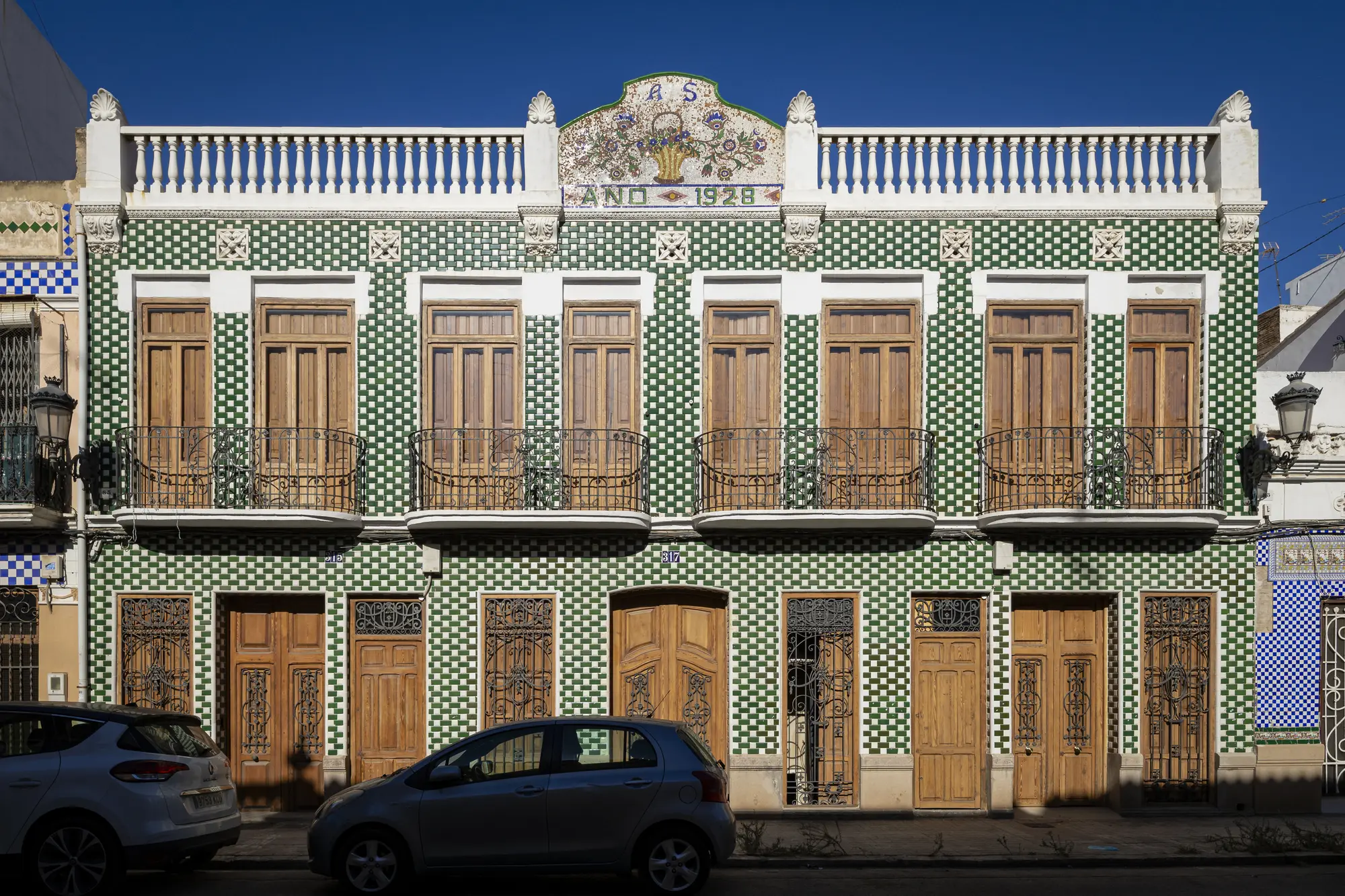 Les Casetes del Gerro, Cabanyal–Canyamelar · Wikimedia Commons
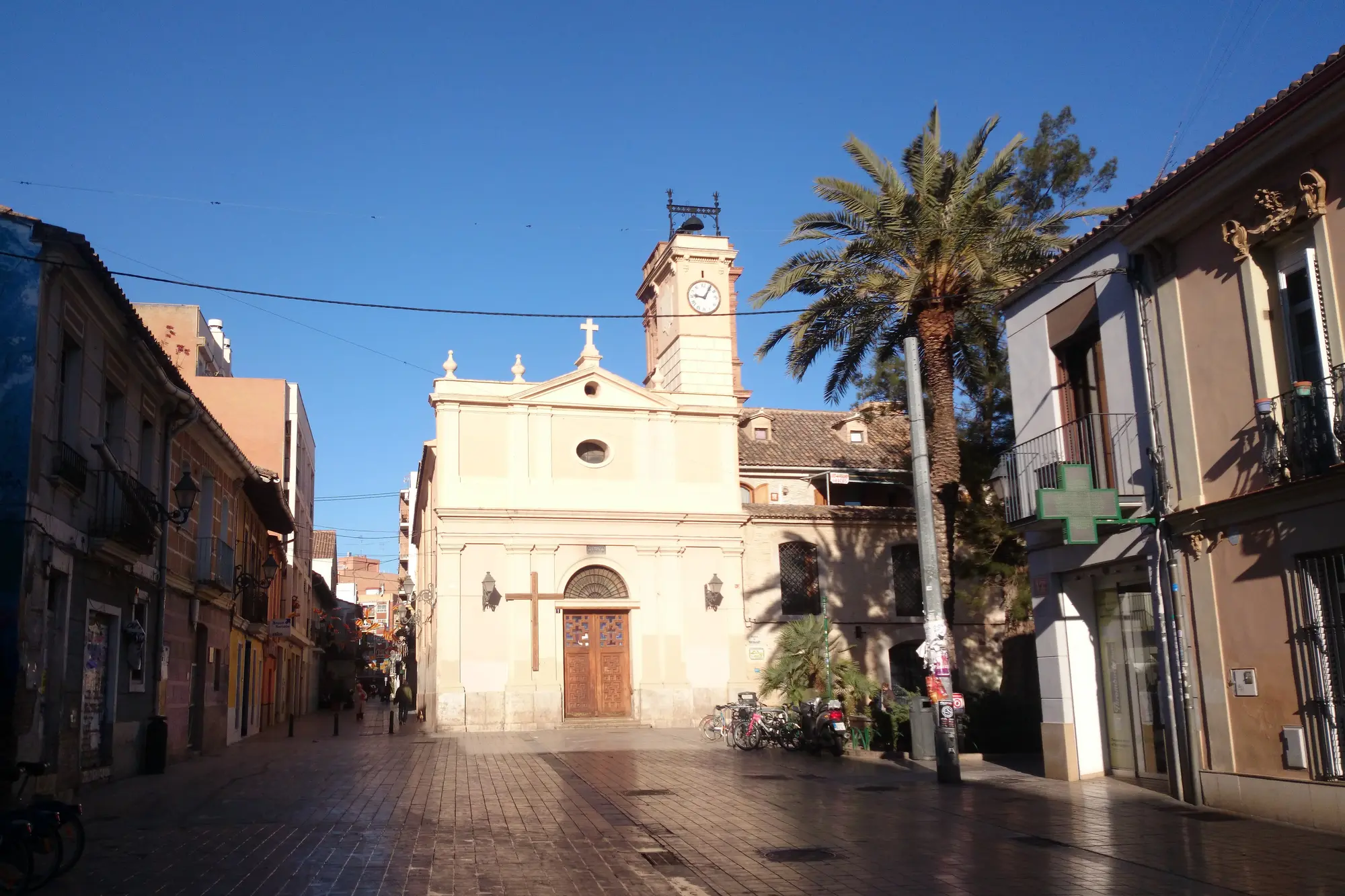 Plaça de Benimaclet and the Church of the Assumption · Wikimedia Commons
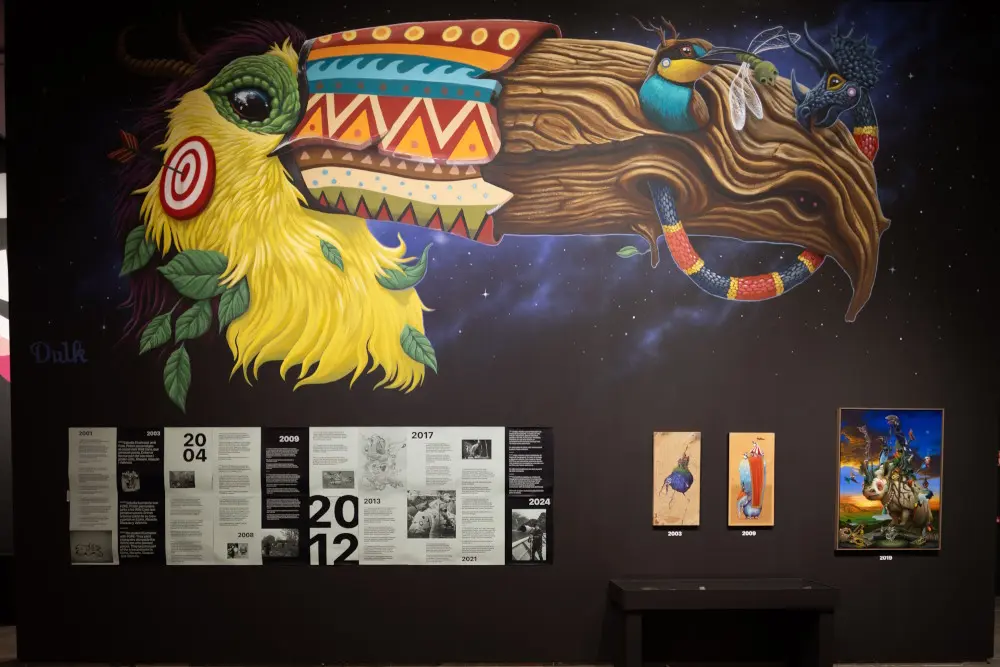 PRINCIPIOS: archive of Valencian urban art · Centre del Carme Cultura Contemporània
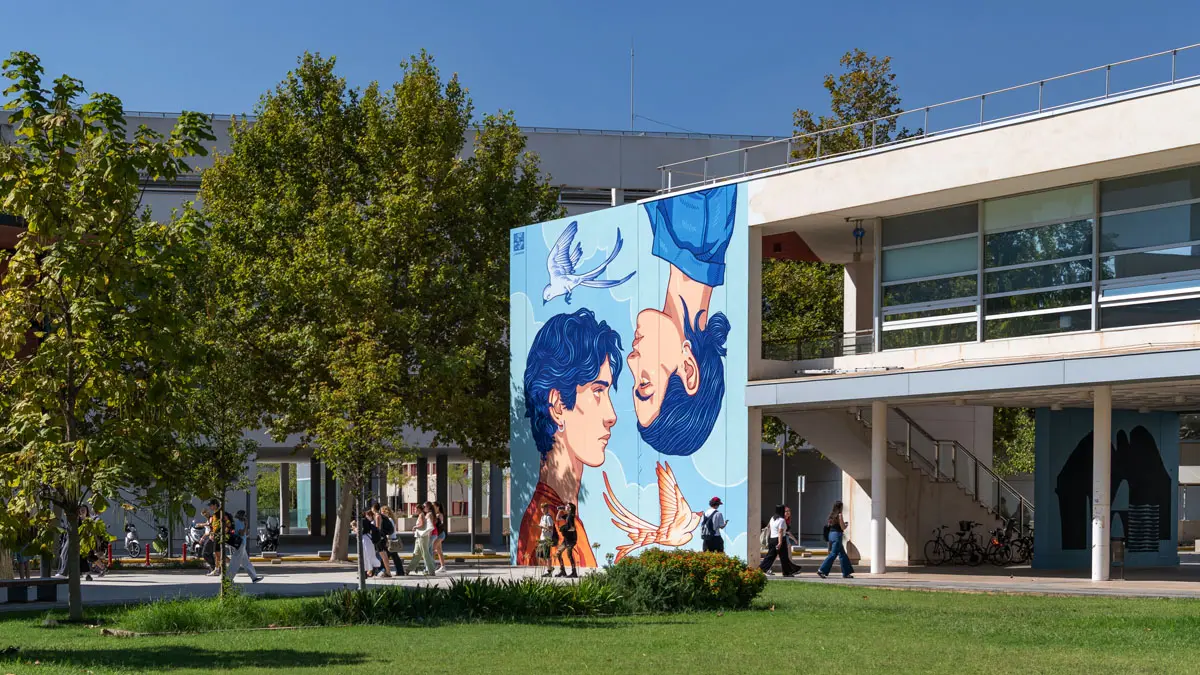 Poliniza Dos 2026 at the Campus de Vera · Universitat Politècnica de València
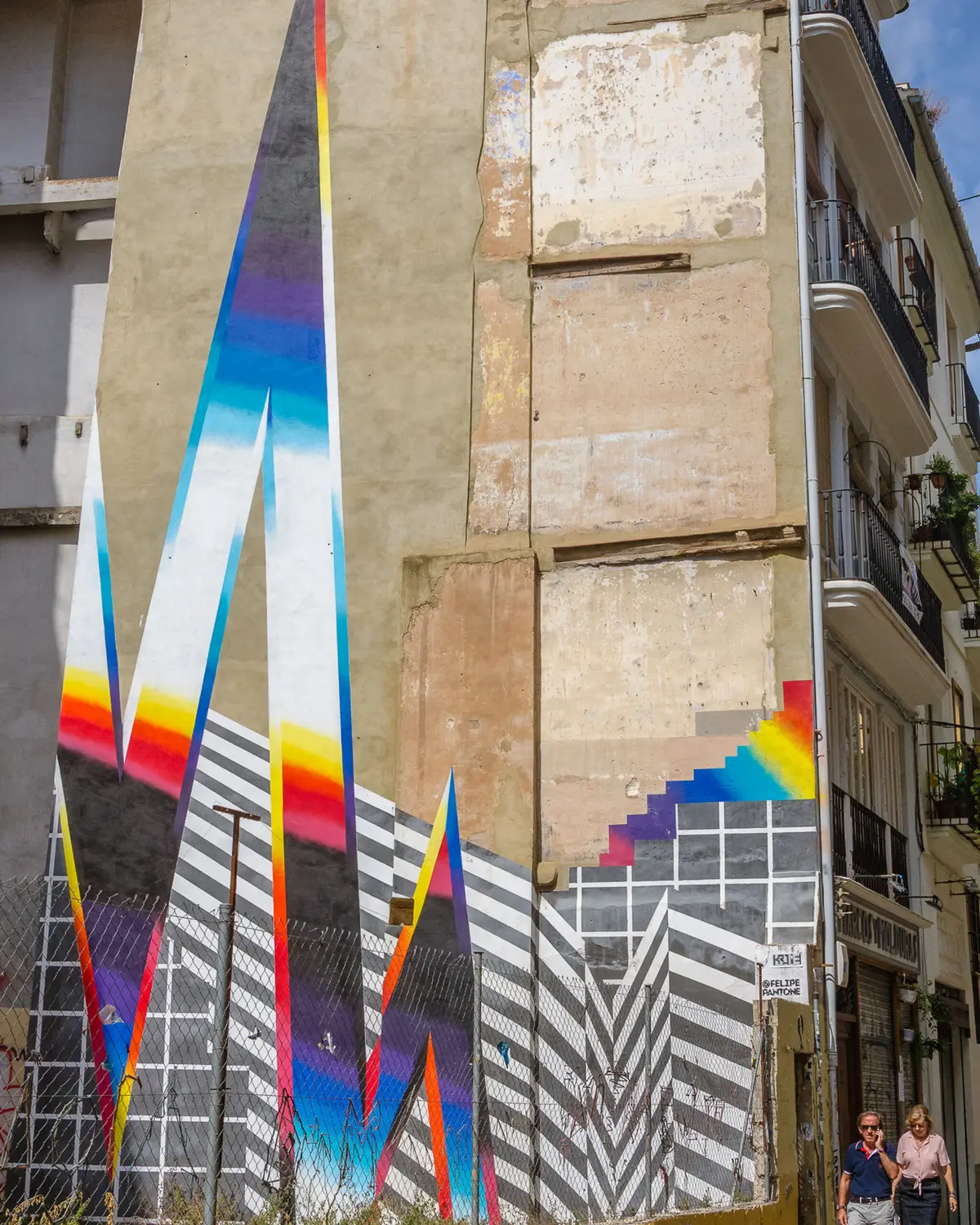 Work by Felipe Pantone · Street Art Cities
 Don’t shoot. People are sleeping! · Wikimedia Commons