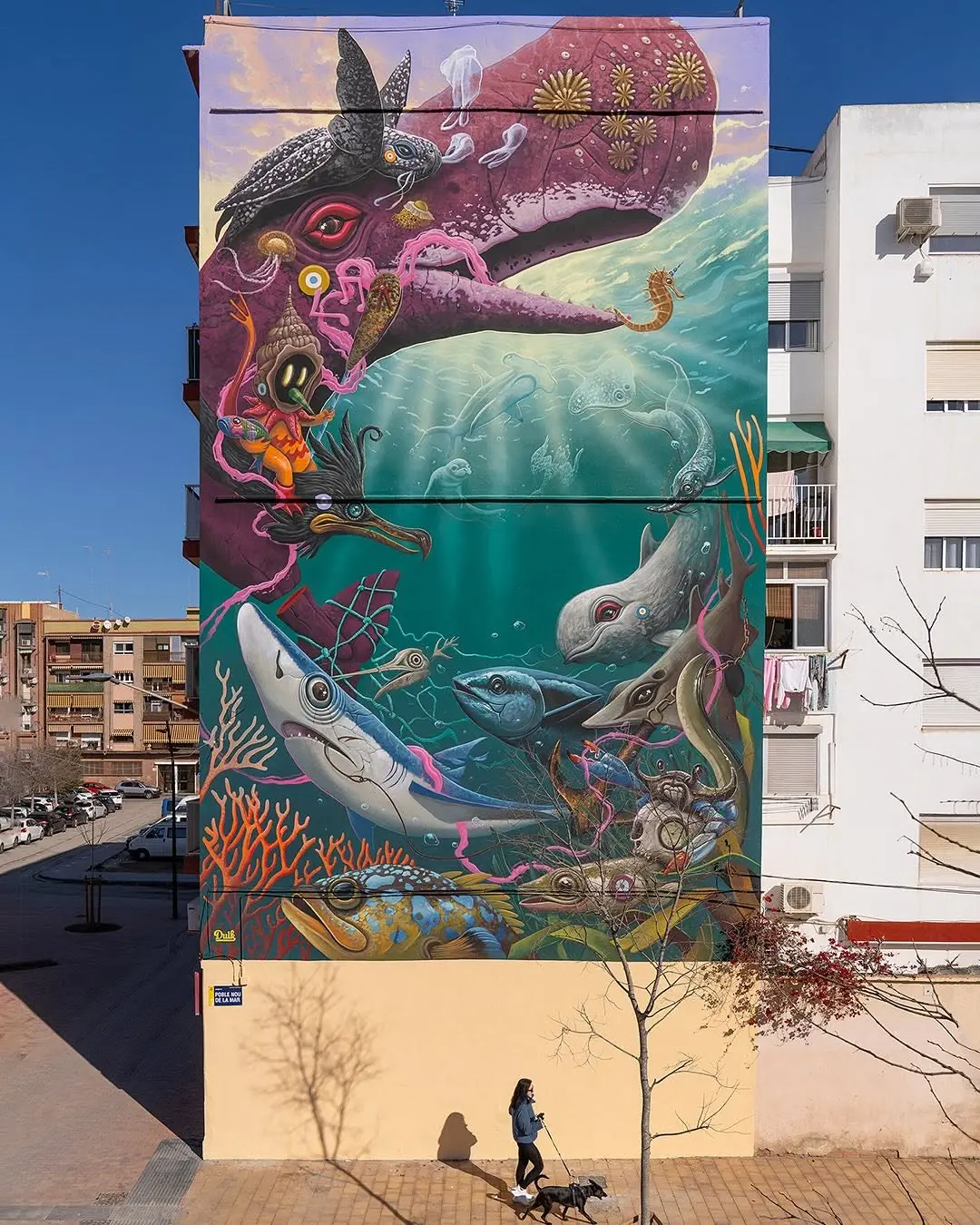
A practice balanced between street and studio
Antonio Segura Donat, known as Dulk, describes the street and studio as complementary parts of one practice. Large murals bring scale, spontaneity and exposure to changing conditions; studio work allows a more methodical approach and a longer life for the image.
Across mural painting, painting and other object-based formats, the visual world remains connected by an early fascination with animals and by the construction of imagined habitats.
Beauty that gives way to warning
Dulk builds colourful biological environments that initially appear calm and inviting. On closer inspection, threatened creatures, damaged habitats and conflicting natural elements shift the scene towards environmental loss.
The artist’s own account describes this tension as a mixture of reality and fiction: an attractive surface used to hold a more difficult story about human pressure on ecosystems.
Mediterraneus in El Cabanyal
In 2025, Dulk and the Fundació Oceanogràfic completed Mediterraneus on a residential façade in El Cabanyal. Oceanogràfic identifies it as the artist’s first exterior painting in the city of Valencia.
Developed with advice from biologists and veterinarians, the mural arranges more than twenty Mediterranean species in a spiral. Details point to pollution, overfishing, invasive species, habitat degradation and climate change, tying Dulk’s broader conservation language to the ecology beside Valencia.
Official links
Sources
Related reading